


Page 1107 - Williams Hematology ( PDFDrive )
P. 1107
1082           Part VIII:  Monocytes and Macrophages                                                                               Chapter 68:  Production, Distribution, and Activation of Monocytes and Macrophages            1083


                                                                      unique T cell function. The “classical” DC develops from a precursor
                                                                      which is dependent on the growth factor receptor. 62–64
                                                                      Spleen
                                                                      From the macrophage point of view, the spleen is the most complex
                                                                      organ in the body. 65,66  Our knowledge is based mainly on the mouse
                                                                                                             67
                                                                      and we know there is considerable species variation,  as well as con-
                                                                      stitutive hematopoiesis in mouse spleen. Subpopulations observed
                                                                      in the mouse by marker and genetic knockout experiments include
                                                                      (1) macrophages in the red pulp, white pulp, and in the marginal zone,
                                                                                        30
                                                                      itself M-CSF dependent,  and (2) heterogeneous, more phagocytic
                                                                      “metallophilic” macrophages in the outer marginal zone. Characteristic
               A                           B                          phenotypic  markers are  available to  identify macrophages in mouse
                                                                      spleen (see Fig. 68–5C to  E). The F4/80 antigen and the mannose
                                                                      receptor (MR) are restricted to mature macrophages in the red pulp,
                                                                      whereas CD68 is a marker for all macrophages, as well as DCs, although
                                                                      the mainly intracellular expression of CD68 is less prominent in DCs.
                                                                      There are several well-characterized markers for mouse metallophilic
                                                                      macrophages, including sialoadhesin (Sn), a poorly characterized pro-
                                                                      tein recognized by the MOMA-1 monoclonal antibody, and ligands for
                                                                      MR cysteine-rich domain-Fc chimeric proteins (see Fig. 68–5E). The
                                                                                                                        68
                                                                      splenic marginal zone macrophage population develops postnatally,
                                                                      in parallel with antipolysaccharide responses to encapsulated bacteria.
                                                                      Functions of splenic marginal zone macrophages include clearance of
                                                                      senescent erythrocytes and neutrophils (red pulp), targeting of circulat-
               C                           D                          ing antigens and pathogens (marginal zone), interferon (IFN) produc-
                                                                      tion, induction of secondary adaptive immune responses, regulation of
                                                                      hematopoiesis, and iron storage. Markers for the outer marginal zone
                                                                      macrophages include MARCO and SIGNR1, a mouse homologue of
                                                                      dendritic cell–specific intercellular adhesion molecule-3–grabbing
                                                                      nonintegrin (DC-SIGN). The spleen is also a site for storage and rapid
                                                                      deployment of monocytes, which participate in wound healing and play
                                                                      a role regulation of inflammation. 69

                                                                      Lymph Nodes
                                                                      Lymph node macrophages are also heterogeneous, with distinctive
                                                                      Sn subcapsular cells, corresponding to marginal metallophils in their
                                                                      marker expression, and F4/80+ macrophages in germinal follicles and
               E                           F                          in the hilus. Macrophages in T-lymphocyte–rich areas are F4/80– or
                                                                      dim, as in T-cell areas in spleen, but express CD68. It is thought that
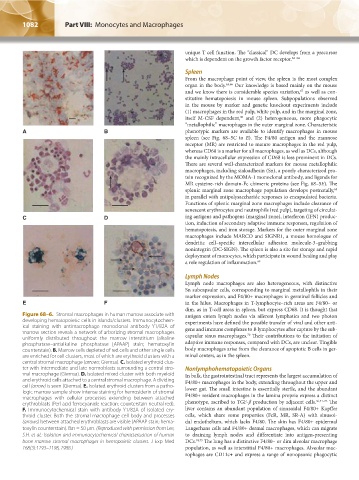
               Figure 68–6.  Stromal macrophages in human marrow associate with   antigen  enters lymph  nodes  via  afferent  lymphatics  and two photon
               developing hematopoietic cells in islands/clusters. Immunocytochem-  experiments have defined the possible transfer of viral and other anti-
               ical staining with antimacrophage monoclonal antibody  Y1/82A of   gens and immune complexes to B lymphocytes after capture by the sub-
               marrow section reveals a network of arborizing stromal macrophages   capsular sinus macrophages.  Their contributions to the initiation of
                                                                                           70
               uniformly distributed throughout the marrow interstitium (alkaline
               phosphatase–antialkaline phosphatase [APAAP] stain; hematoxylin   adaptive immune responses, compared with DCs, are unclear. Tingible
               counterstain). B. Marrow cells depleted of red cells and other single cells   body macrophages arise from the clearance of apoptotic B cells in ger-
               are enriched for cell clusters, most of which are erythroid clusters with a   minal centers, as in the spleen.
               central stromal macrophage (arrows; Giemsa). C. Isolated erythroid clus-
               ter with intermediate and late normoblasts surrounding a central stro-  Nonlymphohematopoietic Organs
               mal macrophage (Giemsa). D. Isolated mixed cluster with both myeloid   In bulk, the gastrointestinal tract represents the largest accumulation of
               and erythroid cells attached to a central stromal macrophage. A dividing   F4/80+ macrophages in the body, extending throughout the upper and
               cell (arrow) is seen (Giemsa). E. Isolated erythroid clusters from a patho-  lower gut. The small intestine is essentially sterile, and the abundant
               logic marrow sample show intense staining for hemosiderin of stromal   F4/80+ resident macrophages in the lamina propria express a distinct
               macrophages with cellular processes  extending between attached                                    56,71–73
               erythroblasts (Perl acid ferrocyanide reaction; counterstain neutral red).     phenotype, ascribed to TGF-β production by adjacent cells.   The
               F. Immunocytochemical stain with antibody Y1/82A of isolated ery-  liver contains an abundant population of sinusoidal F4/80+ Kupffer
               throid cluster. Both the stromal macrophage cell body and processes   cells, which share some properties (FcR, MR, SR-A) with sinusoi-
               (arrows) between attached erythroblasts are visible (APAAP stain; hema-  dal endothelium, which lacks F4/80. The skin has F4/80+ epidermal
               toxylin counterstain). Bar = 50 μm. (Reproduced with permission from Lee,   Langerhans cells and F4/80+ dermal macrophages, which can migrate
               S.H. et al.: Isolation and immunocytochemical characterization of human   to draining lymph nodes and differentiate into antigen-presenting
               bone marrow stromal macrophages in hemopoietic clusters. J Exp Med   DCs. 74,75  The lung has a distinctive F4/80– or dim alveolar macrophage
               168(3):1193–1198, 1988.)                               population, as well as interstitial F4/80+ macrophages. Alveolar mac-
                                                                      rophages are CD11c+ and express a range of nonopsonic phagocytic


          Kaushansky_chapter 68_p1075-1088.indd   1082                                                                  9/17/15   3:41 PM

