


Page 1338 - Williams Hematology ( PDFDrive )
P. 1338
1312  Part X:  Malignant Myeloid Diseases                          Chapter 85:  Essential Thrombocythemia            1313


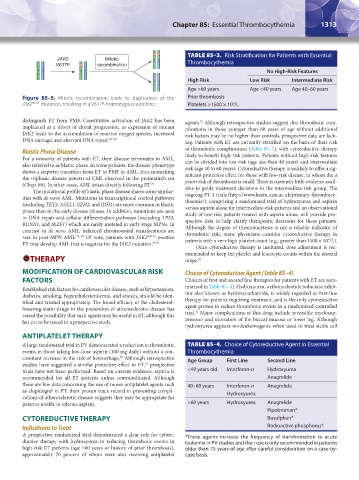
                                                                         TABLE 85–3.  Risk Stratification for Patients with Essential
                             JAK2            Mitotic
                             V617F         recombination                 Thrombocythemia
                                                                                                    No High-Risk Features
                                                                         High Risk            Low Risk      Intermediate Risk
                                                                         Age >60 years        Age <40 years  Age 40–60 years
                  Figure  85–5.  Mitotic recombination leads to duplication of the   Prior thrombosis
                  JAK2 V617F  mutation, resulting in a V617F-homozygous subclone.  Platelets >1500 × 10 /L
                                                                                        9

                  distinguish ET from PMF. Constitutive activation of JAK2 has been   agents.  Although retrospective studies suggest that thrombotic com-
                                                                             31
                  implicated as a driver of clonal progression, as expression of mutant   plications in those younger than 60 years of age without additional
                  JAK2 leads to the accumulation of reactive oxygen species, increased   risk factors may be no higher than controls, prospective data are lack-
                  DNA damage, and aberrant DNA repair. 67–70            ing. Patients with ET are currently stratified on the basis of their risk
                                                                        of thrombotic complications (Table 85–3), with cytoreductive therapy
                  Blastic Phase Disease                                 likely to benefit high-risk patients. Patients without high-risk features
                  For a minority of patients with ET, their disease terminates in AML,   can be divided into low risk (age less than 40 years) and intermediate
                  also referred to as blastic phase. In some patients, the disease phenotype   risk (age 40 to 60 years). Cytoreductive therapy is unlikely to offer a sig-
                  shows a stepwise transition from ET to PMF to AML, thus mimicking   nificant protective effect for those with low-risk disease, in whom the a
                  the triphasic disease pattern of CML observed in the preimatinib era   priori risk of thrombosis is small. There is currently little evidence avail-
                  (Chap. 89). In other cases, AML arises directly following ET. 71  able to guide treatment decisions in the intermediate-risk group. The
                     The mutational profile of blastic phase disease shares some similar-  ongoing PT-1 trials (http://www.haem.cam.ac.uk/primary-thrombocy-
                  ities with de novo AML. Mutations in transcriptional control pathways   thaemia/), comprising a randomized trial of hydroxyurea and aspirin
                  (including TET2, ASXL1, EZH2, and IDH1) are more common in blastic   versus aspirin alone for intermediate-risk patients and an observational
                  phase than in the early disease phases. In addition, mutations are seen   study of low-risk patients treated with aspirin alone, will provide pro-
                  in DNA repair and cellular differentiation pathways (including TP53,   spective  data to help  clarify therapeutic  decisions for  these patients.
                  RUNX1, and IKZF1) which are rarely mutated in early stage MPNs. In   Although the degree of thrombocytosis is not a reliable indicator of
                  contrast to  de novo AML, balanced chromosomal translocations are   thrombotic  risk, many  physicians  consider  cytoreductive  therapy  in
                  rare in post-MPN AML. 72–74  Of note, patients with JAK2 V617F -positive   patients with a very high platelet count (e.g., greater than 1500 × 10 /L).
                                                                                                                        9
                  ET may develop AML that is negative for the JAK2 mutation. 49,71
                                                                            Once cytoreductive therapy is instituted, dose adjustment is rec-
                                                                        ommended to keep the platelet and leucocyte counts within the normal
                    THERAPY                                             range. 35
                  MODIFICATION OF CARDIOVASCULAR RISK                   Choice of Cytoreductive Agent (Table 85–4)
                  FACTORS                                               Choices of first and second line therapies for patients with ET are sum-
                  Established risk factors for cardiovascular disease, such as hypertension,   marized in Table 85–4). Hydroxyurea, a ribonucleotide reductase inhib-
                  diabetes, smoking, hypercholesterolemia, and obesity, should be iden-  itor also known as hydroxycarbamide, is widely regarded as first-line
                  tified and treated appropriately. The broad efficacy of the cholesterol-   therapy for patients requiring treatment, and is the only cytoreductive
                  lowering statin drugs in the prevention of atherosclerotic disease has   agent proven to reduce thrombotic events in a randomized controlled
                                                                            31
                  raised the possibility that such agents may be useful in ET, although this   trial.  Major complications of this drug include reversible myelosup-
                  has yet to be tested in a prospective study.          pression and ulceration of the buccal mucosa or lower leg. Although
                                                                        hydroxyurea appears nonleukemogenic when used to treat sickle cell
                  ANTIPLATELET THERAPY
                  A large randomized trial in PV demonstrated a reduction in thrombotic   TABLE 85–4.  Choice of Cytoreductive Agent in Essential
                  events in those taking low-dose aspirin (100 mg daily) without a con-  Thrombocythemia
                  comitant increase in the risk of hemorrhage.  Although retrospective   Age Group  First Line  Second Line
                                                  75
                  studies have suggested a similar protective effect in ET,  prospective
                                                           32
                  trials have not been performed. Based on current evidence, aspirin is   <40 years old  Interferon-α  Hydroxyurea
                  recommended for all ET patients unless contraindicated. Although                  Anagrelide
                  there are few data concerning the use of newer antiplatelet agents such   40–60 years  Interferon-α  Anagrelide
                  as clopidogrel in ET, their proven track record in preventing compli-  Hydroxyurea
                  cations of atherosclerotic disease suggests they may be appropriate for
                  patients unable to tolerate aspirin.                   >60 years    Hydroxyurea   Anagrelide
                                                                                                    Pipobroman*
                  CYTOREDUCTIVE THERAPY                                                             Busulphan*
                  Indications to Treat                                                              Radioactive phosphorus*
                  A prospective randomized trial demonstrated a clear role for cytore-  *These agents increase the frequency of transformation to acute
                  ductive therapy with hydroxyurea in reducing thrombotic events in     leukemia in PV studies and their use is only recommended in patients
                  high-risk ET patients (age >60 years or history of prior thrombosis),   older than 75 years of age after careful consideration on a case-by-
                  approximately 70 percent of whom were also receiving antiplatelet   case basis.


          Kaushansky_chapter 85_p1307-1318.indd   1313                                                                  9/21/15   11:09 AM

