


Page 1615 - Williams Hematology ( PDFDrive )
P. 1615
1590           Part XI:  Malignant Lymphoid Diseases                                                                                                                              Chapter 96:  Pathology of Lymphomas            1591


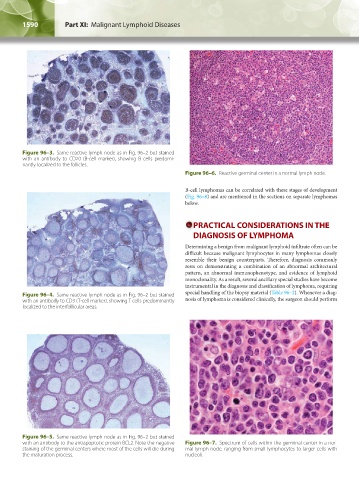
               Figure 96–3.  Same reactive lymph node as in Fig. 96–2 but stained
               with an antibody to CD20 (B-cell marker), showing B cells predomi-
               nantly localized to the follicles.
                                                                      Figure 96–6.  Reactive germinal center in a normal lymph node.

                                                                      B-cell lymphomas can be correlated with these stages of development
                                                                      (Fig. 96–8) and are mentioned in the sections on separate lymphomas
                                                                      below.


                                                                           PRACTICAL CONSIDERATIONS IN THE
                                                                         DIAGNOSIS OF LYMPHOMA

                                                                      Determining a benign from malignant lymphoid infiltrate often can be
                                                                      difficult because malignant lymphocytes in many lymphomas closely
                                                                      resemble their benign counterparts. Therefore, diagnosis commonly
                                                                      rests on demonstrating a combination of an abnormal architectural
                                                                      pattern, an abnormal immunophenotype, and evidence of lymphoid
                                                                      monoclonality. As a result, several ancillary special studies have become
                                                                      instrumental in the diagnosis and classification of lymphoma, requiring
               Figure 96–4.  Same reactive lymph node as in Fig. 96–2 but stained   special handling of the biopsy material (Table 96–2). Whenever a diag-
               with an antibody to CD3 (T-cell marker), showing T cells predominantly   nosis of lymphoma is considered clinically, the surgeon should perform
               localized to the interfollicular areas.


               Figure 96–5.  Same reactive lymph node as in Fig. 96–2 but stained
               with an antibody to the antiapoptotic protein BCL2. Note the negative   Figure 96–7.  Spectrum of cells within the germinal center in a nor-
               staining of the germinal centers where most of the cells will die during   mal lymph node, ranging from small lymphocytes to larger cells with
               the maturation process.                                nucleoli.


          Kaushansky_chapter 96_p1587-1602.indd   1590                                                                  9/18/15   6:06 PM

