


Page 549 - Williams Hematology ( PDFDrive )
P. 549
524            Part VI:  The Erythrocyte                                                                                                                           Chapter 35:  Aplastic Anemia: Acquired and Inherited            525


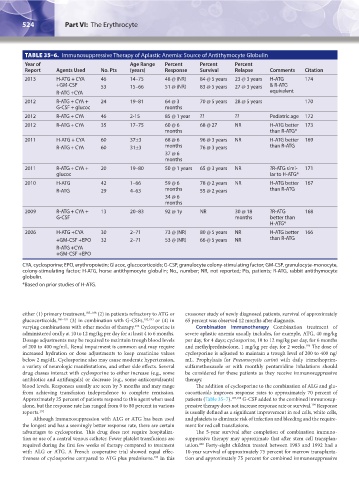
                TABLE 35–6.  Immunosuppressive Therapy of Aplastic Anemia: Source of Antithymocyte Globulin
                Year of                            Age Range   Percent     Percent     Percent
                Report     Agents Used    No. Pts  (years)     Response    Survival    Relapse    Comments    Citation
                2013       H-ATG + CYA    46       14–75       48 @ (NR)   84 @ 5 years  23 @ 3 years  H-ATG   174
                           +GM-CSF        53       15–66       51 @ (NR)   83 @ 5 years  27 @ 3 years  & R-ATG
                           R-ATG +CYA                                                             equivalent
                2012       R-ATG + CYA +   24      19–81       64 @ 3      70 @ 5 years  28 @ 5 years         170
                           G-CSF + glucoc                      months
                2012       R-ATG + CYA    46       2-15        85 @ 1 year  ??         ??         Pediatric age  172
                2012       R-ATG + CYA    35       17–75       60 @ 6      68 @ 27     NR         H-ATG better  173
                                                               months                             than R-ATG*
                2011       H-ATG + CYA    60       37±3        68 @ 6      96 @ 3 years  NR       H-ATG better  169
                           R-ATG + CYA    60       31±3        months      76 @ 3 years           than R-ATG
                                                               37 @ 6
                                                               months
                2011       R-ATG + CYA +   20      19–80       50 @ 1 years  65 @ 3 years  NR     ?R-ATG simi-  171
                           glucoc                                                                 lar to H-ATG*
                2010       H-ATG          42        1–66       59 @ 6      78 @ 2 years  NR       H-ATG better  167
                           R-ATG          29        4–63       months      55 @ 2 years           than R-ATG
                                                               34 @ 6
                                                               months
                2009       R-ATG + CYA +   13       20–83      92 @ 1y     NR          30 @ 18    ?R-ATG      168
                           G-CSF                                                       months     better than
                                                                                                  H-ATG*
                2006       H-ATG +CYA     30        2–71       73 @ (NR)   80 @ 5 years  NR       H-ATG better  166
                           +GM-CSF +EPO   32        2–71       53 @ (NR)   66 @ 5 years  NR       than R-ATG
                           R-ATG +CYA
                           +GM-CSF +EPO
               CYA, cyclosporine; EPO, erythropoietin; Glucoc, glucocorticoids; G-CSF, granulocyte colony-stimulating factor; GM-CSF, granulocyte-monocyte,
               colony-stimulating factor; H-ATG, horse antithymocyte globulin; No., number; NR, not reported; Pts, patients; R-ATG, rabbit antithymocyte
               globulin.
               *Based on prior studies of H-ATG.


               either (1) primary treatment, 185–188  (2) in patients refractory to ATG or   crossover study of newly diagnosed patients, survival of approximately
               glucocorticoids, 186–191  (3) in combination with G-CSFs, 192,193  or (4) in   65 percent was observed 12 months after diagnosis.
               varying combinations with other modes of therapy.  Cyclosporine is   Combination Immunotherapy  Combination  treatment  of
                                                     194
               administered orally at 10 to 12 mg/kg per day for at least 4 to 6 months.   severe aplastic anemia usually includes, for example, ATG, 40 mg/kg
               Dosage adjustments may be required to maintain trough blood levels   per day, for 4 days; cyclosporine, 10 to 12 mg/kg per day, for 6 months
               of 200 to 400 ng/mL. Renal impairment is common and may require   and methylprednisolone, 1 mg/kg per day, for 2 weeks.  The dose of
                                                                                                              196
               increased hydration or dose adjustments to keep creatinine values   cyclosporine is adjusted to maintain a trough level of 200 to 400 ng/
               below 2 mg/dL. Cyclosporine also may cause moderate hypertension,   mL. Prophylaxis for  Pneumocystis carinii with daily trimethoprim-
               a variety of neurologic manifestations, and other side effects. Several   sulfamethoxazole or with monthly pentamidine inhalations should
               drug classes interact with cyclosporine to either increase (e.g., some   be considered for these patients as they receive immunosuppressive
               antibiotics and antifungals) or decrease (e.g., some anticonvulsants)   therapy.
               blood levels. Responses usually are seen by 3 months and may range   The addition of cyclosporine to the combination of ALG and glu-
               from  achieving  transfusion  independence  to  complete  remission.   cocorticoids improves response rates to approximately 70 percent of
               Approximately 25 percent of patients respond to this agent when used   patients (Table 35–7). 197,198  G-CSF added to the combined immunosup-
               alone, but the response rate has ranged from 0 to 80 percent in various   pressive therapy does not increase response rate or survival.  Response
                                                                                                                199
               reports. 194                                           is usually defined as a significant improvement in red cells, white cells,
                   Although immunosuppression with ALG or ATG has been used   and platelets to eliminate risk of infection and bleeding and the require-
               the longest and has a seemingly better response rate, there are certain   ment for red cell transfusions.
               advantages to cyclosporine. This drug does not require hospitaliza-  The 5-year survival after completion of combination immuno-
               tion or use of a central venous catheter. Fewer platelet transfusions are   suppressive therapy may approximate that after stem cell transplan-
               required during the first few weeks of therapy compared to treatment   tation.   Forty-eight  children  treated  between  1983  and  1992  had  a
                                                                           200
               with ALG or ATG. A  French cooperative trial showed equal effec-  10-year survival of approximately 75 percent for marrow transplanta-
               tiveness of cyclosporine compared to ATG plus prednisone.  In this   tion and approximately 75 percent for combined immunosuppressive
                                                           195


          Kaushansky_chapter 35_p0513-0538.indd   524                                                                   9/19/15   12:24 AM

