


Page 1120 - Clinical Immunology_ Principles and Practice ( PDFDrive )
P. 1120
1084         Part eight  Immunology of Neoplasia


            KeY CONCePtS                                       Management
         Multiple Myeloma                                      Patients who have end-organ damage attributable to the underly-

          •  A cancer of plasma cells.                         ing plasma cell disorder have MM and require therapy. The
          •  Organ damage due to plasma cell proliferation and M-protein   following findings, if attributable to the underlying plasma
           overproduction.                                     cell  disorder,  are  clear  indications  for  treatment:  anemia,
          •  Pathophysiology of multiple myeloma consists mainly of CRAB:   hypercalcemia, renal insufficiency, lytic bone lesions or severe
           hyperCalcemia, Renal, Anemia, and Bone.             osteopenia,  and extramedullary  plasmacytoma  (excluding
          •  History and physical examination, laboratory tests, bone marrow testing,   SEP).   Asymptomatic patients who have one of the follow-
                                                                    9
           and imaging all play key roles in the diagnosis and management of
           myeloma.                                            ing biomarkers are also considered to have MM that requires
          •  Prognosis and treatment vary depending on risk stratification.  therapy: ≥60% clonal plasma cells in the bone marrow, involved/
                                                               uninvolved FRL ratio of ≥100, more than one focal bone lesion
                                                               on MRI. 9
                                                                  High-dose chemotherapy with autologous hematopoietic
                                                               stem cell transplantation (HSCT) is the preferred therapy
                                                               for patients with standard- or intermediate-risk myeloma.
                                                               Patients eligible for HSCT receive induction therapy for 2–4
                                                               months prior to stem cell collection to reduce the number
                                                               of tumor cells in the bone marrow and peripheral blood, to
                                                                                                             9
                                                               lessen symptoms, and to mitigate end-organ damage.  The
                                                               preferred induction chemotherapy regimen depends on the risk
                                                               stratification.
                                                                  Patients ineligible for HSCT receive induction lenalidomide
                                                               plus dexamethasone. In contrast, those receiving alkylator- or
                                                               bortezomib-based regimen are treated for approximately 12 to
                                                                                                      9
                                                               18 months and then observed until progression.  Patients with
                                                               high-risk MM do poorly with all conventional treatment options.
                                                               All patients should be evaluated before each treatment cycle to
                                                               determine the degree of disease response.
                                                                  Patients with one or more lesions on skeletal radiographs
                                                               and those with osteopenia should be given bisphosphonate
                                                               therapy. Pneumococcal and influenza vaccines should also be
                                                               given to all patients. Patients with MM frequently develop
                                                               complications related to their disease, including hypercalcemia,
                                                               renal insufficiency, infection, and skeletal lesions, which require
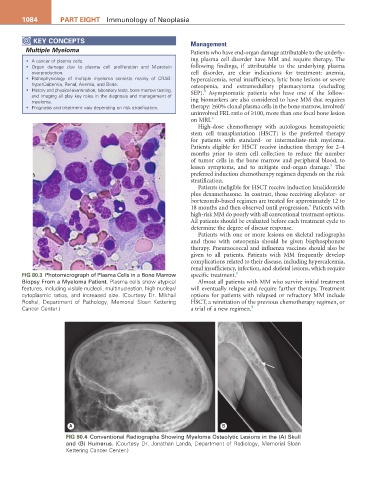
        Fig 80.3  Photomicrograph of Plasma Cells in a Bone Marrow   specific treatment. 9
        Biopsy From a Myeloma Patient. Plasma cells show atypical   Almost all patients with MM who survive initial treatment
        features, including visible nucleoli, multinucleation, high nuclear/  will eventually relapse and require further therapy. Treatment
        cytoplasmic ratios, and increased size. (Courtesy Dr. Mikhail   options for patients with relapsed or refractory MM include
        Roshal, Department of Pathology, Memorial Sloan Kettering   HSCT, a reinitiation of the previous chemotherapy regimen, or
        Cancer Center.)                                        a trial of a new regimen. 9


                        A                                                 B
                       Fig 80.4  Conventional Radiographs Showing Myeloma Osteolytic Lesions in the (A) Skull
                       and (B) Humerus. (Courtesy Dr. Jonathan Landa, Department of Radiology, Memorial Sloan
                       Kettering Cancer Center.)

