


Page 1121 - Clinical Immunology_ Principles and Practice ( PDFDrive )
P. 1121
ChaPter 80  Monoclonal Gammopathies                 1085


                  A                                            B


                  C
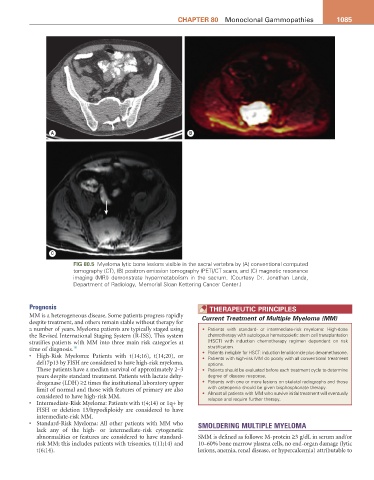
                         Fig 80.5  Myeloma lytic bone lesions visible in the sacral vertebra by (A) conventional computed
                         tomography (CT), (B) positron emission tomography (PET)/CT scans, and (C) magnetic resonance
                         imaging  (MRI)  demonstrate  hypermetabolism  in  the  sacrum.  (Courtesy  Dr.  Jonathan  Landa,
                         Department of Radiology, Memorial Sloan Kettering Cancer Center.)


           Prognosis                                                  theraPeUtiC PriNCiPLeS
           MM is a heterogeneous disease. Some patients progress rapidly   Current Treatment of Multiple Myeloma (MM)
           despite treatment, and others remain stable without therapy for
           a number of years. Myeloma patients are typically staged using   •  Patients with standard- or intermediate-risk myeloma: High-dose
           the Revised International Staging System (R-ISS). This system   chemotherapy with autologous hematopoietic stem cell transplantation
           stratifies patients with MM into three main risk categories at   (HSCT) with induction chemotherapy regimen dependent on risk
           time of diagnosis. 10                                     stratification.
           •  High-Risk  Myeloma:  Patients  with  t(14;16),  t(14;20),  or   •  Patients ineligible for HSCT: induction lenalidomide plus dexamethasone.
                                                                   •  Patients with high-risk MM do poorly with all conventional treatment
             del17p13 by FISH are considered to have high-risk myeloma.   options.
             These patients have a median survival of approximately 2–3   •  Patients should be evaluated before each treatment cycle to determine
             years despite standard treatment. Patients with lactate dehy-  degree of disease response.
             drogenase (LDH) ≥2 times the institutional laboratory upper   •  Patients with one or more lesions on skeletal radiographs and those
             limit of normal and those with features of primary are also   with osteopenia should be given bisphosphonate therapy.
             considered to have high-risk MM.                      •  Almost all patients with MM who survive initial treatment will eventually
                                                                     relapse and require further therapy.
           •  Intermediate-Risk Myeloma: Patients with t(4;14) or 1q+ by
             FISH or deletion 13/hypodiploidy are considered to have
             intermediate-risk MM.
           •  Standard-Risk Myeloma: All other patients with MM who   SMOLDERING MULTIPLE MYELOMA
             lack any of the high- or intermediate-risk cytogenetic
             abnormalities or features are considered to have standard-  SMM is defined as follows: M-protein ≥3 g/dL in serum and/or
             risk MM; this includes patients with trisomies, t(11;14) and     10–60% bone marrow plasma cells, no end-organ damage (lytic
             t(6;14).                                             lesions, anemia, renal disease, or hypercalcemia) attributable to

