


Page 1287 - Clinical Immunology_ Principles and Practice ( PDFDrive )
P. 1287
CHaPtEr 92  Flow Cytometry             1249


              600                               1000                               10 4
                        G1
                                                 800                               10 3
              400
                                                 600                                                    Late
            # Cells                           SSC                      Live     PI  10 2              Early

              200                                400
                         S   G2-M                                                   1
                                                 200                               10
                                                                                                          Live
                                                               Dead
                0                                 0                                10 0
                 0   200  400  600  800  1000       0   200  400  600  800  1000     10 0  10 1  10 2  10 3  10 4
           A              DNA content          B               FSC              C              Dioc6 (3)
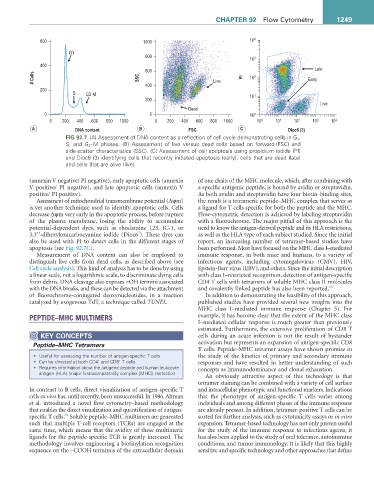
                       FIG 92.7  (A) Assessment of DNA content as a reflection of cell cycle demonstrating cells in G 1 ,
                       S, and G 2 –M phases. (B)  Assessment of live  versus dead cells  based on forward-(FSC) and
                       side-scatter characteristics (SSC). (C) Assessment of cell apoptosis using propidium iodide (PI)
                       and Dioc6 (3) identifying cells that recently initiated apoptosis (early), cells that are dead (late)
                       and cells that are alive (live).

           (annexin V negative/ PI negative), early apoptotic cells (annexin   of one chain of the MHC molecule, which, after combining with
           V positive/ PI negative), and late apoptotic cells  (annexin V   a specific antigenic peptide, is bound by avidin or streptavidin.
           positive/ PI positive).                                As both avidin and streptavidin have four biotin-binding sites,
             Assessment of mitochondrial transmembrane potential (Δψm)   the result is a tetrameric peptide–MHC complex that serves as
           is yet another technique used to identify apoptotic cells. Cells   a ligand for T cells specific for both the peptide and the MHC.
           decrease Δψm very early in the apoptotic process, before rupture   Flow-cytometric detection is achieved by labeling streptavidin
           of the plasma membrane, losing the ability to accumulate   with a fluorochrome. The major pitfall of this approach is the
           potential-dependent  dyes,  such  as  rhodamine  123,  JC-1,  or   need to know the antigen-derived peptide and its HLA restrictions,
                                              3
           3,3’ ’-dihexyloxacarbocyanine iodide (Dioc6 ). These dyes can   as well as the HLA type of each subject studied. Since the initial
           also be used with  PI to detect cells in the  different  stages of   report, an increasing number of tetramer-based studies have
           apoptosis (see Fig. 92.7C).                            been performed. Most have focused on the MHC class I–mediated
             Measurement of DNA content can also be employed to   immune response, in both mice and humans, to a variety of
           distinguish live cells from dead cells, as described above (see   infectious agents, including cytomegalovirus (CMV), HIV,
           Cell cycle analysis). This kind of analysis has to be done by using   Epstein-Barr virus (EBV), and others. Since the initial description
           a linear scale, not a logarithmic scale, to discriminate dying cells   with class I–restricted recognition, detection of antigen-specific
           from debris. DNA cleavage also exposes −OH termini associated   CD4 T cells with tetramers of soluble MHC class II molecules
           with the DNA breaks, and these can be detected via the attachment   and covalently linked peptide has also been reported. 55
           of fluorochrome-conjugated deoxynucleotides, in a reaction   In addition to demonstrating the feasibility of this approach,
           catalyzed by exogenous TdT, a technique called TUNEL.  published studies have provided several new insights into the
                                                                  MHC class I–mediated immune response (Chapter 5). For
           PEPTIDE–MHC MULTIMERS                                  example, it has become clear that the extent of the MHC class
                                                                  I–mediated cellular response is much greater than previously
                                                                  estimated. Furthermore, the extensive proliferation of CD8 T
               KEY COnCEPtS                                       cells during an acute infection is not the result of bystander
            Peptide–MHC Tetramers                                 activation but represents an expansion of antigen-specific CD8
                                                                  T cells. Peptide–MHC tetramer assays have shown promise in
            •  Useful for assessing the number of antigen-specific T cells  the study of the kinetics of primary and secondary immune
                                 +
                                        +
            •  Can be directed at both CD4  and CD8  T cells      responses and have resulted in better understanding of such
            •  Requires information about the antigenic peptide and human leukocyte   concepts as immunodominance and clonal exhaustion.
              antigen (HLA) (major histocompatibility complex [MHC]) restriction
                                                                    An obviously attractive aspect of this technology is that
                                                                  tetramer staining can be combined with a variety of cell surface
           In contrast to B cells, direct visualization of antigen-specific T   and intracellular phenotypic and functional markers. Indications
           cells ex vivo has, until recently, been unsuccessful. In 1996, Altman   that the phenotype of antigen-specific T cells varies among
           et al. introduced a novel flow cytometry–based methodology   individuals and among different phases of the immune response
           that enables the direct visualization and quantification of antigen-  are already present. In addition, tetramer-positive T cells can be
                      54
           specific T cells.  Soluble peptide–MHC multimers are generated   sorted for further analysis, such as cytotoxicity assays or in vitro
           such that multiple T-cell receptors (TCRs) are engaged at the   expansion. Tetramer-based technology has not only proven useful
           same time, which means that the avidity of these multimeric   for the study of the immune response to infectious agents, it
           ligands for the peptide-specific TCR is greatly increased. The   has also been applied to the study of oral tolerance, autoimmune
           methodology involves engineering a biotinylation recognition   conditions, and tumor immunology. It is likely that this highly
           sequence on the −COOH terminus of the extracellular domain   sensitive and specific technology and other approaches that define

