


Page 1292 - Clinical Immunology_ Principles and Practice ( PDFDrive )
P. 1292
1254         Part eleven  Diagnostic Immunology


                                                                     Antigen-presenting cell
                                                                            (APC)


                                                          MHC                                   CD80/86

                                       CD4/CD8
                                                            TCR                                       CD28
                cSMAC
            T cell     APC
                                                     γ ε  ε  δ  Fyn
           TCR/CD3     MHC                          P        P                    P
            CD28     CD80/86                  Lck     P    P
            CD27      CD70                  P         P  ζζ  P          LAT           IP 3       PI3K
            OX40      OX40L                              ZAP-70       P
            4-1BB     4-1BBL                                                  PLC-γ     P                 P
                                                         P   P
                                                                             P    P
                                                                      P                Itk     Ca2 + flux
                pSMAC                                                                          Gene transcription
                                                                                               T-cell activation
            T cell     APC
            LFA-1     ICAM-1


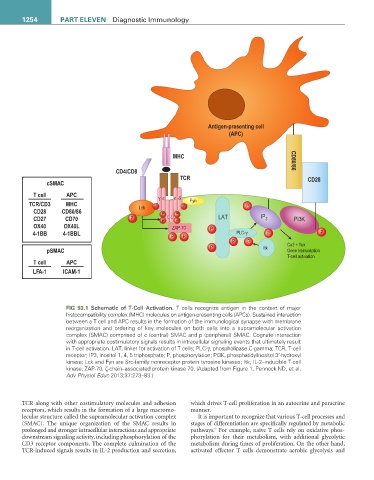
                       FIG 93.1  Schematic of T-Cell Activation. T cells recognize antigen in the context of major
                       histocompatibility complex (MHC) molecules on antigen-presenting cells (APCs). Sustained interaction
                       between a T cell and APC results in the formation of the immunological synapse with membrane
                       reorganization and ordering of key molecules on both cells into a supramolecular activation
                       complex (SMAC) comprised of c (central) SMAC and p (peripheral) SMAC. Cognate interaction
                       with appropriate costimulatory signals results in intracellular signaling events that ultimately result
                       in T-cell activation. LAT, linker for activation of T cells; PLC-γ, phospholipase C-gamma; TCR, T-cell
                       receptor; IP3, inositol 1, 4, 5 triphosphate; P, phosphorylation; PI3K, phosphatidylinositol 3′-hydroxyl
                       kinase; Lck and Fyn are Src-family nonreceptor protein tyrosine kinases; Itk, IL-2–inducible T-cell
                       kinase; ZAP-70, ζ-chain–associated protein kinase 70. (Adapted from Figure 1, Pennock ND, et al.
                       Adv Physiol Educ 2013;37:273–83.)


        TCR along with other costimulatory molecules and adhesion   which drives T-cell proliferation in an autocrine and paracrine
        receptors, which results in the formation of a large macromo-  manner.
        lecular structure called the supramolecular activation complex   It is important to recognize that various T-cell processes and
        (SMAC). The unique organization of the SMAC results in   stages of differentiation are specifically regulated by metabolic
                                                                       6
        prolonged and stronger intracellular interactions and appropriate   pathways.  For example, naïve T cells rely on oxidative phos-
        downstream signaling activity, including phosphorylation of the   phorylation for their metabolism, with additional glycolytic
        CD3 receptor components. The complete culmination of the   metabolism during times of proliferation. On the other hand,
        TCR-induced signals results in IL-2 production and secretion,   activated effector T cells demonstrate aerobic glycolysis and

