


Page 1294 - Clinical Immunology_ Principles and Practice ( PDFDrive )
P. 1294
1256         Part eleven  Diagnostic Immunology


           10 3                                                    KeY COnCePtS
                                          Annexin V+7-AAD+
                                                                 T-Cell Activation and Function
                                                                 •  Cognate recognition of peptide major histocompatibility complex (MHC)
           10 2                                                    complex on the APC by the T-cell receptor results in formation of the
                                                                   immunological synapse.
                                                                 •  Activated T cells express early activation markers, such as CD69 and
                                                                   CD40L. Other T-cell activation markers include CD25 and MHC class
           10 1                                                    II (human leukocyte antigen–D related [HLA-DR]).
                                                                 •  T cells can be stimulated to proliferate using nonspecific stimulants
                                                                   such as plant lectins (mitogens) and cross-linking of the CD3 coreceptor,
                                                                   along with other costimulatory molecules (e.g., anti-CD28) or in the
             2                                                     presence of exogenous interleukin-2 (IL-2).
                                                                 •  The magnitude of antigen-specific T-cell proliferation is dependent on
                                                                   the starting frequency of antigen-specific T cells.
             0                                                   •  Flow cytometry–based assays of T-cell proliferation offer the advantages
                                                                   of high resolution, accounting for cellular dilution due to T-cell lym-
            –2                                                     phopenia and single-cell analysis.
                Viable cells                  Annexin V+

                    0    10 0      10 1      10 2    10 3
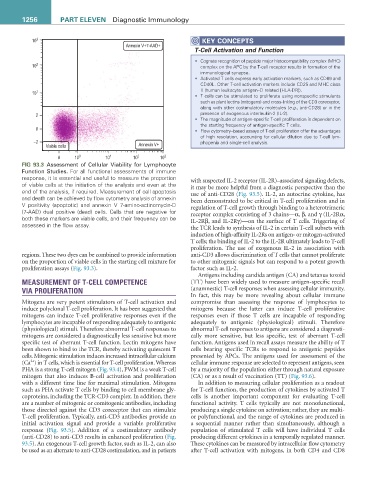
        FIG  93.3  Assessment  of  Cellular  Viability  for  Lymphocyte
        Function Studies. For all functional assessments of immune
        response, it is essential and useful to measure the proportion   with suspected IL-2 receptor (IL-2R)–associated signaling defects,
        of viable cells at the initiation of the analysis and even at the   it may be more helpful from a diagnostic perspective than the
        end of the analysis, if required. Measurement of cell apoptosis   use of anti-CD28 (Fig. 93.5). IL-2, an autocrine cytokine, has
        and death can be achieved by flow cytometry analysis of annexin   been demonstrated to be critical in T-cell proliferation and in
        V positivity (apoptotic) and annexin V 7-amino-actinomycin-D   regulation of T-cell growth through binding to a heterotrimeric
        (7-AAD) dual positive (dead) cells. Cells that are negative for   receptor complex consisting of 3 chains—α, β, and γ (IL-2Rα,
        both these markers are viable cells, and their frequency can be   IL-2Rβ, and IL-2Rγ)—on the surface of T cells. Triggering of
        assessed in the flow assay.                            the TCR leads to synthesis of IL-2 in certain T-cell subsets with
                                                               induction of high-affinity IL-2Rs on antigen- or mitogen-activated
                                                               T cells; the binding of IL-2 to the IL-2R ultimately leads to T-cell
                                                               proliferation. The use of exogenous IL-2 in association with
        regions. These two dyes can be combined to provide information   anti-CD3 allows discrimination of T cells that cannot proliferate
        on the proportion of viable cells in the starting cell mixture for   to other mitogenic signals but can respond to a potent growth
        proliferation assays (Fig. 93.3).                      factor such as IL-2.
                                                                  Antigens including candida antigen (CA) and tetanus toxoid
        MEASUREMENT OF T-CELL COMPETENCE                       (TT) have been widely used to measure antigen-specific recall
        VIA PROLIFERATION                                      (anamnestic) T-cell responses when assessing cellular immunity.
                                                               In fact, this may be more revealing about cellular immune
        Mitogens are very potent stimulators of T-cell activation and   compromise than assessing  the response of lymphocytes  to
        induce polyclonal T-cell proliferation. It has been suggested that   mitogens because the latter can induce T-cell proliferative
        mitogens can induce T-cell proliferative responses even if the   responses even if those T cells are incapable of responding
        lymphocytes are incapable of responding adequately to antigenic   adequately to antigenic (physiological) stimuli. Therefore
        (physiological) stimuli. Therefore abnormal T-cell responses to   abnormal T-cell responses to antigens are considered a diagnosti-
        mitogens are considered a diagnostically less sensitive but more   cally more sensitive, but less specific, test of aberrant T-cell
        specific test of aberrant T-cell function. Lectin mitogens have   function. Antigens used in recall assays measure the ability of T
        been shown to bind to the TCR, thereby activating quiescent T   cells bearing specific TCRs to respond to antigenic peptides
        cells. Mitogenic stimulation induces increased intracellular calcium   presented by APCs. The antigens used for assessment of the
           2+
        (Ca ) in T cells, which is essential for T-cell proliferation. Whereas   cellular immune response are selected to represent antigens, seen
        PHA is a strong T-cell mitogen (Fig. 93.4), PWM is a weak T-cell   by a majority of the population either through natural exposure
        mitogen that also induces B-cell activation and proliferation   (CA) or as a result of vaccination (TT) (Fig. 93.6).
        with a different time line for maximal stimulation. Mitogens   In addition to measuring cellular proliferation as a readout
        such as PHA activate T cells by binding to cell membrane gly-  for T-cell function, the production of cytokines by activated T
        coproteins, including the TCR-CD3 complex. In addition, there   cells is another important component for evaluating T-cell
        are a number of mitogenic or comitogenic antibodies, including   functional activity. T cells typically are not monofunctional,
        those directed against the CD3 coreceptor that can stimulate   producing a single cytokine on activation; rather, they are multi-
        T-cell proliferation. Typically, anti-CD3 antibodies provide an   or polyfunctional, and the range of cytokines are produced in
        initial activation signal and provide a variable proliferative   a sequential manner rather than simultaneously, although a
        response (Fig. 93.5).  Addition of a costimulatory antibody   population  of  stimulated  T  cells  will  have  individual  T  cells
        (anti-CD28) to anti-CD3 results in enhanced proliferation (Fig.   producing different cytokines in a temporally regulated manner.
        93.5). An exogenous T-cell growth factor, such as IL-2, can also   These cytokines can be measured by intracellular flow cytometry
        be used as an alternate to anti-CD28 costimulation, and in patients   after T-cell activation with mitogens, in both CD4 and CD8

