


Page 1296 - Clinical Immunology_ Principles and Practice ( PDFDrive )
P. 1296
1258         Part eleven  Diagnostic Immunology


                                       Healthy donor     PHA/CD45             PHA/CD3

                              80
                                                                60
                              60      Proliferating CD45+ lymphs       Proliferating CD3+ T cells
                             Count  40                         Count  40


                                                                20
                              20

                               0                                 0
                                    0    10 0  10 1  10 2  10 3       0   10 0   10 1  10 2  10 3
                                           Fluorescence                     Fluorescence
                                      Patient with T cell lymphopenia
                                            PHA/CD45                          PHA/CD3
                              150

                                                                30
                              100         Proliferating CD45+ lymphs        Proliferating CD3+ T cells
                             Count                             Count  20

                               50
                                                                10


                               0                                 0
                                    0    10 0  10 1  10 2  10 3       0   10 0   10 1  10 2  10 3
                                           Fluorescence                      Fluorescence
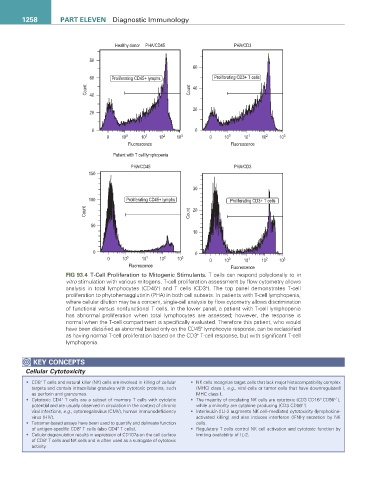
                       FIG 93.4  T-Cell Proliferation to Mitogenic Stimulants. T cells can respond polyclonally to in
                       vitro stimulation with various mitogens. T-cell proliferation assessment by flow cytometry allows
                                                    +
                                                                    +
                       analysis in total lymphocytes (CD45 ) and T cells (CD3 ). The top panel demonstrates T-cell
                       proliferation to phytohemagglutinin (PHA) in both cell subsets. In patients with T-cell lymphopenia,
                       where cellular dilution may be a concern, single-cell analysis by flow cytometry allows discrimination
                       of functional versus nonfunctional T cells. In the lower panel, a patient with T-cell lymphopenia
                       has abnormal proliferation when total lymphocytes are assessed; however, the response is
                       normal when the T-cell compartment is specifically evaluated. Therefore this patient, who would
                                                                   +
                       have been classified as abnormal based only on the CD45  lymphocyte response, can be reclassified
                                                                 +
                       as having normal T-cell proliferation based on the CD3  T-cell response, but with significant T-cell
                       lymphopenia.

            KeY COnCePtS
         Cellular Cytotoxicity
          •  CD8  T cells and natural killer (NK) cells are involved in killing of cellular   •  NK cells recognize target cells that lack major histocompatibility complex
              +
           targets and contain intracellular granules with cytotoxic proteins, such   (MHC) class I, e.g., viral cells or tumor cells that have downregulated
           as perforin and granzymes.                            MHC class I.
                                                                                                              +/−
                     +
                                                                                                          ++
          •  Cytotoxic CD4  T cells are a subset of memory T cells with cytolytic   •  The majority of circulating NK cells are cytotoxic (CD3 CD16 CD56 ),
                                                                                                     −
                                                                                                    ++
                                                                                                −
           potential and are usually observed in circulation in the context of chronic   while a minority are cytokine producing (CD3 CD56 ).
           viral infections, e.g., cytomegalovirus (CMV), human immunodeficiency   •  Interleukin (IL)-2 augments NK cell–mediated cytotoxicity (lymphokine-
           virus (HIV).                                          activated  killing)  and also  induces  interferon  (IFN)-γ secretion by  NK
          •  Tetramer-based assays have been used to quantify and delineate function   cells.
           of antigen-specific CD8  T cells (also CD4  T cells).  •  Regulatory T cells control NK cell activation and cytotoxic function by
                           +
                                       +
          •  Cellular degranulation results in expression of CD107a on the cell surface   limiting availability of IL-2.
                +
           of CD8  T cells and NK cells and is often used as a surrogate of cytotoxic
           activity.

