


Page 1298 - Clinical Immunology_ Principles and Practice ( PDFDrive )
P. 1298
1260         Part eleven  Diagnostic Immunology


                                        &DQGLGD  &$  &'                     &DQGLGD  &$  &'


                                       3UROLIHUDWLQJ &'    O\PSKV         3UROLIHUDWLQJ &'   7 FHOOV

                           &RXQW                               &RXQW


                                          )OXRUHVFHQFH                        )OXRUHVFHQFH

                                      7HWDQXV WR[RLG  77  &'               7HWDQXV WR[RLG  77  &'


                                       3UROLIHUDWLQJ &'    O\PSKV          3UROLIHUDWLQJ &'   7 FHOOV

                           &RXQW                               &RXQW


                                          )OXRUHVFHQFH                        )OXRUHVFHQFH
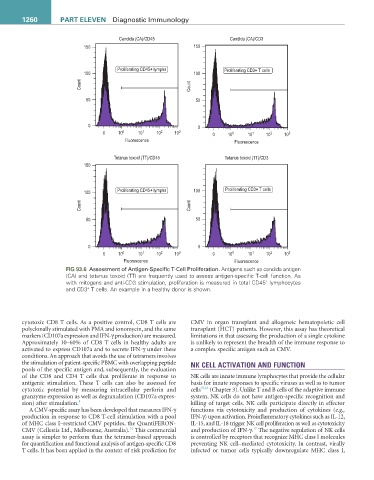
                       FIG 93.6  Assessment of Antigen-Specific T-Cell Proliferation. Antigens such as candida antigen
                       (CA) and tetanus toxoid (TT) are frequently used to assess antigen-specific T-cell function. As
                                                                                        +
                       with mitogens and anti-CD3 stimulation, proliferation is measured in total CD45  lymphocytes
                              +
                       and CD3  T cells. An example in a healthy donor is shown.


        cytotoxic CD8 T cells. As a positive control, CD8 T cells are   CMV in organ transplant and allogeneic hematopoietic cell
        polyclonally stimulated with PMA and ionomycin, and the same   transplant (HCT) patients. However, this assay has theoretical
        markers (CD107a expression and IFN-γ production) are measured.   limitations in that assessing the production of a single cytokine
        Approximately 10–60% of CD8 T cells in healthy adults are   is unlikely to represent the breadth of the immune response to
        activated to express CD107a and to secrete IFN-γ under these   a complex specific antigen such as CMV.
        conditions. An approach that avoids the use of tetramers involves
        the stimulation of patient-specific PBMC with overlapping peptide   NK CELL ACTIVATION AND FUNCTION
        pools of the specific antigen and, subsequently, the evaluation
        of  the  CD8  and  CD4  T  cells  that  proliferate  in  response  to   NK cells are innate immune lymphocytes that provide the cellular
        antigenic stimulation. These T cells can also be assessed for   basis for innate responses to specific viruses as well as to tumor
        cytotoxic potential by measuring intracellular perforin and   cells 15,16  (Chapter 3). Unlike T and B cells of the adaptive immune
        granzyme expression as well as degranulation (CD107a expres-  system, NK cells do not have antigen-specific recognition and
        sion) after stimulation. 8                             killing of target cells. NK cells participate directly in effector
           A CMV-specific assay has been developed that measures IFN-γ   functions via cytotoxicity and production of cytokines (e.g.,
        production in response to CD8 T-cell stimulation with a pool   IFN-γ) upon activation. Proinflammatory cytokines such as IL-12,
        of MHC class I–restricted CMV peptides, the QuantiFERON-  IL-15, and IL-18 trigger NK cell proliferation as well as cytotoxicity
                                           14
                                                                                    17
        CMV (Cellestis Ltd., Melbourne, Australia).  This commercial   and production of IFN-γ.  The negative regulation of NK cells
        assay is simpler to perform than the tetramer-based approach   is controlled by receptors that recognize MHC class I molecules
        for quantification and functional analysis of antigen-specific CD8   preventing NK cell–mediated cytotoxicity. In contrast, virally
        T cells. It has been applied in the context of risk prediction for   infected or tumor cells typically downregulate MHC class I,

