


Page 263 - Clinical Immunology_ Principles and Practice ( PDFDrive )
P. 263
244          PArT TwO  Host Defense Mechanisms and Inflammation


        ACTION OF INHIBITORY RECEPTORS                         loss of receptor expression deprives the cell of survival signals,
                                                               resulting in AICD. Similarly, loss of IL-7 or IL-7 receptor results
        T cells express several Ig family transmembrane proteins contain-  in increased apoptosis among naive and memory T-cell popula-
                                                                    36
        ing immune tyrosine inhibitory motifs (ITIMs). Two of these,   tions.  As discussed in Chapter 13, cell death by growth factor
        CTLA4 and PD-1, play important roles in terminating T-cell   withdrawal results from activation of the mitochondrial pathway
        responses in vivo. The first, CTLA4, is expressed by T cells fol-  of apoptosis.
        lowing activation and regulates T-cell activity in two ways: first,   Cytokines can suppress T-cell responses. This function of
        CTLA4 binds to B7 with high affinity and competes with CD28   cytokines is exemplified by IL-10, IL-27, TGF-β, and TNF-α.
        costimulation. Second, CTLA4 inhibits proximal TCR signaling   IL-10 is produced by adaptive Tregs and Tr1 cells, as well as B
        by recruiting the phosphatases SHP-2 and PP2A. Mice deficient   cells, monocytes, and macrophages. IL-10 suppresses inflammation
        in CTLA4 develop a severe CD28-dependent lymphoproliferative   by inhibiting macrophage activation, downregulating chemokine
                                          34
        disease, tissue infiltration, and early death.  PD-1 interacts with   production, and suppressing costimulatory molecule expression
        two ligands, PD-L1 and PD-L2, which are differentially expressed   by  APCs. IL-10–deficient mice develop inflammatory bowel
        in immune and peripheral tissues. PD-1 engagement limits   disease caused by dysregulated Th1 responses. Mice genetically
        proximal TCR signals by recruiting SHP-2, thereby suppressing   deficient for the IL-27 receptor develop exaggerated CD4 T-cell
        activation, cytokine production, and proliferation. Loss of PD-1   responses and inflammatory diseases. These effects of IL-27 can
        has been associated with autoimmune cardiomyopathy, arthritis,   be attributed to its role in suppressing Th1 responses and CD4
                                                                              37
        and a lupus-like glomerulonephritis disease. 35        T cell proliferation.  TGF-β 1  is another antiinflammatory cytokine
                                                               that is produced by subsets of Tregs and a variety of other cell
        CYTOKINE-MEDIATED INHIBITION                           types throughout the body. Unlike IL-10, which targets APCs,
                                                               TGF-β 1  directly inhibits T-cell proliferation and Th1 differentia-
                                                                   38
        Cytokines function to terminate immune responses in three basic   tion.  Mice deficient in TGF-β 1  have multitissue infiltration by
        methods:  (i) by loss or withdrawal of growth factors,  (ii) by   activated lymphocytes and macrophages. TNF-α is well character-
        inducing cell death, and (iii) by direct antiinflammatory properties   ized as possessing proapoptotic function. TNFR1 possesses a
        (Chapter 9). IL-2 functions as a growth factor in early immune   death domain, and binding of TNF-α results in the activation
        responses. Loss of IL-2 signals through decreased production or   of the caspase pathway and apoptosis.


                                     Process                 Targets             Effects
                          Activation                       Costimulatory   Block T-cell and APC
                                                           molecules       activation
                                                           Intracellular   Block proliferation
                                                           signaling
                                                           molecules       Limit cytokine production
                              DC
                                                                           Limit differentiation
                                  Tcell

                          Migration                        Chemokines      Prevent recruitment of
                                                                           T cells and effector cells
                                                                           into tissues
                            Blood                          Integrins       Prevent effector function
                            vessel                                         Prevent extravasation


                          Cytokine production
                                                           Inflammatory    Dampen effector cell
                                T reg                      cytokines       activation and function
                                                                           Enhance effector function
                                        B cell
                                                           Regulatory      Prevent recruitment of T cells
                                T h2   B    B              cytokines       and effector cells into tissues

                                   IL-4
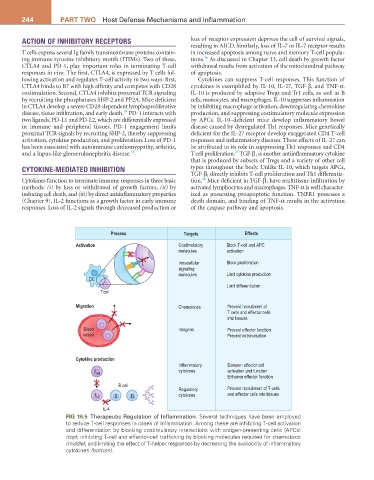
                       FIG 16.5  Therapeutic Regulation of Inflammation. Several techniques have been employed
                       to reduce T-cell responses in cases of inflammation. Among these are inhibiting T-cell activation
                       and differentiation by blocking costimulatory interactions with antigen-presenting cells (APCs)
                       (top); inhibiting T-cell and effector-cell trafficking by blocking molecules required for chemotaxis
                       (middle); and limiting the effect of T-helper responses by decreasing the availability of inflammatory
                       cytokines (bottom).

