


Page 534 - Clinical Immunology_ Principles and Practice ( PDFDrive )
P. 534
CHaPTEr 36  Immunodeficiencies at the Interface of Innate and Adaptive Immunity                 513


                        IFN-γ            IFN-α/β                  other infectious agents. In two other patients with a history of
                                                                  pure MSMD, the same heterozygous mutation, T80A, was found
                                                                                                   23
                                                                  in IRF8, defining an AD IRF8 deficiency.  The mutation was
                                                                  severely hypomorphic and dominant negative. Interestingly, the
                                                                  IFN-γ circuit did not appear to be disrupted in tests on whole
                                                                  blood. Nevertheless, the two unrelated patients with AD IRF8
                                                                                                      23
                                                   cytoplasmic    deficiency lacked circulating CD1c CD11c DCs.  This population
                                                   membrane       of cells produces large amounts of IL-12 in normal individuals,
                                                                  and its absence therefore probably contributed to the MSMD
                                                                  phenotype.
                                                                  AR Complete ISG15 Deficiency
                     STAT-1/STAT-1   STAT-1/STAT-2/IRF-9          Recently, six patients with complete AR ISG15 deficiency have
                       (GAF)             (ISGF-3)  nucleus        been identified (OMIM 616126). 34,35  Three of the six patients
                                                   membrane
                                                                  suffered from clinical disease caused by BCG vaccine. The only
                                                                  features common to all patients were calcifications of the basal
                                                                  ganglia in the brain. The cellular phenotype was characterized
                                                                  by an impaired, but not abolished, IFN-γ production upon whole
                        GAS               ISRE                    blood activation by BCG plus IL-12, as seen in patients with
                 antimycobacterial immunity  antiviral immunity   IL-12p40 or IL-12Rβ1 deficiency. 1,34,35  The addition of recom-
                                                                  binant ISG15 rescued the production of IFN-γ by T and NK
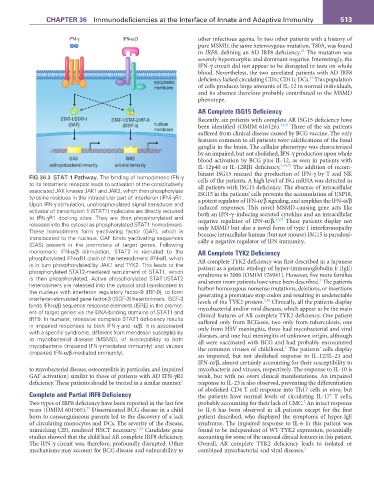
           fIG 36.3  STAT-1 Pathway. The binding of homodimeric IFN-γ
           to its tetrameric receptor leads to activation of the constitutively   cells of the patients. A high level of ISG mRNA was detected in
           associated JAK kinases JAK1 and JAK2, which then phosphorylate   all patients with ISG15 deficiency. The absence of intracellular
           tyrosine residues in the intracellular part of interferon (IFN)-γR1.   ISG15 in the patients’ cells prevents the accumulation of USP18,
           Upon IFN-γ stimulation, unphosphorylated signal transducer and   a potent regulator of IFN-α/β signaling, and amplifies the IFN-α/β
           activator of transcription 1 (STAT1) molecules are directly recruited   induced responses. This novel MSMD-causing gene acts like
           to IFN-γR1 docking sites. They are then phosphorylated and   both an IFN-γ–inducing secreted cytokine and an intracellular
                                                                                           34,35
           released into the cytosol as phosphorylated STAT1 homodimers.   negative regulator of IFN-α/β.   These patients display not
           These homodimers form  γ-activating factor (GAF), which is   only MSMD but also a novel form of type I interferonopathy
           translocated to the nucleus. GAF binds γ-activating sequences   because intracellular human (but not mouse) ISG15 is paradoxi-
           (GAS) present in the promoters of target genes. Following   cally a negative regulator of IFN immunity.
           monomeric IFN-α/β stimulation, STAT2 is recruited to the   AR Complete TYK2 Deficiency
           phosphorylated IFN-αR1 chain of the heterodimeric IFN-αR, which
           is in turn phosphorylated by JAK1 and TYK2. This leads to the   AR complete TYK2 deficiency was first described in a Japanese
           phosphorylated STAT2-mediated recruitment of STAT1, which   patient as a genetic etiology of hyper-immunoglobulin E (IgE)
           is then phosphorylated. Active phosphorylated STAT1/STAT2   syndrome in 2006 (OMIM 176941). However, five more families
                                                                                                          2
           heterodimers are released into the cytosol and translocated to   and seven more patients have since been described.  The patients
           the nucleus with interferon regulatory factor-9 (IRF-9), to form   harbor homozygous nonsense mutations, deletions, or insertions
           interferon-stimulated gene factor-3 (ISGF-3) heterotrimers. ISGF-3   generating a premature stop codon and resulting in undetectable
                                                                                       2,36
           binds IFN-α/β sequence response elements (ISRE) in the promot-  levels of the TYK2 protein.   Clinically, all the patients display
           ers of target genes via the DNA-binding domains of STAT1 and   mycobacterial and/or viral diseases, which appear to be the main
           IRF9. In humans, recessive complete STAT1 deficiency results   clinical features of AR complete TYK2 deficiency. One patient
           in impaired responses to both IFN-γ and -α/β. It is associated   suffered only from BCGosis, two only from tuberculosis, one
           with a specific syndrome, different from mendelian susceptibility   only from HSV meningitis, three had mycobacterial and viral
           to mycobacterial disease (MSMD), of susceptibility to both   diseases, and one had meningitis of unknown origin, although
           mycobacteria (impaired IFN-γ-mediated immunity) and viruses   all were vaccinated with BCG and had probably encountered
                                                                                              2
           (impaired IFN-α/β-mediated immunity).                  the common viruses of childhood.  The patients’ cells display
                                                                  an  impaired,  but  not  abolished  response  to  IL-12/IL-23  and
                                                                  IFN-α/β, almost certainly accounting for their susceptibility to
           to mycobacterial disease, osteomyelitis in particular, and impaired   mycobacteria and viruses, respectively. The response to IL-10 is
           GAF activation) similar to those of patients with AD IFN-γR1   weak, but with no overt clinical manifestations. An impaired
           deficiency. These patients should be treated in a similar manner. 1  response to IL-23 is also observed, preventing the differentiation
                                                                  of abolished CD4 T cell response into Th17 cells in vitro, but
           Complete and Partial IRF8 Deficiency                   the patients have normal levels of circulating IL-17  T cells,
                                                                                                             +
                                                                                                    2
           Two types of IRF8 deficiency have been reported in the last few   probably accounting for their lack of CMC.  An intact response
                             23
           years (OMIM 601565).  Disseminated BCG disease in a child   to IL-6 has been observed in all patients except for the first
           born to consanguineous parents led to the discovery of a lack   patient described, who displayed the symptoms of hyper-IgE
           of circulating monocytes and DCs. The severity of the disease,   syndrome. The impaired response to IL-6 in this patient was
           mimicking CID, rendered HSCT necessary. 1,23  Candidate gene   found to be independent of WT-TYK2 expression, potentially
           studies showed that the child had AR complete IRF8 deficiency.   accounting for some of the unusual clinical features in this patient.
           The IFN-γ circuit was, therefore, profoundly disrupted. Other   Overall,  AR complete TYK2 deficiency leads to isolated or
           mechanisms may account for BCG disease and vulnerability to   combined mycobacterial and viral diseases. 2

