


Page 578 - Clinical Immunology_ Principles and Practice ( PDFDrive )
P. 578
CHaPTEr 39  HIV and Acquired Immunodeficiency Syndrome                   555


                                                                  after diagnosis to reduce morbidity and mortality and to prevent
           Testing for Viral Tropism and Abacavir Hypersensitivity  transmission of HIV (see also HIV prevention). Randomized
           Additional assays should be performed before the initiation of   controlled trials have demonstrated that ART should be initiated
           specific  ARV medications.  A viral tropism assay should be   in all patients with HIV infection, regardless of disease stage.
           performed before initiation of a CCR5 antagonist. HLA-B*57:01   The urgency to initiate ART is greatest for patients with lower
           testing is indicated before initiation of abacavir, as this HLA   CD4 counts, in whom the absolute risk of opportunistic infections,
           phenotype is associated with abacavir hypersensitivity in 5–8%   non-AIDS morbidity, and death is highest. However, the START
           of patients early in the course of treatment.          (Strategic Timing of Anti-Retroviral Therapy) and the French
                                                                  National Agency for Research on AIDS and viral hepatitis (ANRS)
           TREATMENT                                              12136 “Temprano” trials provide the evidence that morbidity
                                                                  and mortality is reduced in individuals with CD4 counts >500
           Antiretroviral Therapy: Attacking HIV’s Lifecycle      cells/mm  at the start of ART, resulting in strong recommenda-
                                                                         3
           Combinations of ARV medications are used to maximally inhibit   tions, from both the US HIV treatment panel and the World
           HIV replication and to reduce HIV-associated morbidity and   Health Organization (WHO), to initiate  ART in all patients
           mortality. Combination ART refers specifically to a combination   regardless of CD4 cell count. In the START trial—a large,
           of at least three ARV medications inhibiting the HIV lifecycle   multinational, randomized controlled clinical trial with 4685
           (see  Fig. 39.3;  Fig. 39.7). Current US guidelines recommend   participants—ART-naive adults  with  CD4  counts  >500  cells/
                                                                     3
           initiation of  ART-naïve persons with a combination of two   mm  were randomized to initiate ART soon after randomization
           nucleoside reverse transcriptase inhibitors (NRTIs) plus an   or to wait to initiate ART until their CD4 counts declined to
                                                                             3
           integrase strand transfer inhibitor, a nonnucleoside reverse   <350 cells/mm , or until they developed a clinical indication for
           transcriptase inhibitor (NNRTI), or a protease inhibitor (PI)   therapy. Serious AIDS or non-AIDS events endpoint was reported
           with a pharmacokinetic enhancer (cobicistat or ritonavir). In   in 42 (1.8%) early ART participants and in 96 (4.1%) deferred
           ART-experienced patients, modification of ARV regimens and   ART participants (hazard ratio [HR] 0.43, favoring early ART
           use of other classes of ARVs is guided, in part, by consideration   [95% confidence interval (CI), 0.30–0.62; p  < 0.001]). The
           of a number of factors, including viral resistance patterns,   majority (59%) of clinical events in the delayed ART arm occurred
                                                                                                                   3
           potential  side effects, available medication  formulations,  pill   in participants whose CD4 counts were still  >500 cells/mm ,
           burden, frequency of dosing, tolerability, short-term and long-  evidence for a benefit of immediate ART even before CD4 count
           term adverse event profiles, desire for pregnancy, and desire to   declines below this threshold. The TEMPRANO ANRS 12136
           preserve subsequent treatment options. 24,25           study—a study of more than 2000 participants in Cote d’Ivoire,
                                                                  who were randomized to immediate or deferred ART—showed
           When to Start Therapy                                  the benefit of immediate treatment over deferred treatment in
           There are significant data to support treating all HIV-infected   reducing a combination of all-cause deaths,  AIDS diseases,
           individuals with ART and starting treatment as soon as possible   non-AIDS malignancies, and non-AIDS invasive bacterial diseases,


                      RTI                         PI                          Fusion inhibitor
                       Abacavir (ABC)              Atazanavir (ATV)            Enfuvirtide
                       Didanosine (ddI)            Darunavir (DRV)             (ENF, T-20)
                       Emtricitabine (FTC)         Fosamprenavir
                       Lamivudine (3TC)              (FPV)
                       Stavudine (d4T)             Indinavir (IDV)            CCR5 Antagonist
                       Tenofovir DF (TDF)          Lopinavir (LPV)             Maraviroc (MVC)
                       Tenofovir alafenamide (TAF)  Nelfinavir (NFV)
                       Zidovudine (AZT, ZDV        Saquinavir (SQV)           Pharmacokinetic (PK) booster
                                                   Tipranavir (TPV)            Ritonavir (RTV)
                                                                               Cobicistat (COBI)
                      NNRTI
                       Delavirdine (DLV)          Integrase inhibitor (INSTI)
                       Efavirenz (EFV)             Dolutegravir (DTG)
                       Etravirine (ETR)            Elvitegravir (EVG)
                       Nevirapine (NVP)            Raltegravir (RAL)
                       Rilpivirine (RPV)
                      One-pill regimen             DTG/ABC/3TC; only if HLA-B*57:01 negative
                                                   EFV/TDF/FTC
                                                   EVG/COBI/TDF/FTC
                                                   EVG/COBI/TAF/FTC
                                                   RPV/TDF/FTC (if HIV RNA <100,000 copies/mL and CD4 >200
                                                   cells/µL)

                                                   RPV/TAF/FTC (if HIV RNA <100,000 copies/mL and CD4 >200
                                                   cells/µL)
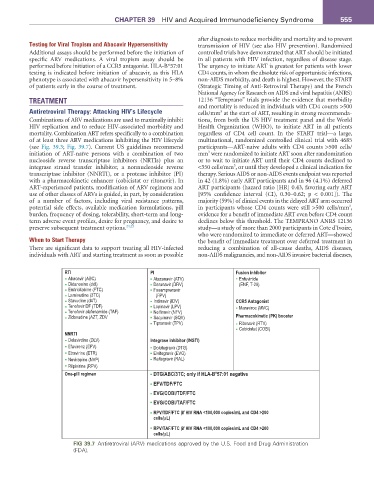
                         fIG 39.7  Antiretroviral (ARV) medications approved by the U.S. Food and Drug Administration
                         (FDA).

