


Page 600 - Clinical Immunology_ Principles and Practice ( PDFDrive )
P. 600
578          ParT FIvE  Allergic Diseases


                                                                 TABLE 41.2  Chemoattractants
            'HFOLQH  )(9     ,QFUHDVH  5                         Linked to the recruitment of allergic   receptor
                                                                 Inflammatory Cells

                                                                 Chemokine
                                                                 CCL1                                    CCR8
                                                                 CCL11                                   CCR3
                              )ROORZ XS  KRXUV                   CCL17, CCL22                            CCR4
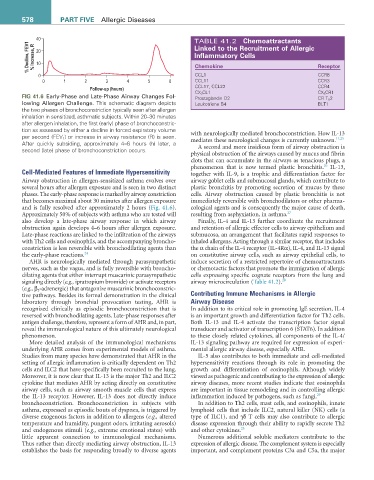
        FIG 41.6  Early-Phase and Late-Phase Airway Changes Fol-  CX 3 CL1                               CX 3 CR1
                                                                 Prostaglandin D2
                                                                                                         CR T H 2
        lowing Allergen Challenge. This schematic diagram depicts   Leukotriene B4                       BLT1
        the two phases of bronchoconstriction typically seen after allergen
        inhalation in sensitized, asthmatic subjects. Within 20–30 minutes
        after allergen inhalation, the first (early) phase of bronchoconstric-
        tion as assessed by either a decline in forced expiratory volume
        per second (FEV 1) or increase in airway resistance (R) is seen.   with neurologically mediated bronchoconstriction. How IL-13
                                                                                                               11,25
        After quickly subsiding, approximately 4–6 hours (h) later, a   mediates these neurological changes is currently unknown.
        second (late) phase of bronchoconstriction occurs.        A second and more insidious form of airway obstruction is
                                                               physical obstruction of the airways caused by mucus and fibrin
                                                               clots that can accumulate in the airways as tenacious plugs, a
                                                                                                           26
                                                               phenomenon that is now termed plastic bronchitis.  IL-13,
        Cell-Mediated Features of Immediate Hypersensitivity   together with IL-9, is a trophic and differentiation factor for
        Airway obstruction in allergen-sensitized asthma evolves over   airway goblet cells and submucosal glands, which contribute to
        several hours after allergen exposure and is seen in two distinct   plastic  bronchitis  by  promoting  secretion of  mucus  by  these
        phases. The early-phase response is marked by airway constriction   cells.  Airway obstruction caused by plastic bronchitis is not
        that becomes maximal about 30 minutes after allergen exposure   immediately reversible with bronchodilators or other pharma-
        and is fully resolved after approximately 2 hours (Fig. 41.6).   cological agents and is consequently the major cause of death,
        Approximately 50% of subjects with asthma who are tested will   resulting from asphyxiation, in asthma. 27
        also  develop  a late-phase  airway  response  in  which  airway   Finally, IL-4 and IL-13 further coordinate the recruitment
        obstruction again develops 4–6 hours after allergen exposure.   and retention of allergic effector cells to airway epithelium and
        Late-phase reactions are linked to the infiltration of the airways   submucosa, an arrangement that facilitates rapid responses to
        with Th2 cells and eosinophils, and the accompanying broncho-  inhaled allergens. Acting through a similar receptor, that includes
        constriction is less reversible with bronchodilating agents than   the α chain of the IL-4 receptor (IL-4Rα), IL-4, and IL-13 signal
        the early-phase reactions. 24                          on constitutive airway cells, such as airway epithelial cells, to
           AHR is neurologically mediated through parasympathetic   induce secretion of a restricted repertoire of chemoattractants
        nerves, such as the vagus, and is fully reversible with broncho-  or chemotactic factors that promote the immigration of allergic
        dilating agents that either interrupt muscarinic parasympathetic   cells expressing specific cognate receptors from the lung and
        signaling directly (e.g., ipratropium bromide) or activate receptors   airway microcirculation (Table 41.2). 28
        (e.g., β 2 -adrenergic) that antagonize muscarinic bronchoconstric-
        tive pathways. Besides its formal demonstration in the clinical   Contributing Immune Mechanisms in Allergic
        laboratory through bronchial provocation testing,  AHR is   Airway Disease
        recognized clinically as episodic bronchoconstriction that is   In addition to its critical role in promoting IgE secretion, IL-4
        reversed with bronchodilating agents. Late-phase responses after   is an important growth and differentiation factor for Th2 cells.
        antigen challenge, therefore, represent a form of AHR and, in part,   Both IL-13 and IL-4 activate the transcription factor signal
        reveal the immunological nature of this ultimately neurological   transducer and activator of transcription 6 (STAT6). In addition
        phenomenon.                                            to these closely related cytokines, all components of the IL-4/
           More  detailed  analysis  of the  immunological  mechanisms   IL-13 signaling pathway are required for expression of experi-
        underlying AHR comes from experimental models of asthma.   mental allergic airway disease, especially AHR.
        Studies from many species have demonstrated that AHR in the   IL-5 also contributes to both immediate and cell-mediated
        setting of allergic inflammation is critically dependent on Th2   hypersensitivity  reactions  through  its  role  in  promoting  the
        cells and ILC2 that have specifically been recruited to the lung.   growth and differentiation of eosinophils.  Although widely
        Moreover, it is now clear that IL-13 is the major Th2 and ILC2   viewed as pathogenic and contributing to the expression of allergic
        cytokine that mediates AHR by acting directly on constitutive   airway diseases, more recent studies indicate that eosinophils
        airway cells, such as airway smooth muscle cells that express   are important in tissue remodeling and in controlling allergic
        the IL-13 receptor. However, IL-13 does not directly induce   inflammation induced by pathogens, such as fungi. 29
        bronchoconstriction. Bronchoconstriction in subjects with   In addition to Th2 cells, mast cells, and eosinophils, innate
        asthma, expressed as episodic bouts of dyspnea, is triggered by   lymphoid cells that include ILC2, natural killer (NK) cells (a
        diverse exogenous factors in addition to allergens (e.g., altered   type of ILC1), and  γδ T cells may also contribute to allergic
        temperature and humidity, pungent odors, irritating aerosols)   disease expression through their ability to rapidly secrete Th2
        and endogenous stimuli (e.g., extreme emotional states) with   and other cytokines. 25
        little apparent connection to immunological mechanisms.   Numerous  additional  soluble  mediators  contribute  to the
        Thus rather than directly mediating airway obstruction, IL-13   expression of allergic disease. The complement system is especially
        establishes the basis for responding broadly to diverse agents   important, and complement proteins C3a and C5a, the major

