


Page 602 - Clinical Immunology_ Principles and Practice ( PDFDrive )
P. 602
580          ParT FIvE  Allergic Diseases


                                                                      ,QKDOHG IXQJDO VSRUHV
                                                                       RU SURWHLQDVHV


                                                                  7K  UHODWHG
                                     6HFRQGDU\ O\PSKRLG RUJDQ     FKHPRNLQHV
                                                                    &&/
                                                                    &&/
                                          7K3 FHOO 7K  FHOO   7K  FHOO            7K  FHOO

                                  $S

                                                  7K  FHOO
                                " 3URWHLQDVH
                              DFWLYDWHG UHFHSWRU


                                                   6PRRWK
                                                    PXVFOH
                                                                            %DVRSKLO

                                                             *REOHW FHOO

                                                      & D5
                                                                             76/3    ,/
                                                       &'
                                                            3$5          7K  FHOO    ,/
                                                                       76/3
                                                                       ,/            ,/
                                                                       003
                                                                        &    &'      ,/
                                                          %URQFKLROH
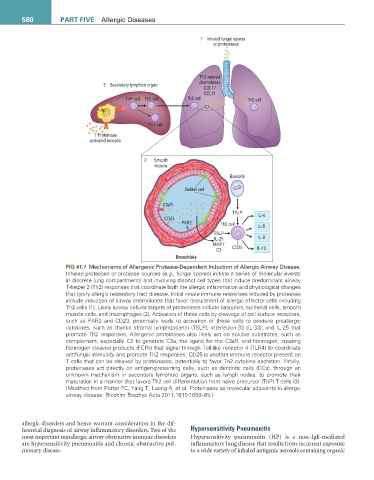
                       FIG 41.7  Mechanisms of Allergenic Protease-Dependent Induction of Allergic Airway Disease.
                       Inhaled proteases or protease sources (e.g., fungal spores) initiate a series of molecular events
                       in discrete lung compartments and involving distinct cell types that induce predominant airway
                       T-helper 2 (Th2) responses that coordinate both the allergic inflammation and physiological changes
                       that typify allergic respiratory tract disease. Initial innate immune responses induced by proteases
                       include induction of airway chemokines that favor recruitment of allergic effector cells including
                       Th2 cells (1). Likely airway cellular targets of proteinases include basophils, epithelial cells, smooth
                       muscle cells, and macrophages (2). Activation of these cells by cleavage of cell surface receptors,
                       such as PAR2 and CD23, potentially leads to activation of these cells to produce proallergic
                       cytokines, such as thymic stromal lymphopoietin (TSLP), interleukin-33 (IL-33), and IL-25 that
                       promote Th2 responses. Allergenic proteinases also likely act on soluble substrates, such as
                       complement, especially C3 to generate C3a, the ligand for the C3aR, and fibrinogen, creating
                       fibrinogen cleaved products (FCPs) that signal through Toll-like receptor 4 (TLR4) to coordinate
                       antifungal immunity and promote Th2 responses. CD25 is another immune receptor present on
                       T cells that can be cleaved by proteinases, potentially to favor Th2 cytokine secretion. Finally,
                       proteinases act directly on antigen-presenting cells, such as dendritic cells (DCs), through an
                       unknown mechanism in secondary lymphoid organs, such as lymph nodes, to promote their
                       maturation in a manner that favors Th2 cell differentiation from naïve precursor (ThP) T cells (3).
                       (Modified from Porter PC, Yang T, Luong A, et al. Proteinases as molecular adjuvants in allergic
                       airway disease. Biochim Biophys Acta 2011;1810:1059–65.)


        allergic disorders and hence warrant consideration in the dif-
        ferential diagnosis of airway inflammatory disorders. Two of the   Hypersensitivity Pneumonitis
        most important nonallergic airway obstructive immune disorders   Hypersensitivity pneumonitis (HP) is a non–IgE-mediated
        are hypersensitivity pneumonitis and chronic obstructive pul-  inflammatory lung disease that results from recurrent exposure
        monary disease.                                        to a wide variety of inhaled antigenic aerosols containing organic

