


Page 599 - Clinical Immunology_ Principles and Practice ( PDFDrive )
P. 599
CHaPTEr 41  Immunological Mechanisms of Airway Diseases and Pathways to Therapy                      577


                                           Antigen
                                 IgE
                                               FcεRI

                      B cell
                     IL-4
                    IL-13                  Mast cell                 Upper airway
                                                       Histamine
                                                      Leukotrienes
                                                      Prostaglandins
                          cell     Antigen
                       Th 2
                                                       Cytokines
                                       FcεRI
                     IL-5
                                                                   Allergic airway disease
                                                                                            Type 4 hypersensitivity

                                  Eosinophil                                                       IL-4
                                                                                         IL-4Rα
                              Type 1 hypersensitivity                                              IL-13
                                                                          Lower airway
                                                                                                          Th  cell
                                                                                                           2
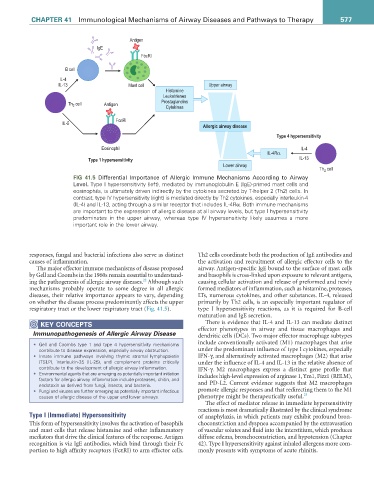
                         FIG 41.5  Differential Importance of Allergic Immune Mechanisms According to Airway
                         Level. Type I hypersensitivity (left), mediated by immunoglobulin E (IgE)-primed mast cells and
                         eosinophils, is ultimately driven indirectly by the cytokines secreted by T-helper 2 (Th2) cells. In
                         contrast, type IV hypersensitivity (right) is mediated directly by Th2 cytokines, especially interleukin-4
                         (IL-4) and IL-13, acting through a similar receptor that includes IL-4Rα. Both immune mechanisms
                         are important to the expression of allergic disease at all airway levels, but type I hypersensitivity
                         predominates in the upper airway, whereas type IV hypersensitivity likely assumes a more
                         important role in the lower airway.


           responses, fungal and bacterial infections also serve as distinct   Th2 cells coordinate both the production of IgE antibodies and
           causes of inflammation.                                the activation and recruitment of allergic effector cells to the
             The major effector immune mechanisms of disease proposed   airway. Antigen-specific IgE bound to the surface of mast cells
           by Gell and Coombs in the 1960s remain essential to understand-  and basophils is cross-linked upon exposure to relevant antigens,
                                                22
           ing the pathogenesis of allergic airway diseases.  Although such   causing cellular activation and release of preformed and newly
           mechanisms probably operate to some degree in all allergic   formed mediators of inflammation, such as histamine, proteases,
           diseases, their relative importance appears to vary, depending   LTs, numerous cytokines, and other substances. IL-4, released
           on whether the disease process predominantly affects the upper   primarily by Th2 cells, is an especially important regulator of
           respiratory tract or the lower respiratory tract (Fig. 41.5).  type I hypersensitivity reactions, as it is required for B-cell
                                                                  maturation and IgE secretion.
               KEY CONCEPTS                                         There is evidence that IL-4 and IL-13 can mediate distinct
            Immunopathogenesis of Allergic Airway Disease         effector phenotypes in airway and tissue macrophages and
                                                                  dendritic cells (DCs). Two major effector macrophage subtypes
            •  Gell and Coombs type 1 and type 4 hypersensitivity mechanisms   include conventionally activated (M1) macrophages that arise
              contribute to disease expression, especially airway obstruction.  under the predominant influence of type I cytokines, especially
            •  Innate immune pathways involving thymic stromal lymphopoietin   IFN-γ, and alternatively activated macrophages (M2) that arise
              (TSLP), interleukin-25 (IL-25), and complement proteins critically   under the influence of IL-4 and IL-13 in the relative absence of
              contribute to the development of allergic airway inflammation.  IFN-γ.  M2  macrophages  express  a distinct  gene  profile that
            •  Environmental agents that are emerging as potentially important initiation   includes high-level expression of arginase 1, Ym1, Fizz1 (RELM),
              factors for allergic airway inflammation include proteases, chitin, and
              endotoxin as derived from fungi, insects, and bacteria.  and PD-L2. Current evidence suggests that M2 macrophages
            •  Fungi and viruses are further emerging as potentially important infectious   promote allergic responses and that redirecting them to the M1
              causes of allergic disease of the upper and lower airways.  phenotype might be therapeutically useful. 23
                                                                    The effect of mediator release in immediate hypersensitivity
                                                                  reactions is most dramatically illustrated by the clinical syndrome
           Type I (Immediate) Hypersensitivity                    of anaphylaxis, in which patients may exhibit profound bron-
           This form of hypersensitivity involves the activation of basophils   choconstriction and dyspnea accompanied by the extravasation
           and mast cells that release histamine and other inflammatory   of vascular solutes and fluid into the interstitium, which produces
           mediators that drive the clinical features of the response. Antigen   diffuse edema, bronchoconstriction, and hypotension (Chapter
           recognition is via IgE antibodies, which bind through their Fc   42). Type I hypersensitivity against inhaled allergens more com-
           portion to high affinity receptors (FcεRI) to arm effector cells.   monly presents with symptoms of acute rhinitis.

