


Page 65 - Clinical Immunology_ Principles and Practice ( PDFDrive )
P. 65
50           ParT ONE  Principles of Immune Response


                                                                 Bacteria
                                                                     MDP
                                      RIP2
                                  TAK1   IKK                      LRRs
                                  CARD9                                 NOD2
                                                        CARD  CARD  NOD
                                         IκB
                                  MAPKs  NF-κB         IRF7
                                                       IRF3
                                                                               Viral RNA
                                            Nucleus           TBK1/IKKι
                                   IL-1/18
                                                       IκB
                                                                                      RIG-1
                                                      NF-κB      IPS-1
                                            Pro-IL-1/18
                                                                                      MDA5
                                  CARD       Caspase1       Mitochondria
                                  CARD
                                         ASC
                                   PYD
                                                           PAMPs
                                   PYD   NOD   LRR  NLRP3  DAMPs
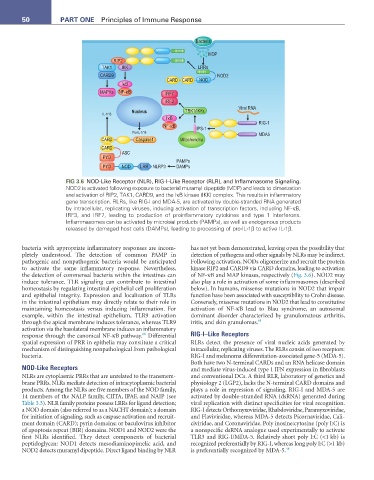
                       FIG 3.6  NOD-Like Receptor (NLR), RIG-I–Like Receptor (RLR), and Inflammasome Signaling.
                       NOD2 is activated following exposure to bacterial muramyl dipeptide (MDP) and leads to dimerization
                       and activation of RIP2, TAK1, CARD9, and the IκB kinase (IKK) complex. This results in inflammatory
                       gene transcription. RLRs, like RIG-I and MDA-5, are activated by double-stranded RNA generated
                       by intracellular, replicating viruses, inducing activation of transcription factors, including NF-κB,
                       IRF3, and IRF7, leading to production of proinflammatory cytokines and type 1 interferons.
                       Inflammasomes can be activated by microbial products (PAMPs), as well as endogenous products
                       released by damaged host cells (DAMPs), leading to processing of pro-IL-1β to active IL-1β.


        bacteria with appropriate inflammatory responses are incom-  has not yet been demonstrated, leaving open the possibility that
        pletely understood. The detection of common PAMP in    detection of pathogens and other signals by NLRs may be indirect.
        pathogenic and nonpathogenic bacteria would be anticipated   Following activation, NODs oligomerize and recruit the protein
        to activate the same inflammatory response. Nevertheless,    kinase RIP2 and CARD9 via CARD domains, leading to activation
        the detection of commensal bacteria within the intestines can   of NF-κB and MAP kinases, respectively (Fig. 3.6). NOD2 may
        induce tolerance. TLR signaling can contribute to intestinal   also play a role in activation of some inflammasomes (described
        homeostasis by regulating intestinal epithelial cell proliferation   below). In humans, missense mutations in NOD2 that impair
        and epithelial integrity. Expression and localization of TLRs   function have been associated with susceptibility to Crohn disease.
        in the intestinal epithelium may directly relate to their role in   Conversely, missense mutations in NOD2 that lead to constitutive
        maintaining homeostasis versus inducing inflammation. For   activation of NF-κB lead to Blau syndrome, an autosomal
        example, within the intestinal epithelium, TLR9 activation   dominant disorder characterized by granulomatous arthritis,
        through the apical membrane induces tolerance, whereas TLR9   iritis, and skin granulomas. 61
        activation via the basolateral membrane induces an inflammatory
                                                60
        response through the canonical NF-κB pathway.  Differential   RIG-I–Like Receptors
        spatial expression of PRR in epithelia may constitute a critical   RLRs detect the presence of viral nucleic acids generated by
        mechanism of distinguishing nonpathological from pathological     intracellular, replicating viruses. The RLRs consist of two receptors:
        bacteria.                                              RIG-I and melanoma differentiation-associated gene-5 (MDA-5).
                                                               Both have two N-terminal CARDs and an RNA helicase domain
        NOD-Like Receptors                                     and mediate virus-induced type 1 IFN expression in fibroblasts
        NLRs are cytoplasmic PRRs that are unrelated to the transmem-  and conventional DCs. A third RLR, laboratory of genetics and
        brane PRRs. NLRs mediate detection of intracytoplasmic bacterial   physiology 2 (LGP2), lacks the N-terminal CARD domains and
        products. Among the NLRs are five members of the NOD family,   plays a role in repression of signaling. RIG-I and MDA-5 are
        14 members of the NALP family, CIITA, IPAF, and NAIP (see   activated by double-stranded RNA (dsRNA) generated during
        Table 3.3). NLR family proteins possess LRRs for ligand detection;   viral replication with distinct specificities for viral recognition.
        a NOD domain (also referred to as a NACHT domain); a domain   RIG-I detects Orthomyxoviridae, Rhabdoviridae, Paramyxoviridae,
        for initiation of signaling, such as caspase activation and recruit-  and Flaviviridae, whereas MDA-5 detects Picornaviridae, Cali-
        ment domain (CARD); pyrin domains; or baculovirus inhibitor   civiridae, and Coronaviridae. Poly inosine:cytosine (poly I:C) is
        of apoptosis repeat (BIR) domains. NOD1 and NOD2 were the   a nonspecific dsRNA analogue used experimentally to activate
        first NLRs identified. They detect components of bacterial   TLR3 and RIG-I/MDA-5. Relatively short poly I:C (<1 kb) is
        peptidoglycan: NOD1 detects mesodiaminopimelic acid, and   recognized preferentially by RIG-I, whereas long poly I:C (>1 kb)
        NOD2 detects muramyl dipeptide. Direct ligand binding by NLR   is preferentially recognized by MDA-5. 48

