


Page 849 - Clinical Immunology_ Principles and Practice ( PDFDrive )
P. 849
CHaPtEr 59  Large-Vessel Vasculitides             821


                                                                  been disappointing, cautioning one that edema-weighted MR
                                                                  should not be used as a sole means of measuring disease activity
                                                                                            38
                                                                  and therapeutic responsiveness.  Both, CT angiography and
                                                                  MRA are now used routinely to monitor progression or regression
                                                                  of vascular involvement and have an important place in managing
                                                                  the chronic phase of GCA and TA.


                                                                  THERAPEUTIC MANAGEMENT

                                                                      tHEraPEUtIC PrINCIPLES
                                                                   Treatment of Large Vessel Vasculitides

                                                                   •  To prevent vision loss, patients with giant-cell arteritis (GCA) require
                                                                     immediate treatment. Similarly, with the threat of catastrophic cerebral
                                                                     ischemia in Takayasu arteritis (TA), prompt initiation of therapy is
            $                                                        imperative.
                                                                   •  Corticosteroids are the immunosuppressive drug of choice for large-
                                                                     vessel  vasculitides  (LVVs). Often, the  drugs must  be  given over  a
                                                                     period of several years but may be clinically effective at very low
                                                                     doses.
                                                                   •  Clinical trials have failed to show convincing steroid-sparing effects
                                                                     for either methotrexate or tumor necrosis factor (TNF)-α blockade in
                                                                     GCA.
                                                                   •  A phase 3 clinical trial has demonstrated steroid-sparing effect of
                                                                     treatment with tocilizumab.
                                                                   •  Molecular studies of the inflammatory infiltrate in GCA have shown
                                                                     that early and untreated disease is characterized by two functional
                                                                     T-cell lineages; T helper (Th)1 and Th17 cells. Th17 cells are rapidly
                                                                     responsive to corticosteroids, whereas Th1 cells persist and promote
                                                                     chronic, smoldering vasculitis.
                                                                   •  It is not known whether the smoldering activity persisting beyond the
                                                                     acute phase of the disease requires immunosuppressive therapy or
                                                                     whether the benefits of chronic immunosuppressive therapy outweigh
                                                                     the potential risks.
                                                                   •  Clinical experience (not evidence-based therapeutic trials) suggests
                                                                     that a combination of methotrexate, mycophenolate mofetil, or
                                                                     TNF-α–blocking agents with corticosteroids may be beneficial in
                                                                     controlling disease in some patients with TA.
                                                                   •  Close monitoring for diabetes, hypertension, and hyperlipidemia
            %                                                        combined with bone-saving therapy should be part of the treatment
                                                                     regime in patients with LVVs on long-term corticosteroids.
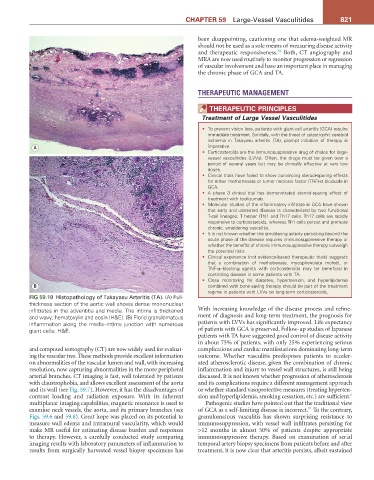
           FIG 59.10  Histopathology of Takayasu Arteritis (TA). (A) Full-
           thickness section of the aortic wall shows dense mononuclear
           infiltrates in the adventitia and media. The intima is thickened   With increasing knowledge of the disease process and refine-
           and wavy; hematoxylin and eosin (H&E). (B) Florid granulomatous   ment of diagnosis and long-term treatment, the prognosis for
           inflammation along the media–intima junction with numerous   patients with LVVs has significantly improved. Life expectancy
           giant cells; H&E.                                      of patients with GCA is preserved. Follow-up studies of Japanese
                                                                  patients with TA have suggested good control of disease activity
                                                                  in about 75% of patients, with only 25% experiencing serious
           and computed tomography (CT) are now widely used for evaluat-  complications and cardiac manifestations dominating long-term
           ing the vascular tree. These methods provide excellent information   outcome.  Whether vasculitis predisposes patients to acceler-
           on abnormalities of the vascular lumen and wall, with increasing   ated atherosclerotic disease, given the combination of chronic
           resolution, now capturing abnormalities in the more peripheral   inflammation and injury to vessel wall structures, is still being
           arterial branches. CT imaging is fast, well tolerated by patients   discussed. It is not known whether progression of atherosclerosis
           with claustrophobia, and allows excellent assessment of the aorta   and its complications require a different management approach
           and its wall (see Fig. 59.7). However, it has the disadvantages of   or whether standard vasoprotective measures (treating hyperten-
           contrast loading and radiation exposure.  With its inherent   sion and hyperlipidemia, smoking cessation, etc.) are sufficient. 6
           multiplanar imaging capabilities, magnetic resonance is used to   Pathogenic studies have pointed out that the traditional view
                                                                                                      11
           examine neck vessels, the aorta, and its primary branches (see   of GCA as a self-limiting disease is incorrect.  To the contrary,
           Figs. 59.6 and 59.8). Great hope was placed on its potential to   granulomatous vasculitis has shown surprising resistance to
           measure wall edema and intramural vascularity, which would   immunosuppression, with vessel wall infiltrates persisting for
           make MR useful for estimating disease burden and responses   >12 months in almost 50% of patients despite appropriate
           to therapy. However, a carefully conducted study comparing   immunosuppressive therapy. Based on examination of serial
           imaging results with laboratory parameters of inflammation to   temporal artery biopsy specimens from patients before and after
           results from surgically harvested vessel biopsy specimens has   treatment, it is now clear that arteritis persists, albeit sustained

