


Page 85 - Clinical Immunology_ Principles and Practice ( PDFDrive )
P. 85
70           Part one  Principles of Immune Response


                          Ag       C3d                         share the ability to negatively regulate signaling by activating
                                                               receptors.
                                                                  The ability of passively administered soluble antibody to inhibit
                                       CD21                    humoral responses has long been appreciated and was initially
                IgM                                            thought to occur by soluble antibody effectively masking all
                                                               available antigen epitopes. The molecular mechanism accounting
                                         CD19                  for this suppression is now known to be mediated by the binding
                          Ig-α                                 of IgG to FcRγIIB and the subsequent recruitment of cytosolic
                              Ig-β          CD81               phosphatases to the FcRγIIB ITIM upon tyrosine phosphorylation.
                                                               Thus the inhibitory effect of IgG on BCR-mediated B cell activa-
                                                               tion is explained by the interaction of the FcγRIIB ITIM, and
                                                               specifically associated phosphatases, with the BCR (Fig. 4.13).
                               PTK                             Coligation of the BCR and FcRγIIB by antigen–IgG complexes
                                                               results in the tyrosine phosphorylation of the FcRγIIB ITIM,
                      Syk                   P13-K              presumably by the BCR-associated tyrosine kinases. Phosphory-
                               +                               lated FcRγIIB ITIMs then recruit two different SH2-containing
                                               +               phosphatases, SHIP and SHP-1, which function to remove
                                   Lyn                         phosphate groups from inositol lipids or tyrosines, respectively.
                                   Fyn      Vav
                                                               Although both phosphatases can negatively regulate BCR-
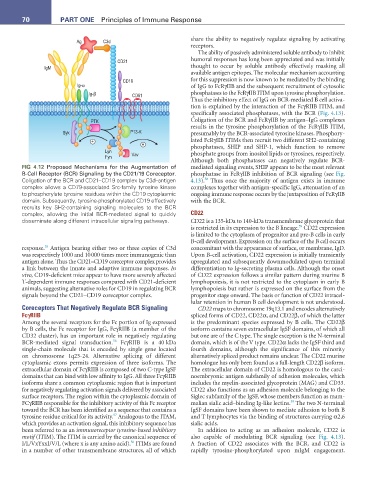
        FIG 4.12  Proposed Mechanisms for the Augmentation of   mediated signaling events, SHIP appears to be the most relevant
        B-Cell Receptor (BCR) Signaling by the CD21/19 Coreceptor.   phosphatase in FcRγIIB inhibition of BCR signaling (see Fig.
                                                                    58
        Coligation of the BCR and CD21–CD19 complex by C3d–antigen   4.13).   Thus  once  the  majority  of  antigen  exists  in  immune
        complex allows a CD79-associated Src-family tyrosine kinase   complexes together with antigen-specific IgG, attenuation of an
        to phosphorylate tyrosine residues within the CD19 cytoplasmic   ongoing immune response occurs by the juxtaposition of FcRγIIB
        domain. Subsequently, tyrosine-phosphorylated CD19 effectively   with the BCR.
        recruits key SH2-containing signaling molecules to the BCR
        complex, allowing the initial BCR-mediated signal to quickly   CD22
        disseminate along different intracellular signaling pathways.   CD22 is a 135-kDa to 140-kDa transmembrane glycoprotein that
                                                                                                   59
                                                               is restricted in its expression to the B lineage.  CD22 expression
                                                               is limited to the cytoplasm of progenitor and pre-B cells in early
                                                               B-cell development. Expression on the surface of the B cell occurs
                55
        response.  Antigen bearing either two or three copies of C3d   concomitant with the appearance of surface, or membrane, IgD.
        was respectively 1000 and 10 000 times more immunogenic than   Upon B-cell activation, CD22 expression is initially transiently
        antigen alone. Thus the CD21–CD19 coreceptor complex provides   upregulated and subsequently downmodulated upon terminal
        a link between the innate and adaptive immune responses. In   differentiation to Ig-secreting plasma cells. Although the onset
        vivo, CD19-deficient mice appear to have more severely affected   of CD22 expression follows a similar pattern during murine B
        T-dependent immune responses compared with CD21-deficient   lymphopoiesis, it is not restricted to the cytoplasm in early B
        animals, suggesting alternative roles for CD19 in regulating BCR   lymphopoiesis but rather is expressed on the surface from the
        signals beyond the CD21–CD19 coreceptor complex.       progenitor stage onward. The basis or function of CD22 intracel-
                                                               lular retention in human B cell development is not understood.
        Coreceptors That Negatively Regulate BCR Signaling        CD22 maps to chromosome 19q13.1 and encodes alternatively
        FcγRIIB                                                spliced forms of CD22, CD22α, and CD22β, of which the latter
        Among the several receptors for the Fc portion of Ig expressed   is the predominant species expressed by B cells. The CD22β
        by B cells, the Fc receptor for IgG, FcγRIIB (a member of the   isoform contains seven extracellular IgSF domains, of which all
        CD32 cluster), has an important role in negatively regulating   but one are of the C type. The single exception is the N-terminal
                                      56
        BCR-mediated signal transduction.  FcγRIIB is a 40 kDa   domain, which is of the V type. CD22α lacks the IgSF third and
        single-chain molecule that is encoded by single gene located   fourth domains, although the significance of this minority
        on  chromosome  1q23-24.  Alternative  splicing  of  different   alternatively spliced product remains unclear. The CD22 murine
        cytoplasmic  exons  permits  expression  of  three  isoforms.  The   homologue has only been found as a full-length CD22β isoform.
        extracellular domain of FcγRIIB is composed of two C-type IgSF   The extracellular domain of CD22 is homologous to the carci-
        domains that can bind with low affinity to IgG. All three FcγRIIB   noembryonic antigen subfamily of adhesion molecules, which
        isoforms share a common cytoplasmic region that is important   includes the myelin-associated glycoprotein (MAG) and CD33.
        for negatively regulating activation signals delivered by associated   CD22 also functions as an adhesion molecule belonging to the
        surface receptors. The region within the cytoplasmic domain of   Siglec subfamily of the IgSF, whose members function as mam-
                                                                                                59
        FCγRIIB responsible for the inhibitory activity of this Fc receptor   malian sialic acid–binding Ig-like lectins.  The two N-terminal
        toward the BCR has been identified as a sequence that contains a   IgSF domains have been shown to mediate adhesion to both B
                                      57
        tyrosine residue critical for its activity.  Analogous to the ITAM,   and T lymphocytes via the binding of structures carrying α2,6
        which provides an activation signal, this inhibitory sequence has   sialic acids.
        been referred to as an immunoreceptor tyrosine-based inhibitory   In addition to acting as an adhesion molecule, CD22 is
        motif (ITIM). The ITIM is carried by the canonical sequence of   also capable of modulating BCR signaling (see  Fig. 4.13).
                                            56
        I/L/VxYxxI/V/L (where x is any amino acid).  ITIMs are found   A fraction of CD22 associates with the BCR, and CD22 is
        in a number of other transmembrane structures, all of which   rapidly tyrosine-phosphorylated upon mIgM engagement.

