


Page 86 - Clinical Immunology_ Principles and Practice ( PDFDrive )
P. 86
CHaPter 4  Antigen Receptor Genes, Gene Products, and Coreceptors                    71


                                       Ag


                                                                                             CD22
                                                         IgG
                             BCR
                                                                         BCR

                                       Ig-α                 FcRγIIB              Ig-α
                                           Ig-β                                      Ig-β


                                           PTK                                       Lyn
                                  Syk                                       Syk
                                                –
                                                    SHIP or                         –  SHP-1
                                                     SHP-1
                            A                                       B
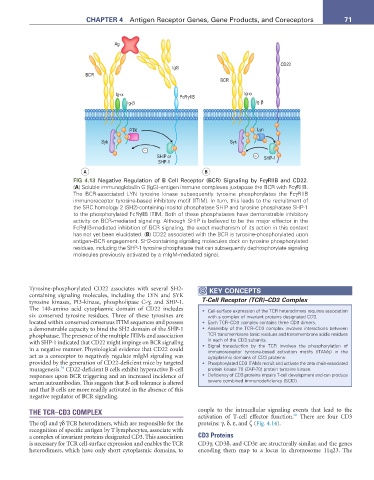
                         FIG 4.13  Negative Regulation of B Cell Receptor (BCR) Signaling by FcγRIIB and CD22.
                         (a) Soluble immunoglobulin G (IgG)–antigen immune complexes juxtapose the BCR with FcγRIIB.
                         The BCR-associated LYN tyrosine kinase subsequently tyrosine phosphorylates the FcγRIIB
                         immunoreceptor tyrosine-based inhibitory motif (ITIM). In turn, this leads to the recruitment of
                         the SRC homology 2 (SH2)-containing inositol phosphatase SHIP and tyrosine phosphatase SHP-1
                         to the phosphorylated FcRγIIB ITIM. Both of these phosphatases have demonstrable inhibitory
                         activity on BCR-mediated signaling. Although SHIP is believed to be the major effector in the
                         FcRγIIB-mediated inhibition of BCR signaling, the exact mechanism of its action in this context
                         has not yet been elucidated. (B) CD22 associated with the BCR is tyrosine-phosphorylated upon
                         antigen–BCR engagement. SH2-containing signaling molecules dock on tyrosine phosphorylated
                         residues, including the SHP-1 tyrosine phosphatase that can subsequently dephosphorylate signaling
                         molecules previously activated by a mIgM-mediated signal.


           Tyrosine-phosphorylated CD22 associates with several SH2-   KeY ConCePtS
           containing signaling molecules, including the LYN and SYK
           tyrosine kinases, PI3-kinase, phospholipase C-γ, and SHP-1.   T-Cell Receptor (TCR)–CD3 Complex
           The 140-amino  acid cytoplasmic domain  of CD22  includes   •  Cell-surface expression of the TCR heterodimers requires association
           six conserved tyrosine residues. Three of these tyrosines are   with a complex of invariant proteins designated CD3.
           located within conserved consensus ITIM sequences and possess   •  Each TCR–CD3 complex contains three CD3 dimers.
           a demonstrable capacity to bind the SH2 domain of the SHP-1   •  Assembly of the TCR–CD3 complex involves interactions between
           phosphatase. The presence of the multiple ITIMs and association   TCR transmembrane basic residues and transmembrane acidic residues
           with SHP-1 indicated that CD22 might impinge on BCR signaling   in each of the CD3 subunits.
           in a negative manner. Physiological evidence that CD22 could   •  Signal transduction by the TCR involves the phosphorylation of
                                                                     immunoreceptor tyrosine-based activation  motifs (ITAMs) in the
           act as a coreceptor to negatively regulate mIgM signaling was   cytoplasmic domains of CD3 proteins.
           provided by the generation of CD22-deficient mice by targeted   •  Phosphorylated CD3 ITAMs recruit and activate the zeta chain-associated
                     59
           mutagenesis.  CD22-deficient B cells exhibit hyperactive B-cell   protein kinase 70 (ZAP-70) protein tyrosine kinase.
           responses upon BCR triggering and an increased incidence of   •  Deficiency of CD3 proteins impairs T-cell development and can produce
           serum autoantibodies. This suggests that B-cell tolerance is altered   severe combined immunodeficiency (SCID).
           and that B cells are more readily activated in the absence of this
           negative regulator of BCR signaling.

           THE TCR–CD3 COMPLEX                                    couple to the intracellular signaling events that lead to the
                                                                                                 60
                                                                  activation  of T-cell  effector  function.   There are  four  CD3
           The αβ and γδ TCR heterodimers, which are responsible for the   proteins: γ, δ, ε, and ζ (Fig. 4.14).
           recognition of specific antigen by T lymphocytes, associate with
           a complex of invariant proteins designated CD3. This association   CD3 Proteins
           is necessary for TCR cell-surface expression and enables the TCR   CD3γ, CD3δ, and CD3ε are structurally similar, and the genes
           heterodimers, which have only short cytoplasmic domains, to   encoding them map to a locus in chromosome 11q23. The

