


Page 855 - Clinical Immunology_ Principles and Practice ( PDFDrive )
P. 855
826          ParT SIX  Systemic Immune Diseases


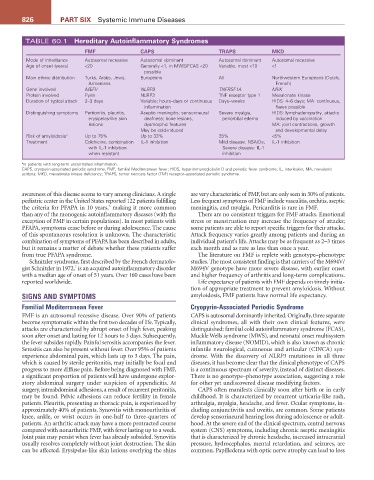
         TABLE 60.1  Hereditary autoinflammatory Syndromes
                             FMF               CaPS                      TraPS            MKD
          Mode of inheritance  Autosomal recessive  Autosomal dominant   Autosomal dominant  Autosomal recessive
          Age of onset (years)  <20            Generally <1, in MWS/FCAS <20   Variable, most <10  <1
                                                possible
          Main ethnic distribution  Turks, Arabs, Jews,   Europeans      All              Northwestern Europeans (Dutch,
                              Armenians                                                    French)
          Gene involved      MEFV              NLRP3                     TNFRSF1A         MVK
          Protein involved   Pyrin             NLRP3                     TNF receptor type 1  Mevalonate kinase
          Duration of typical attack  2–3 days  Variable; hours–days or continuous   Days–weeks  HIDS: 4–6 days; MA: continuous,
                                                inflammation                               flares possible
          Distinguishing symptoms  Peritonitis, pleuritis,   Aseptic meningitis; sensorineural   Severe myalgia,   HIDS: lymphadenopathy, attacks
                              erysipelas-like skin   deafness; bone lesions,   periorbital edema  induced by vaccination
                              lesions           dysmorphic features                       MA: joint contractions, growth
                                               May be cold-induced                         and developmental delay
          Risk of amyloidosis a  Up to 75%     Up to 33%                 25%              <5%
          Treatment          Colchicine, combination   IL-1 inhibition   Mild disease: NSAIDs;   IL-1 inhibition
                              with IL-1 inhibition                        Severe disease: IL-1
                              when resistant                              inhibition
        a In patients with long-term uncontrolled inflammation.
        CAPS, cryopyrin-associated periodic syndrome; FMF, familial Mediterranean fever; HIDS, hyperimmunoglobulin D and periodic fever syndrome; IL, interleukin; MA, mevalonic
        aciduria; MKD, mevalonate kinase deficiency; TRAPS, tumor necrosis factor (TNF) receptor–associated periodic syndrome.


        awareness of this disease seems to vary among clinicians. A single   are very characteristic of FMF, but are only seen in 30% of patients.
        pediatric center in the United States reported 122 patients fulfilling   Less frequent symptoms of FMF include vasculitis, orchitis, aseptic
                                     6
        the criteria for PFAPA in 10 years,  making it more common   meningitis, and myalgia. Pericarditis is rare in FMF.
        than any of the monogenic autoinflammatory diseases (with the   There are no consistent triggers for FMF attacks. Emotional
        exception of FMF in certain populations). In most patients with   stress or menstruation may increase the frequency of attacks;
        PFAPA, symptoms cease before or during adolescence. The cause   some patients are able to report specific triggers for their attacks.
        of this spontaneous resolution is unknown. The characteristic   Attack frequency varies greatly among patients and during an
        combination of symptoms of PFAPA has been described in adults,   individual patient’s life. Attacks may be as frequent as 2–3 times
        but it remains a matter of debate whether these patients suffer   each month and as rare as less than once a year.
        from true PFAPA syndrome.                                 The literature on FMF is replete with genotype–phenotype
           Schnitzler syndrome, first described by the French dermatolo-  studies. The most consistent finding is that carriers of the M694V/
                          7
        gist Schnitzler in 1972,  is an acquired autoinflammatory disorder   M694V genotype have more severe disease, with earlier onset
        with a median age of onset of 51 years. Over 160 cases have been   and higher frequency of arthritis and long-term complications.
        reported worldwide.                                       Life expectancy of patients with FMF depends on timely initia-
                                                               tion of appropriate treatment to prevent amyloidosis. Without
        SIGNS AND SYMPTOMS                                     amyloidosis, FMF patients have normal life expectancy.
        Familial Mediterranean Fever                           Cryopyrin-Associated Periodic Syndrome
        FMF is an autosomal recessive disease. Over 90% of patients   CAPS is autosomal dominantly inherited. Originally, three separate
        become symptomatic within the first two decades of life. Typically,   clinical  syndromes, all  with  their  own  clinical  features, were
        attacks are characterized by abrupt onset of high fever, peaking   distinguished: familial cold autoinflammatory syndrome (FCAS),
        soon after onset and lasting for 12 hours to 3 days. Subsequently,   Muckle Wells syndrome (MWS), and neonatal onset multisystem
        the fever subsides rapidly. Painful serositis accompanies the fever.   inflammatory disease (NOMID), which is also known as chronic
        Serositis can also be present without fever. Over 95% of patients   infantile neurological, cutaneous and articular (CINCA) syn-
        experience abdominal pain, which lasts up to 3 days. The pain,   drome.  With the discovery of  NLRP3 mutations in all three
        which is caused by sterile peritonitis, may initially be focal and   diseases, it has become clear that the clinical phenotype of CAPS
        progress to more diffuse pain. Before being diagnosed with FMF,   is a continuous spectrum of severity, instead of distinct diseases.
        a significant proportion of patients will have undergone explor-  There is no genotype–phenotype association, suggesting a role
        atory abdominal surgery under suspicion of appendicitis.  At   for other yet undiscovered disease modifying factors.
        surgery, intraabdominal adhesions, a result of recurrent peritonitis,   CAPS often manifests clinically soon after birth or in early
        may be found. Pelvic adhesions can reduce fertility in female   childhood. It is characterized by recurrent urticaria-like rash,
        patients. Pleuritis, presenting as thoracic pain, is experienced by   arthralgia, myalgia, headache, and fever. Ocular symptoms, in-
        approximately 40% of patients. Synovitis with monoarthritis of   cluding conjunctivitis and uveitis, are common. Some patients
        knee, ankle, or wrist occurs in one-half to three-quarters of   develop sensorineural hearing loss during adolescence or adult-
        patients. An arthritic attack may have a more protracted course   hood. At the severe end of the clinical spectrum, central nervous
        compared with nonarthritic FMF, with fever lasting up to a week.   system (CNS) symptoms, including chronic aseptic meningitis
        Joint pain may persist when fever has already subsided. Synovitis   that is characterized by chronic headache, increased intracranial
        usually resolves completely without joint destruction. The skin   pressure, hydrocephalus, mental retardation, and seizures, are
        can be affected. Erysipelas-like skin lesions overlying the shins   common. Papilledema with optic nerve atrophy can lead to loss

