


Page 1174 - Hall et al (2015) Principles of Critical Care-McGraw-Hill
P. 1174
CHAPTER 86: Intracranial Pressure: Monitoring and Management  813


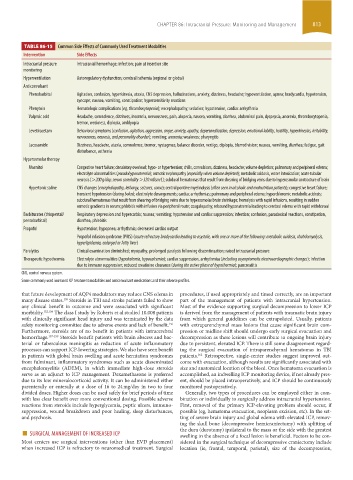
                      TABLE 86-15    Common Side Effects of Commonly Used Treatment Modalities
                    Intervention      Side Effects
                    Intracranial pressure   Intracranial hemorrhage; infection; pain at insertion site
                      monitoring
                    Hyperventilation  Autoregulatory dysfunction; cerebral ischemia (regional or global)
                    Anticonvulsant
                      Phenobarbital   Agitation, confusion, hyperkinesia, ataxia, CNS depression, hallucinations, anxiety, dizziness, headache; hypoventilation, apnea; bradycardia, hypotension,
                                      syncope;  nausea, vomiting, constipation; hypersensitivity reactions
                      Phenytoin       Hematologic complications (eg, thrombocytopenia); encephalopathy; sedation; hypotension, cardiac arrhythmia
                      Valproic acid   Headache, somnolence, dizziness, insomnia, nervousness, pain, alopecia, nausea, vomiting, diarrhea, abdominal pain, dyspepsia, anorexia, thrombocytopenia,
                                      tremor, weakness, diplopia, amblyopia
                      Levetiracetam   Behavioral symptoms (confusion, agitation, aggression, anger, anxiety, apathy, depersonalization, depression, emotional lability, hostility, hyperkinesias, irritability,
                                      n ervousness, neurosis, and personality disorder); vomiting; anorexia; weakness; pharyngitis
                      Lacosamide      Dizziness, headache, ataxia, somnolence, tremor, nystagmus, balance disorder, vertigo, diplopia, blurred vision; nausea, vomiting, diarrhea; fatigue, gait
                                        disturbance, asthenia
                    Hyperosmolar therapy
                      Mannitol        Congestive heart failure; circulatory overload; hypo- or hypertension; chills, convulsions, dizziness, headache; volume depletion; pulmonary and peripheral edema;
                                      electrolyte abnormalities (pseudohyponatremia); osmotic nephropathy (especially when volume depleted); metabolic acidosis, water intoxication; acute tubular
                                      necrosis (>200 g/day; serum osmolality >320 mOsm/L); subdural hematomas that result from shearing of bridging veins due to hyperosmolar contracture of brain
                      Hypertonic saline  CNS changes (encephalopathy, lethargy, seizures, coma); central pontine myelinolysis (often seen in alcoholic and malnutrition patients); congestive heart failure;
                                      transient hypotension (during bolus); electrolyte derangements; cardiac arrhythmias; pulmonary and peripheral edema; hyperchloremic metabolic acidosis;
                                      subdural hematomas that result from shearing of bridging veins due to hyperosmolar brain shrinkage; hemolysis with rapid infusions, resulting in sudden
                                      osmotic gradients in serum; phlebitis with infusion via peripheral route; coagulopathy; rebound hyponatremia leading to cerebral edema with rapid withdrawal
                    Barbiturates (thiopental/   Respiratory depression and hypercarbia; nausea; vomiting; hypotension and cardiac suppression; infection; confusion, paradoxical reactions, constipation,
                    pentobarbital)    diarrhea,  phlebitis
                    Propofol          Hypotension; hypopnea; arrhythmia; decreased cardiac output
                                      Propofol infusion syndrome (PRIS) (acute refractory bradycardia leading to asystole, with one or more of the following: metabolic acidosis, rhabdomyolysis,
                                      hyperlipidemia, enlarged or fatty liver)
                    Paralytics        Clinical examination diminished; myopathy; prolonged paralysis following discontinuation; raised intracranial pressure
                    Therapeutic hypothermia  Electrolyte abnormalities (hypokalemia, hypocalcemia); cardiac suppression, arrhythmias (including asymptomatic electrocardiographic changes); infection
                                      due to immune suppression; reduced creatinine clearance (during the active phase of hypothermia); pancreatitis
                    CNS, central nervous system.
                    Some commonly used increased ICP treatment modalities and anticonvulsant medications and their adverse profiles.
                    that future development of AQP4 modulators may reduce CNS edema in   procedures, if used appropriately and timed correctly, are an important
                    many disease states.  Steroids in TBI and stroke patients failed to show   part of the management of patients with intracranial hypertension.
                                  155
                    any clinical benefit  in outcome  and were  associated  with  significant   Most of the evidence supporting surgical decompression to lower ICP
                    morbidity. 152,156  The class I study by Roberts et al studied 10,008 patients   is derived from the management of patients with traumatic brain injury
                    with clinically significant head injury and was terminated by the data   from which general guidelines can be extrapolated. Usually, patients
                    safety monitoring committee due to adverse events and lack of  benefit.    with extraparenchymal mass lesions that cause significant brain com-
                                                                      156
                    Furthermore, steroids are of no benefit in patients with intracerebral   pression or midline shift should undergo early surgical evacuation and
                    hemorrhage. 157-159  Steroids benefit patients with brain abscess and bac-  decompression as these lesions will contribute to ongoing brain injury
                    terial or tuberculous meningitis as reduction of acute inflammatory   due to persistent, elevated ICP. There is still some disagreement regard-
                    processes can support ICP-lowering strategies. We also have seen benefit   ing the surgical evacuation of intraparenchymal hematomas in TBI
                    in patients with global brain swelling and acute herniation syndromes   patients.  Retrospective, single-center studies suggest improved out-
                                                                                162
                    from fulminant, inflammatory syndromes such as acute disseminated   come with evacuation, although results are significantly associated with
                    encephalomyelitis  (ADEM),  in  which immediate  high-dose  steroids   size and anatomical location of the bleed. Once hematoma evacuation is
                    serve as an adjunct to ICP management. Dexamethasone is preferred   accomplished, an indwelling ICP monitoring device, if not already pres-
                    due to its low mineralocorticoid activity. It can be administered either   ent, should be placed intraoperatively, and ICP should be continuously
                    parenterally or enterally at a dose of 16 to 24 mg/day in two to four   monitored postoperatively.
                    divided doses. Higher doses can be used safely for brief periods of time   Generally, two types of procedures can be employed either in com-
                    with less clear benefit over more conventional dosing. Possible adverse   bination or individually to surgically address intracranial hypertension.
                    reactions from steroids include hyperglycemia, peptic ulcers, immuno-  First, removal of the primary ICP-elevating problem should occur, if
                    suppression, wound breakdown and poor healing, sleep disturbances,   possible (eg, hematoma evacuation, neoplasm excision, etc). In the set-
                    and psychosis.                                        ting of severe brain injury and global edema with elevated ICP, remov-
                                                                          ing the skull bone (decompressive hemicraniectomy) with splitting of
                        ■  SURGICAL MANAGEMENT OF INCREASED ICP           the dura (durotomy) ipsilateral to the mass or the side with the greatest
                                                                          swelling in the absence of a focal lesion is beneficial. Factors to be con-
                    Most centers use surgical interventions (other than EVD placement)   sidered in the surgical technique of decompressive craniectomy include
                    when increased ICP is refractory to neuromedical treatment. Surgical   location (ie, frontal, temporal, parietal), size of the decompression,


            section06.indd   813                                                                                       1/23/2015   12:56:08 PM

