


Page 1572 - Hall et al (2015) Principles of Critical Care-McGraw-Hill
P. 1572
CHAPTER 115: The Transplant Patient  1091


                               3000
                                        CF     Alfa-1
                                        IPF    IPAH
                               2500
                                        COPD   Re-Tx
                              Number of transplants  1500
                               2000


                               1000


                                500


                                 0
                                   1990  1991  1992  1993  1994  1995  1996  1997  1998  1999  2000  2001  2002  2003  2004  2005  2006  2007  2008  2009  2010  2011

                                                                       Transplant year
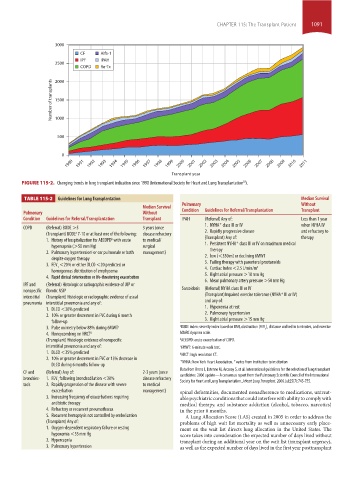
                    FIGURE 115-2.  Changing trends in lung transplant indication since 1990 (International Society for Heart and Lung Transplantation ).
                                                                                               30
                                                                            TABLE 115-2    Guidelines for Lung Transplantation
                      TABLE 115-2    Guidelines for Lung Transplantation                                           Median Survival
                                                                          Pulmonary                                Without
                                                             Median Survival
                    Pulmonary                                Without      Condition  Guidelines for Referral/Transplantation  Transplant
                    Condition  Guidelines for Referral/Transplantation  Transplant   IPAH  (Referral) Any of:      Less than 1 year
                                                                                       +
                                                                                  1.  NYHA  class III or IV        when NYHA IV
                    COPD    (Referral) BODE >5               3 years (once
                            (Transplant) BODE  7-10 or at least one of the following:  disease refractory   2.  Rapidly progressive disease  and refractory to
                                      a
                            1.  History of hospitalization for AECOPD  with acute   to medical/   (Transplant) Any of: +  therapy
                                                  b
                              hypercapnia (>50 mm Hg)        surgical             1.  Persistent NYHA  class III or IV on maximum medical
                                           c
                            2.  Pulmonary hypertension  or cor pulmonale or both   management)  therapy
                              despite oxygen therapy                              2.  low (<350 m) or declining 6MWT
                            3.  FEV  <20% or either DLCO <20 predicted or         3.  Failing therapy with parenteral prostanoids
                                                                                                    2
                                1
                              homogenous distribution of emphysema                4.  Cardiac Index <2.5 L/min/m
                            4.  Rapid clinical deterioration or life-threatening exacerbation  5.  Right atrial pressure >10 mm Hg
                                                                                  6.  Mean pulmonary artery pressure >50 mm Hg
                    IPF and   (Referral) Histologic or radiographic evidence of UIP or
                    nonspecific   fibrotic NSIP                           Sarcoidosis (Referral) NYHA class III or IV  +
                    interstitial  (Transplant) Histologic or radiographic evidence of usual   (Transplant)Impaired exercise tolerance (NYHA  III or IV)
                    pneumonia interstitial pneumonia and any of:                  and any of:
                            1.  DLCO <30% predicted                               1.  Hypoxemia at rest
                            2.  10% or greater decrement in FVC during 6 month    2.  Pulmonary hypertension
                              follow-up                                           3.  Right atrial pressure >15 mm Hg
                            3.  Pulse oximetry below 88% during 6MWT c    a BODE index: severity index based on BMI, obstruction (FEV ), distance walked in 6 minutes, and exercise
                                                                                                       1
                            4.  Honeycombing on HRCT d                    MMRC dyspnea scale.
                            (Transplant) Histologic evidence of nonspecific    b AECOPD: acute exacerbation of COPD.
                            interstitial pneumonia and any of:            c 6MWT: 6-minute walk test.
                            1.  DLCO <35% predicted                       d HRCT: high resolution CT.
                            2.  10% or greater decrement in FVC or 15% decrease in   +      +
                              DLCO during 6 months follow-up              NYHA: New York Heart Association.  varies from institution to institution
                                                                          Data from Orens J, Estenne M, Arcasoy S, et al. International guidelines for the selection of lung transplant
                    CF and   (Referral) Any of:              2-3 years (once
                    bronchiec-  1.  FEV  following bronchodilation <30%  disease refractory    candidates: 2006 update—A consensus report from the Pulmonary Scientific Council of the International
                                                                          Society for Heart and Lung Transplantation. J Heart Lung Transplant. 2006 Jul;25(7):745-755.
                                1
                    tasis   2.  Rapidly progression of the disease with severe    to medical
                              exacerbation                     management)  spinal deformities, documented nonadherence to medications, untreat-
                            3.  Increasing frequency of exacerbations requiring    able psychiatric conditions that could interfere with ability to comply with
                              antibiotic therapy                          medical therapy, and substance addiction (alcohol, tobacco, narcotics)
                            4.  Refractory or recurrent pneumothorax      in the prior 6 months.
                            5.  Recurrent hemoptysis not controlled by embolization  A Lung Allocation Score (LAS) created in 2005 in order to address the
                            (Transplant) Any of:                          problems of high wait list mortality as well as unnecessary early place-
                            1.  Oxygen-dependent respiratory failure or resting    ment on the wait list directs lung allocation in the United States. The
                              hypoxemia <55 mm Hg                         score takes into consideration the expected number of days lived without
                            2.  Hypercapnia                               transplant during an additional year on the wait list (transplant urgency),
                            3.  Pulmonary hypertension                    as well as the expected number of days lived in the first year posttransplant


            section10.indd   1091                                                                                      1/20/2015   9:19:53 AM

