


Page 1805 - Hall et al (2015) Principles of Critical Care-McGraw-Hill
P. 1805
1274     PART 11: Special Problems in Critical Care


                              Endogenous compensatory                  to distinguish anaphylaxis from a vasovagal reaction. However, brady-
                                   mechanisms                          cardia has also been described during anaphylaxis. It can occur second-
                     Epinephrine                                       ary to increased vagal reactivity mediated through unmyelinated vagal
                                                                       C-fibers which are activated by ischemia. Brown et al studied 21 adults
                                                                       with history of systemic insect sting allergy who were challenged with
                                                      Norepinephrine   stings in controlled settings. Eighteen individuals developed systemic
                            Adrenal                   Endothelin       reactions. Hypotension accompanied by bradycardia developed in two
                                                                       individuals.  Allergic reactions can trigger not only anginal episodes,
                                                                                108
                                         Angiotensin II  Ganglion      but also acute myocardial infarction.  This was first reported in the
                                                                                                   109
                             Kidney                                    American Heart Journal in 1950 with a case of a prolonged allergic reac-
                                                     Endothelium       tion to penicillin.  In 1991, Kounis and Zavras described the Kounis
                                                                                    110
                                                                       syndrome  as chest pain during an anaphylactic reaction. The chest
                                                                              112
                                 Angiotensin I
                                                                       pain can present as classical angina pectoris. Myocardial infarction with
                                                                       normal coronary arteries can occur due to this phenomenon. 111-113  The
                                                                       Kounis syndrome has been divided into two subtypes. In type I, chest
                                                                       pain occurs without coronary artery disease during an acute allergic
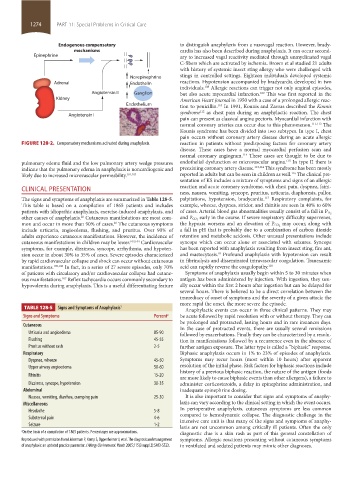
                 FIGURE 128-2.  Compensatory mechanisms activated during anaphylaxis.  reaction in patients without predisposing factors for coronary artery
                                                                       disease. These cases have a normal myocardial perfusion scan and
                                                                       normal coronary angiogram.  These cases are thought to be due to
                                                                                             114
                                                                                                           115
                 pulmonary edema fluid and the low pulmonary artery wedge pressures   endothelial dysfunction or microvascular angina.  In type II there is
                 indicate that the pulmonary edema in anaphylaxis is noncardiogenic and   preexisting coronary artery disease. 113,114  This syndrome has been mostly
                                                                                                             116
                 likely due to increased microvascular permeability. 101,102  reported in adults but can be seen in children as well.  The clinical pre-
                                                                       sentation of KS includes a mixture of symptoms and signs of an allergic
                 CLINICAL PRESENTATION                                 reaction and acute coronary syndrome, with chest pain, dyspnea, faint-
                                                                       ness, nausea, vomiting, syncope, pruritus, urticaria, diaphoresis, pallor,
                 The signs and symptoms of anaphylaxis are summarized in Table 128-5.    palpitations, hypotension, bradycardia.  Respiratory complaints, for
                                                                                                    117
                 This table is based on a compilation of 1865 patients and includes   example, wheeze, dyspnea, stridor, and rhinitis are seen in 40% to 60%
                 patients with idiopathic anaphylaxis, exercise-induced anaphylaxis, and   of cases. Arterial blood gas abnormalities usually consist of a fall in P O 2
                 other causes of anaphylaxis.  Cutaneous manifestations are most com-  and P CO 2  early in the course. If severe respiratory difficulty supervenes,
                                     20
                 mon and occur in more than 90% of cases.  The cutaneous symptoms   the hypoxia worsens and an elevation of P CO 2  may occur, along with
                                                 20
                 include urticaria, angioedema, flushing, and pruritus. Over 90% of   a fall in pH that is probably due to a combination of carbon dioxide
                 adults experience cutaneous manifestations. However, the incidence of   retention and metabolic acidosis. Other unusual presentations include
                 cutaneous manifestations in children may be lower. 103,104  Cardiovascular   syncope which can occur alone or associated with seizures. Syncope
                 symptoms, for example, dizziness, syncope, arrhythmia, and hypoten-  has been reported with anaphylaxis resulting from insect sting, fire ant,
                 sion occur in about 30% to 35% of cases. Severe episodes characterized   and mastocytosis.  Profound anaphylaxis with hypotension can result
                                                                                    10
                 by rapid cardiovascular collapse and shock can occur without cutaneous   in fibrinolysis and disseminated intravascular coagulation. Tranexamic
                 manifestations. 105,106  In fact, in a series of 27 severe episodes, only 70%   acid can rapidly reverse the coagulopathy. 118
                 of patients with circulatory and/or cardiovascular collapse had cutane-  Symptoms of anaphylaxis usually begin within 5 to 30 minutes when
                 ous manifestations.  Reflex tachycardia occurs commonly secondary to   antigen has been administered by injection. With ingestion, they usu-
                               107
                 hypovolemia during anaphylaxis. This is a useful differentiating feature   ally occur within the first 2 hours after ingestion but can be delayed for
                                                                       several hours. There is believed to be a direct correlation between the
                                                                       immediacy of onset of symptoms and the severity of a given attack: the
                                                                       more rapid the onset, the more severe the episode.
                   TABLE 128-5    Signs and Symptoms of Anaphylaxis 1    Anaphylactic events can occur in three clinical patterns. They may
                  Signs and Symptoms                          Percent a  be acute followed by rapid resolution with or without therapy. They can
                                                                       be prolonged and protracted, lasting hours and in rare instances days.
                  Cutaneous                                            In the case of protracted events, there are usually several remissions
                    Urticaria and angioedema                  85-90    followed by exacerbations. Finally they can be characterized by a resolu-
                    Flushing                                  45-55    tion in manifestations followed by a recurrence even in the absence of
                    Pruritus without rash                     2-5      further antigen exposure. The latter type is called a “biphasic” response.
                  Respiratory                                          Biphasic anaphylaxis occurs in 1% to 23% of episodes of anaphylaxis.
                    Dyspnea, wheeze                           45-50    Symptoms may recur hours (most within 10 hours) after apparent
                    Upper airway angioedema                   50-60    resolution of the initial phase. Risk factors for biphasic reactions include
                                                                       history of a previous biphasic reaction, the nature of the antigen (foods
                    Rhinitis                                  15-20
                                                                       are more likely to cause biphasic events than other allergens), a failure to
                    Dizziness, syncope, hypotension           30-35    administer corticosteroids, a delay in epinephrine administration, and
                  Abdominal                                            inadequate epinephrine dosing.
                    Nausea, vomiting, diarrhea, cramping pain   25-30    It is also important to consider that signs and symptoms of anaphy-
                  Miscellaneous                                        laxis can vary according to the clinical setting in which the event occurs.
                    Headache                                  5-8      In perioperative anaphylaxis, cutaneous symptoms are less common
                                                                       compared to hemodynamic collapse. The diagnostic challenge in the
                    Substernal pain                           4-6      intensive care unit is that many of the signs and symptoms of anaphy-
                    Seizure                                   1-2      laxis are not uncommon among critically ill patients. Often the only
                 a On the basis of a compilation of 1865 patients. Percentages are approximations.  diagnostic clue is a skin rash as part of this general constellation of
                 Reproduced with permission from Lieberman P, Kemp S, Oppenheimer J, et al. The diagnosis and management   symptoms. Allergic reactions presenting without cutaneous symptoms
                 of anaphylaxis: an updated practice parameter. J Allergy Clin Immunol. March 2005;115(3 suppl 2):S483-S523.  in ventilated and sedated patients may mimic other diagnoses.


            section11.indd   1274                                                                                      1/19/2015   10:52:28 AM

