


Page 215 - Textbook of Pathology, 6th Edition
P. 215
pre-existing ones (angiogenesis). How this takes place under  199
                                                               the influence of angiogenic factors elaborated by tumour cells
                                                               such as vascular endothelium growth factor (VEGF) is
                                                               discussed later under molecular pathogenesis of cancer.
                                                               However, related morphologic features are as under:
                                                               i) Microvascular density. The new capillaries add to the
                                                               vascular density of the tumour which has been used as a  CHAPTER 8
                                                               marker to assess the rate of growth of tumours and hence
                                                               grade the tumours. This is done by counting microvascular
                                                               density in the section of the tumour.
                                                               ii) Central necrosis. However, if the tumour outgrows its blood
                                                               supply as occurs in rapidly growing tumours or tumour
                                                               angiogenesis fails, its core undergoes ischaemic necrosis.
                                                               TUMOUR STROMA. The collagenous tissue in the stroma    Neoplasia
                                                               may be scanty or excessive. In the former case, the tumour is
                                                               soft and fleshy (e.g. in sarcomas, lymphomas), while in the
                                                               latter case the tumour is hard and gritty (e.g. infiltrating duct
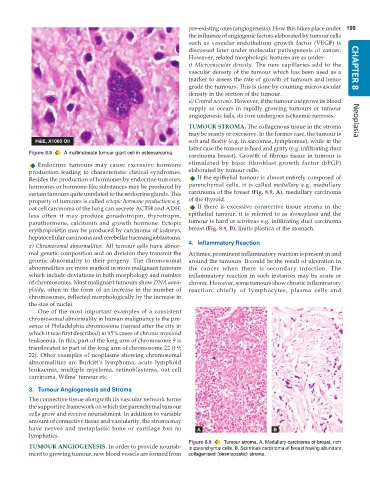
           Figure 8.8  A multinulceate tumour giant cell in osteosarcoma.
                                                               carcinoma breast). Growth of fibrous tissue in tumour is
              Endocrine tumours may cause excessive hormone    stimulated by basic fibroblast growth factor (bFGF)
           production leading to characteristic clinical syndromes.  elaborated by tumour cells.
           Besides the production of hormones by endocrine tumours,  If the epithelial tumour is almost entirely composed of
           hormones or hormone-like substances may be produced by  parenchymal cells, it is called  medullary  e.g. medullary
           certain tumours quite unrelated to the endocrine glands. This  carcinoma of the breast (Fig. 8.9, A), medullary carcinoma
           property of tumours is called ectopic hormone production e.g.  of the thyroid.
           oat cell carcinoma of the lung can secrete ACTH and ADH;  If there is excessive connective tissue stroma in the
           less often it may  produce gonadotropin, thyrotropin,  epithelial tumour, it is referred to as  desmoplasia and the
           parathormone, calcitonin and growth hormone. Ectopic  tumour is hard or scirrhous e.g. infiltrating duct carcinoma
           erythropoietin may be produced by carcinoma of kidneys,  breast (Fig. 8.9, B), linitis plastica of the stomach.
           hepatocellular carcinoma and cerebellar haemangioblastoma.
           x) Chromosomal abnormalities. All tumour cells have abnor-  4. Inflammatory Reaction
           mal genetic composition and on division they transmit the  At times, prominent inflammatory reaction is present in and
           genetic abnormality to their progeny. The chromosomal  around the tumours. It could be the result of ulceration in
           abnormalities are more marked in more malignant tumours  the cancer when there is secondary infection. The
           which include deviations in both morphology and number  inflammatory reaction in such instances may be acute or
           of chromosomes. Most malignant tumours show DNA aneu-  chronic. However, some tumours show chronic inflammatory
           ploidy, often in the form of an increase in the number of  reaction, chiefly of lymphocytes, plasma cells and
           chromosomes, reflected morphologically by the increase in
           the size of nuclei.
              One of the most important examples of a consistent
           chromosomal abnormality in human malignancy is the pre-
           sence of Philadelphia chromosome (named after the city in
           which it was first described) in 95% cases of chronic myeloid
           leukaemia. In this, part of the long arm of chromosome 9 is
           translocated to part of the long arm of chromosome 22 (t 9;
           22). Other examples of neoplasms showing chromosomal
           abnormalities are Burkitt’s lymphoma, acute lymphoid
           leukaemia, multiple myeloma, retinoblastoma, oat cell
           carcinoma, Wilms’ tumour etc.

           3. Tumour Angiogenesis and Stroma
           The connective tissue alongwith its vascular network forms
           the supportive framework on which the parenchymal tumour
           cells grow and receive nourishment. In addition to variable
           amount of connective tissue and vascularity, the stroma may
           have nerves and metaplastic bone or cartilage but no
           lymphatics.
                                                               Figure 8.9  Tumour stroma. A, Medullary carcinoma of breast, rich
           TUMOUR ANGIOGENESIS. In order to provide nourish-   in parenchymal cells. B, Scirrhous carcinoma of breast having abundant
           ment to growing tumour, new blood vessels are formed from  collagenised (desmopastic) stroma.

