


Page 292 - Textbook of Pathology, 6th Edition
P. 292
276                                                      24-hour collections of urine are useless for cytodiagnostic
                                                               purposes.
                                                               9. EFFUSIONS. Pericardial, pleural and peritoneal fluids
                                                               are obtained by paracentesis. As these fluids are often
                                                               exudative in character, they may clot after removal from
                                                               respective cavities. Anticoagulants may be used to prevent
                                                               coagulation—heparin (3-5 units per ml), 3.8% sodium citrate
                                                               (1 ml per 10 ml), or EDTA (1 mg per ml) may be used for this
                                                               purpose.
     SECTION I
                                                                  If the fluids cannot be processed within 12 hours of
                                                               collection, an equal volume of 50% ethanol or 10% formalin
                                                               should be added.

                                                               10. CEREBROSPINAL FLUID (CSF). CSF samples should
                                                               be despatched without delay to the laboratory for immediate
                                                               processing as the cells contained are extremely fragile. A gap
                                                               of even 1 hour between removal and processing may result
                                                               in loss of diagnostic cellular material.
                                                               11.  SEMEN.  Samples of seminal fluid obtained by
                                                               masturbation are best collected at the laboratory. Samples
                                                               obtained by coitus interruptus are collected in clean, dry test
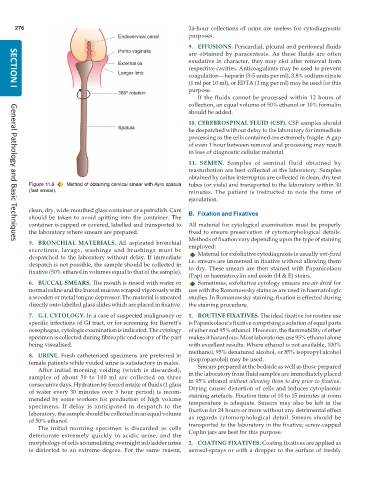
           Figure 11.9  Method of obtaining cervical smear with Ayre spatula  tubes (or vials) and transported to the laboratory within 30
           (fast smear).                                       minutes. The patient is instructed to note the time of
                                                               ejaculation.

           clean, dry, wide-mouthed glass container or a petridish. Care  B. Fixation and Fixatives
           should be taken to avoid spitting into the container. The
           container is capped or covered, labelled and transported to  All material for cytological examination must be properly
           the laboratory where smears are prepared.           fixed to ensure preservation of cytomorphological details.
                                                               Methods of fixation vary depending upon the type of staining
           5. BRONCHIAL MATERIALS.  All aspirated bronchial    employed:
     General Pathology and Basic Techniques
           secretions, lavage, washings and brushings must be
                                                                  Material for exfoliative cytodiagnosis is usually wet-fixed
           despatched to the laboratory without delay. If immediate  i.e. smears are immersed in fixative without allowing them
           despatch is not possible, the sample should be collected in  to dry. These smears are then stained with Papanicolaou
           fixative (50% ethanol in volumes equal to that of the sample).
                                                               (Pap) or haematoxylin and eosin (H & E) stains.
           6. BUCCAL SMEARS. The mouth is rinsed with water or    Sometimes, exfoliative cytology smears are air-dried for
           normal saline and the buccal mucosa scraped vigorously with  use with the Romanowsky stains as are used in haematologic
           a wooden or metal tongue depressor. The material is smeared  studies. In Romanowsky staining, fixation is effected during
           directly onto labelled glass slides which are placed in fixative.  the staining procedure.
           7. G.I. CYTOLOGY. In a case of suspected malignancy or  1. ROUTINE FIXATIVES. The ideal fixative for routine use
           specific infections of GI tract, or for screening for Barrett’s  is Papanicolaou’s fixative comprising a solution of equal parts
           oesophagus, cytologic examination is indicated. The cytology  of ether and 95% ethanol. However, the flammability of ether
           specimen is collected during fibreoptic endoscopy of the part  makes it hazardous. Most laboratories use 95% ethanol alone
           being visualised.                                   with excellent results. Where ethanol is not available, 100%
                                                               methanol, 95% denatured alcohol, or 85% isopropyl alcohol
           8. URINE. Fresh catheterised specimens are preferred in  (isopropanolol) may be used.
           female patients while voided urine is satisfactory in males.  Smears prepared at the bedside as well as those prepared
              After initial morning voiding (which is discarded),
           samples of about 50 to 100 ml are collected on three  in the laboratory from fluid samples are immediately placed
           consecutive days. Hydration by forced intake of fluids (1 glass  in 95% ethanol without allowing them to dry prior to fixation.
                                                               Drying causes distortion of cells and induces cytoplasmic
           of water every 30 minutes over 3 hour period) is recom-  staining artefacts. Fixation time of 10 to 15 minutes at room
           mended by some workers for production of high volume  temperature is adequate. Smears may also be left in the
           specimens. If delay is anticipated in despatch to the  fixative for 24 hours or more without any detrimental effect
           laboratory, the sample should be collected in an equal volume  as regards cytomorphological detail. Smears should be
           of 50% ethanol.                                     transported to the laboratory in the fixative; screw-capped
              The initial morning specimen is discarded as cells
           deteriorate extremely quickly in acidic urine, and the  Coplin jars are best for this purpose.
           morphology of cells accumulating overnight in bladder urine  2. COATING FIXATIVES. Coating fixatives are applied as
           is distorted to an extreme degree. For the same reason,  aerosol-sprays or with a dropper to the surface of freshly

