


Page 363 - Textbook of Pathology, 6th Edition
P. 363
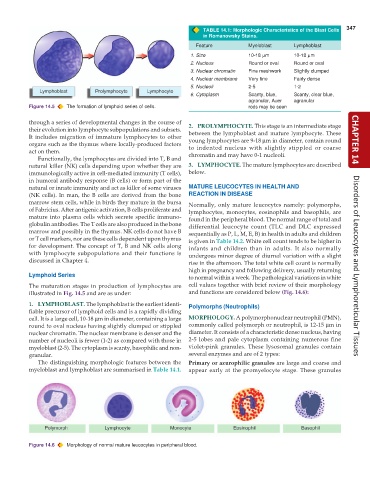
TABLE 14.1: Morphologic Characteristics of the Blast Cells 347
in Romanowsky Stains.
Feature Myeloblast Lymphoblast
1. Size 10-18 μm 10-18 μm
2. Nucleus Round or oval Round or oval
3. Nuclear chromatin Fine meshwork Slightly clumped
4. Nuclear membrane Very fine Fairly dense
5. Nucleoli 2-5 1-2
6. Cytoplasm Scanty, blue, Scanty, clear blue,
agranular, Auer agranular
Figure 14.5 The formation of lymphoid series of cells. rods may be seen
through a series of developmental changes in the course of 2. PROLYMPHOCYTE. This stage is an intermediate stage
their evolution into lymphocyte subpopulations and subsets. between the lymphoblast and mature lymphocyte. These
It includes migration of immature lymphocytes to other young lymphocytes are 9-18 μm in diameter, contain round
organs such as the thymus where locally-produced factors to indented nucleus with slightly stippled or coarse CHAPTER 14
act on them. chromatin and may have 0-1 nucleoli.
Functionally, the lymphocytes are divided into T, B and
natural killer (NK) cells depending upon whether they are 3. LYMPHOCYTE. The mature lymphocytes are described
immunologically active in cell-mediated immunity (T cells), below.
in humoral antibody response (B cells) or form part of the
natural or innate immunity and act as killer of some viruses MATURE LEUCOCYTES IN HEALTH AND
(NK cells). In man, the B cells are derived from the bone REACTION IN DISEASE
marrow stem cells, while in birds they mature in the bursa Normally, only mature leucocytes namely: polymorphs,
of Fabricius. After antigenic activation, B cells proliferate and lymphocytes, monocytes, eosinophils and basophils, are
mature into plasma cells which secrete specific immuno- found in the peripheral blood. The normal range of total and
globulin antibodies. The T cells are also produced in the bone differential leucocyte count (TLC and DLC expressed
marrow and possibly in the thymus. NK cells do not have B sequentially as P, L, M, E, B) in health in adults and children
or T cell markers, nor are these cells dependent upon thymus is given in Table 14.2. White cell count tends to be higher in
for development. The concept of T, B and NK cells along infants and children than in adults. It also normally
with lymphocyte subpopulations and their functions is undergoes minor degree of diurnal variation with a slight
discussed in Chapter 4. rise in the afternoon. The total white cell count is normally
high in pregnancy and following delivery, usually returning Disorders of Leucocytes and Lymphoreticular Tissues
Lymphoid Series to normal within a week. The pathological variations in white
The maturation stages in production of lymphocytes are cell values together with brief review of their morphology
illustrated in Fig. 14.5 and are as under: and functions are considered below (Fig. 14.6):
1. LYMPHOBLAST. The lymphoblast is the earliest identi- Polymorphs (Neutrophils)
fiable precursor of lymphoid cells and is a rapidly dividing
cell. It is a large cell, 10-18 μm in diameter, containing a large MORPHOLOGY. A polymorphonuclear neutrophil (PMN),
round to oval nucleus having slightly clumped or stippled commonly called polymorph or neutrophil, is 12-15 μm in
nuclear chromatin. The nuclear membrane is denser and the diameter. It consists of a characteristic dense nucleus, having
number of nucleoli is fewer (1-2) as compared with those in 2-5 lobes and pale cytoplasm containing numerous fine
myeloblast (2-5). The cytoplasm is scanty, basophilic and non- violet-pink granules. These lysosomal granules contain
granular. several enzymes and are of 2 types:
The distinguishing morphologic features between the Primary or azurophilic granules are large and coarse and
myeloblast and lymphoblast are summarised in Table 14.1. appear early at the promyelocyte stage. These granules
Figure 14.6 Morphology of normal mature leucocytes in peripheral blood.

