


Page 724 - Textbook of Pathology, 6th Edition
P. 724
708


     SECTION III
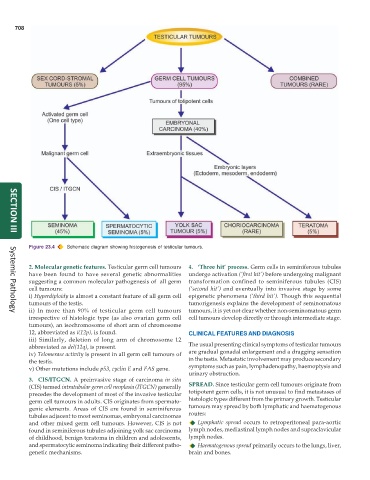
           Figure 23.4  Schematic diagram showing histogenesis of testicular tumours.


           2. Molecular genetic features. Testicular germ cell tumours  4. ‘Three hit’ process. Germ cells in seminiferous tubules
           have been found to have several genetic abnormalities  undergo activation (‘first hit’) before undergoing malignant
           suggesting a common molecular pathogenesis of  all germ  transformation confined to seminiferous tubules (CIS)
           cell tumours:                                       (‘second hit’) and eventually into invasive stage by some
           i) Hyperdiploidy is almost a constant feature of all germ cell  epigenetic phenomena (‘third hit’). Though this sequential
           tumours of the testis.                              tumorigenesis explains the development of seminomatous
           ii) In more than 90% of testicular germ cell tumours  tumours, it is yet not clear whether non-seminomatous germ
     Systemic Pathology
           irrespective of histologic type (as also ovarian germ cell  cell tumours develop directly or through intermediate stage.
           tumours), an isochromosome of short arm of chromosome
           12, abbreviated as i(12p), is found.                CLINICAL FEATURES AND DIAGNOSIS
           iii) Similarly, deletion of long arm of chromosome 12
           abbreviated as del(12q), is present.                The usual presenting clinical symptoms of testicular tumours
           iv) Telomerase activity is present in all germ cell tumours of  are gradual gonadal enlargement and a dragging sensation
           the testis.                                         in the testis. Metastatic involvement may produce secondary
           v) Other mutations include p53, cyclin E and FAS gene.  symptoms such as pain, lymphadenopathy, haemoptysis and
                                                               urinary obstruction.
           3. CIS/ITGCN. A preinvasive stage of carcinoma in situ
           (CIS) termed intratubular germ cell neoplasia (ITGCN) generally  SPREAD. Since testicular germ cell tumours originate from
           precedes the development of most of the invasive testicular  totipotent germ cells, it is not unusual to find metastases of
           germ cell tumours in adults. CIS originates from spermato-  histologic types different from the primary growth. Testicular
           genic elements. Areas of CIS are found in seminiferous  tumours may spread by both lymphatic and haematogenous
           tubules adjacent to most seminomas, embryonal carcinomas  routes:
           and other mixed germ cell tumours. However, CIS is not  Lymphatic spread occurs to retroperitoneal para-aortic
           found in seminiferous tubules adjoining yolk sac carcinoma  lymph nodes, mediastinal lymph nodes and supraclavicular
           of childhood, benign teratoma in children and adolescents,  lymph nodes.
           and spermatocytic seminoma indicating their different patho-  Haematogenous spread primarily occurs to the lungs, liver,
           genetic mechanisms.                                 brain and bones.

