


Page 855 - Textbook of Pathology, 6th Edition
P. 855
839


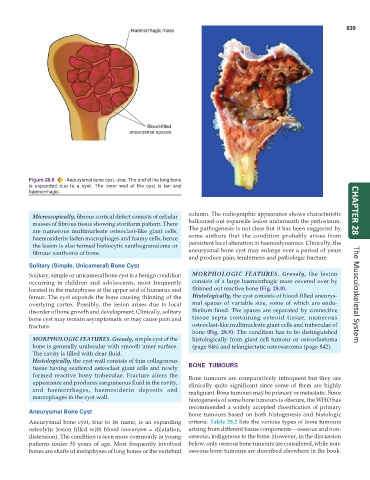
           Figure 28.8  Aneurysmal bone cyst, ulna. The end of the long bone
           is expanded due to a cyst. The inner wall of the cyst is tan and
           haemorrhagic.


            Microscopically, fibrous cortical defect consists of cellular  column. The radiographic appearance shows characteristic  CHAPTER 28
            masses of fibrous tissue showing storiform pattern. There  ballooned-out expansile lesion underneath the periosteum.
            are numerous multinucleate osteoclast-like giant cells,  The pathogenesis is not clear but it has been suggested by
            haemosiderin-laden macrophages and foamy cells; hence  some authors that the condition probably arises from
            the lesion is also termed histiocytic xanthogranuloma or  persistent local alteration in haemodynamics. Clinically, the
            fibrous xanthoma of bone.                          aneurysmal bone cyst may enlarge over a period of years
                                                               and produce pain, tenderness and pathologic fracture.
           Solitary (Simple, Unicameral) Bone Cyst
           Solitary, simple or unicameral bone cyst is a benign condition  MORPHOLOGIC FEATURES. Grossly, the lesion
           occurring in children and adolescents, most frequently  consists of a large haemorrhagic mass covered over by
           located in the metaphyses at the upper end of humerus and  thinned out reactive bone (Fig. 28.8).
           femur. The cyst expands the bone causing thinning of the  Histologically, the cyst consists of blood-filled aneurys-  The Musculoskeletal System
           overlying cortex. Possibly, the lesion arises due to local  mal spaces of variable size, some of which are endo-
           disorder of bone growth and development. Clinically, solitary  thelium-lined. The spaces are separated by connective
           bone cyst may remain asymptomatic or may cause pain and  tissue septa containing osteoid tissue, numerous
           fracture.                                             osteoclast-like multinucleate giant cells and trabeculae of
                                                                 bone (Fig. 28.9). The condition has to be distinguished
            MORPHOLOGIC FEATURES. Grossly, simple cyst of the    histologically from giant cell tumour or osteoclastoma
            bone is generally unilocular with smooth inner surface.  (page 846) and telangiectatic osteosarcoma (page 842).
            The cavity is filled with clear fluid.
            Histologically, the cyst wall consists of thin collagenous
            tissue having scattered osteoclast giant cells and newly  BONE  TUMOURS
            formed reactive bony trabeculae. Fracture alters the  Bone tumours are comparatively infrequent but they are
            appearance and produces sanguineous fluid in the cavity,  clinically quite significant since some of them are highly
            and haemorrhages, haemosiderin deposits and        malignant. Bone tumours may be primary or metastatic. Since
            macrophages in the cyst wall.
                                                               histogenesis of some bone tumours is obscure, the WHO has
                                                               recommended a widely accepted classification of primary
           Aneurysmal Bone Cyst
                                                               bone tumours based on both histogenesis and histologic
           Aneurysmal bone cyst, true to its name, is an expanding  criteria. Table 28.2 lists the various types of bone tumours
           osteolytic lesion filled with blood (aneurysm = dilatation,  arising from different tissue components—osseous and non-
           distension). The condition is seen more commonly in young  osseous, indigenous to the bone. However, in the discussion
           patients under 30 years of age. Most frequently involved  below, only osseous bone tumours are considered, while non-
           bones are shafts of metaphyses of long bones or the vertebral  osseous bone tumours are described elsewhere in the book.

