


Page 878 - Textbook of Pathology, 6th Edition
P. 878
862                                                      KELOID. A keloid is a progressive fibrous overgrowth in
                                                               response to cutaneous injury such as burns, incisions, insect
                                                               bites, vaccinations and others. Keloids are found more often
                                                               in blacks. Their excision is frequently followed by
                                                               recurrences.

                                                                 Grossly, the keloid is a firm, smooth, pink, raised patch
                                                                 from which extend claw-like processes (keloid-claw).
                                                                 Histologically, it is composed of thick, homogeneous,
                                                                 eosinophilic hyalinised bands of collagen admixed with
                                                                 thin collagenous fibres and large active fibroblasts. The
                                                                 adnexal structures are atrophic or destroyed.
                                                                  There are some differences between a  keloid  and a
                                                               hypertrophic scar. A hypertrophic scar of the skin is more
                                                               cellular and has numerous fibroblasts than a keloid and is
                                                               composed of thinner collagenous fibres. A keloid is a
                                                               progressive lesion and liable to recurrences after surgical
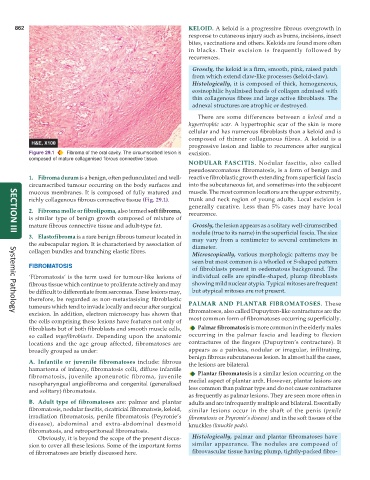
           Figure 29.1  Fibroma of the oral cavity. The circumscribed lesion is  excision.
           composed of mature collagenised fibrous connective tissue.
                                                               NODULAR FASCITIS.  Nodular fascitis, also called
                                                               pseudosarcomatous fibromatosis, is a form of benign and
           1. Fibroma durum is a benign, often pedunculated and well-  reactive fibroblastic growth extending from superficial fascia
           circumscribed tumour occurring on the body surfaces and  into the subcutaneous fat, and sometimes into the subjacent
           mucous membranes. It is composed of fully matured and  muscle. The most common locations are the upper extremity,
           richly collagenous fibrous connective tissue (Fig. 29.1).  trunk and neck region of young adults. Local excision is
                                                               generally curative. Less than 5% cases may have local
           2. Fibroma molle or fibrolipoma, also termed soft fibroma,  recurrence.
           is similar type of benign growth composed of mixture of
           mature fibrous connective tissue and adult-type fat.  Grossly, the lesion appears as a solitary well-cirumscribed
                                                                 nodule (true to its name) in the superficial fascia. The size
     SECTION III
           3. Elastofibroma is a rare benign fibrous tumour located in  may vary from a centimeter to several centimeters in
           the subscapular region. It is characterised by association of  diameter.
           collagen bundles and branching elastic fibres.
                                                                 Microscopically, various morphologic patterns may be
                                                                 seen but most common is a whorled or S-shaped pattern
           FIBROMATOSIS
                                                                 of fibroblasts present in oedematous background. The
           ‘Fibromatosis’ is the term used for tumour-like lesions of  individual cells are spindle-shaped, plump fibroblasts
           fibrous tissue which continue to proliferate actively and may  showing mild nuclear atypia. Typical mitoses are frequent
           be difficult to differentiate from sarcomas. These lesions may,  but atypical mitoses are not present.
           therefore, be regarded as non-metastasising fibroblastic
           tumours which tend to invade locally and recur after surgical  PALMAR AND PLANTAR FIBROMATOSES.  These
           excision. In addition, electron microscopy has shown that  fibromatoses, also called Dupuytren-like contractures are the
     Systemic Pathology
           the cells comprising these lesions have features not only of  most common form of fibromatoses occurring superficially.
           fibroblasts but of both fibroblasts and smooth muscle cells,  Palmar fibromatosis is more common in the elderly males
           so called  myofibroblasts.  Depending upon the anatomic  occurring in the palmar fascia and leading to flexion
           locations and the age group affected, fibromatoses are  contractures of the fingers (Dupuytren’s contracture). It
           broadly grouped as under:                           appears as a painless, nodular or irregular, infiltrating,
                                                               benign fibrous subcutaneous lesion. In almost half the cases,
           A. Infantile or juvenile fibromatoses  include: fibrous  the lesions are bilateral.
           hamartoma of infancy, fibromatosis colli, diffuse infantile
           fibromatosis, juvenile aponeurotic fibroma, juvenile   Plantar fibromatosis is a similar lesion occurring on the
           nasopharyngeal angiofibroma and congenital (generalised  medial aspect of plantar arch. However, plantar lesions are
           and solitary) fibromatosis.                         less common than palmar type and do not cause contractures
                                                               as frequently as palmar lesions. They are seen more often in
           B. Adult type of fibromatoses  are: palmar and plantar  adults and are infrequently multiple and bilateral. Essentially
           fibromatosis, nodular fascitis, cicatricial fibromatosis, keloid,  similar lesions occur in the shaft of the penis  (penile
           irradiation fibromatosis, penile fibromatosis (Peyronie’s  fibromatosis or Peyronie’s disease) and in the soft tissues of the
           disease), abdominal and extra-abdominal desmoid     knuckles (knuckle pads).
           fibromatosis, and retroperitoneal fibromatosis.
              Obviously, it is beyond the scope of the present discus-  Histologically, palmar and plantar fibromatoses have
           sion to cover all these lesions. Some of the important forms  similar appearance. The nodules are composed of
           of fibromatoses are briefly discussed here.           fibrovascular tissue having plump, tightly-packed fibro-

