


Page 126 - 9780077418427.pdf
P. 126
/Users/user-f465/Desktop
          tiL12214_ch04_085-114.indd Page 103  9/1/10  9:38 PM user-f465
          tiL12214_ch04_085-114.indd Page 103  9/1/10  9:38 PM user-f465                                                /Users/user-f465/Desktop


                             25      25
                                                         10
                                    5                               10
                              5                            15
                          10       10                    5     5
                                       5
                              5                                     5
                                  15                            5
                                     10                   10


                                  115                           65
                           Average =       = 11.5       Average =       = 8.1
                                  10                            8
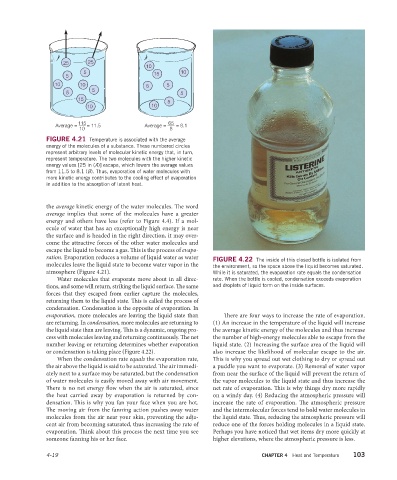
                       FIGURE 4.21  Temperature is associated with the average
                       energy of the molecules of a substance. These numbered circles
                       represent arbitrary levels of molecular kinetic energy that, in turn,
                       represent temperature. The two molecules with the higher kinetic
                       energy values [25 in (A)] escape, which lowers the average values
                       from 11.5 to 8.1 (B). Thus, evaporation of water molecules with
                       more kinetic energy contributes to the cooling effect of evaporation
                       in addition to the absorption of latent heat.


                       the average kinetic energy of the water molecules. Th e word
                       average implies that some of the molecules have a greater
                       energy and others have less (refer to Figure 4.4). If a mol-
                       ecule of water that has an exceptionally high energy is near
                       the  surface and is headed in the right direction, it may over-
                       come the  attractive forces of the other  water molecules and
                       escape the liquid to become a gas. This is the process of evapo-

                       ration. Evaporation reduces a volume of liquid water as water
                                                                               FIGURE 4.22  The inside of this closed bottle is isolated from
                       molecules leave the liquid state to become water vapor in the   the environment, so the space above the liquid becomes saturated.
                         atmosphere (Figure 4.21).                             While it is saturated, the evaporation rate equals the condensation
                           Water molecules that evaporate move about in all direc-  rate. When the bottle is cooled, condensation exceeds evaporation
                       tions, and some will return, striking the liquid surface. Th e same   and droplets of liquid form on the inside surfaces.
                       forces that they escaped from earlier capture the molecules,
                       returning them to the liquid state. This is called the process of

                       condensation. Condensation is the opposite of evaporation. In
                       evaporation, more molecules are leaving the liquid state than   There are four ways to increase the rate of evaporation.

                       are returning. In condensation, more molecules are returning to   (1) An increase in the temperature of the liquid will increase
                       the liquid state than are leaving. This is a dynamic, ongoing pro-  the average kinetic energy of the molecules and thus increase

                       cess with molecules leaving and returning continuously. Th e net   the number of high-energy molecules able to escape from the
                       number leaving or returning determines whether evaporation   liquid state. (2) Increasing the surface area of the liquid will
                       or condensation is taking place (Figure 4.22).          also increase the like lihood of molecular escape to the air.

                           When the condensation rate equals the evaporation rate,   This is why you spread out wet clothing to dry or spread out
                       the air above the liquid is said to be saturated. The air immedi-  a puddle you want to evaporate. (3) Removal of water vapor

                       ately next to a surface may be saturated, but the condensation   from near the surface of the liquid will prevent the return of
                       of water molecules is easily moved away with air movement.   the vapor molecules to the liquid state and thus increase the
                       There is no net energy flow when the air is saturated, since   net rate of evaporation. This is why things dry more rapidly


                       the heat carried away by evaporation is returned by con-  on a windy day. (4) Reducing the atmospheric  pressure will


                       densation. This is why you fan your face when you are hot.   increase the rate of evaporation. The atmospheric pressure
                       The moving air from the fanning action pushes away water   and the intermolecular forces tend to hold water molecules in


                       molecules from the air near your skin, preventing the adja-  the liquid state. Thus, reducing the atmospheric pressure will
                       cent air from becoming saturated, thus increasing the rate of   reduce one of the forces holding molecules in a liquid state.

                       evaporation. Think about this process the next time you see   Perhaps you have noticed that wet items dry more quickly at
                       someone fanning his or her face.                        higher elevations, where the atmospheric pressure is less.
                       4-19                                                                    CHAPTER 4  Heat and Temperature   103

