


Page 125 - 9780077418427.pdf
P. 125
/Users/user-f465/Desktop
tiL12214_ch04_085-114.indd Page 102 9/1/10 9:38 PM user-f465
tiL12214_ch04_085-114.indd Page 102 9/1/10 9:38 PM user-f465 /Users/user-f465/Desktop
Warm- Phase Warming Phase Warming SOLUTION
ing change change
This type of problem is best solved by subdividing it into smaller
steps that consider (1) the heat added or removed and the resulting
Q = mLv temperature changes for each phase of the substance and (2) the heat
flow resulting from any phase change that occurs within the ranges
Temperature (°C) 100 Q = mLf involved in each phase change and the heat involved in the heating
of changes as identified by the problem (see Figure 4.20). Th e heat
or cooling of each phase are identifi ed as Q 1 , Q 2 , and so forth. Tem-
perature readings are calculated with absolute values, so you ignore any
positive or negative signs.
1. Water in the liquid state cools from 20.0°C to 0°C (the freezing
0
point) according to the relationship Q = mcΔT, where c is the
Ice specific heat of water, and
and Liquid Water and
Ice water water water vapor Water vapor Q 1 = mcΔT
–20
cal
(
)
= (100.0 g) 1.00 _ (0°C – 20.0°C)
Constant heat input (cal) gC°
g . cal . C°
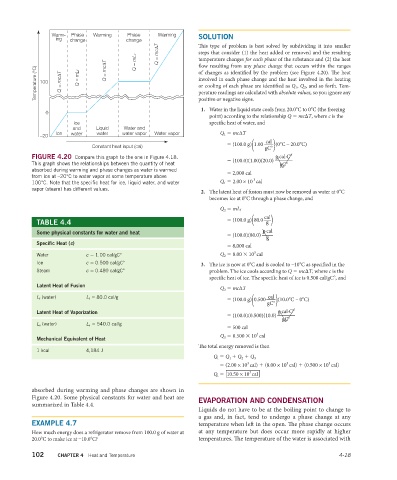
FIGURE 4.20 Compare this graph to the one in Figure 4.18. _
= (100.0)(1.00)(20.0)
This graph shows the relationships between the quantity of heat gC°
absorbed during warming and phase changes as water is warmed
= 2,000 cal
from ice at –20°C to water vapor at some temperature above 3
100°C. Note that the specific heat for ice, liquid water, and water Q 1 = 2.00 × 10 cal
vapor (steam) has different values.
2. The latent heat of fusion must now be removed as water at 0°C
becomes ice at 0°C through a phase change, and
Q 2 = mL f
cal _
(
g )
TABLE 4.4 = (100.0 g) 80.0
g . cal
Some physical constants for water and heat _
= (100.0)(80.0)
g
Specific Heat (c)
= 8,000 cal
3
Water c = 1.00 cal/gC° Q 2 = 8.00 × 10 cal
Ice c = 0.500 cal/gC° 3. The ice is now at 0°C and is cooled to –10°C as specified in the
Steam c = 0.480 cal/gC° problem. The ice cools according to Q = mcΔT, where c is the
specific heat of ice. The specific heat of ice is 0.500 cal/gC°, and
Latent Heat of Fusion
Q 3 = mcΔT
)
(
cal
L f (water) L f = 80.0 cal/g = (100.0 g) 0.500 _ (10.0°C – 0°C)
gC°
g . cal . C°
Latent Heat of Vaporization _
= (100.0)(0.500)(10.0)
gC°
L v (water) L v = 540.0 cal/g
= 500 cal
3
Q 3 = 0.500 × 10 cal
Mechanical Equivalent of Heat
The total energy removed is then
1 kcal 4,184 J
Q t = Q 1 + Q 2 + Q 3
= (2.00 × 10 cal) + (8.00 × 10 cal) + (0.500 × 10 cal)
3
3
3
3
Q t = 10.50 × 10 cal
absorbed during warming and phase changes are shown in
Figure 4.20. Some physical constants for water and heat are EVAPORATION AND CONDENSATION
summarized in Table 4.4.
Liquids do not have to be at the boiling point to change to
a gas and, in fact, tend to undergo a phase change at any
EXAMPLE 4.7 temperature when left in the open. The phase change occurs
How much energy does a refrigerator remove from 100.0 g of water at at any temperature but does occur more rapidly at higher
20.0°C to make ice at –10.0°C? temperatures. The temperature of the water is associated with
102 CHAPTER 4 Heat and Temperature 4-18

