


Page 123 - 9780077418427.pdf
P. 123
/Users/user-f465/Desktop
          tiL12214_ch04_085-114.indd Page 100  9/1/10  9:37 PM user-f465
          tiL12214_ch04_085-114.indd Page 100  9/1/10  9:37 PM user-f465                                                /Users/user-f465/Desktop


                           Ice   Ice    Liquid   Water and  Water vapor
                                and     water    water vapor
                                                             Warming
                                water
                                                   Phase
                                Phase             change
                               change
                    Temperature (°C)  100         Boiling


                               Melting  Warming
                       0
                          Warming

                                                                           A                            B
                      –20
                                                                          FIGURE 4.19  (A) Work is done against gravity to lift an object,
                                      Constant heat input (cal)
                                                                          giving the object more gravitational potential energy. (B) Work is
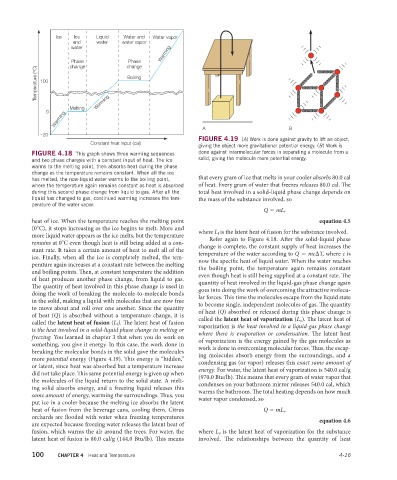
                   FIGURE 4.18  This graph shows three warming sequences   done against intermolecular forces in separating a molecule from a
                   and two phase changes with a constant input of heat. The ice   solid, giving the molecule more potential energy.
                   warms to the melting point, then absorbs heat during the phase
                   change as the temperature remains constant. When all the ice
                                                                          that every gram of ice that melts in your cooler absorbs 80.0 cal
                   has melted, the now-liquid water warms to the boiling point,
                   where the temperature again remains constant as heat is absorbed   of heat. Every gram of water that freezes releases 80.0 cal. Th e
                   during this second phase change from liquid to gas. After all the   total heat involved in a solid- liquid phase change depends on
                   liquid has changed to gas, continued warming increases the tem-  the mass of the substance  involved, so
                   perature of the water vapor.
                                                                                                Q = mL f
                   heat of ice. When the temperature reaches the melting point                                    equation 4.5
                   (0°C), it stops increasing as the ice begins to melt. More and
                                                                          where L f  is the latent heat of fusion for the substance  involved.
                   more liquid water appears as the ice melts, but the temperature

                                                                             Refer again to Figure 4.18. After the solid-liquid phase
                   remains at 0°C even though heat is still being added at a con-
                                                                          change is complete, the constant supply of heat increases the
                   stant rate. It takes a certain amount of heat to melt all of the
                                                                          temperature of the water according to Q = mcΔT, where c is
                   ice. Finally, when all the ice is completely melted, the tem-
                                                                          now the specific heat of liquid water. When the water reaches

                   perature again increases at a constant rate between the melting
                                                                          the boiling point, the temperature again remains constant

                   and boiling points. Then, at constant temperature the addition
                                                                          even though heat is still being supplied at a constant rate. Th e
                   of heat produces another phase change, from liquid to gas.
                                                                          quantity of heat involved in the liquid-gas phase change again

                   The quantity of heat involved in this phase change is used in
                                                                          goes into doing the work of overcoming the attractive molecu-
                   doing the work of breaking the molecule-to-molecule bonds
                                                                          lar forces. This time the molecules escape from the liquid state

                   in the solid, making a liquid with molecules that are now free
                                                                          to become single, independent molecules of gas. Th e quantity
                   to move about and roll over one another. Since the quantity
                                                                          of heat (Q) absorbed or released during this phase change is
                   of heat (Q) is absorbed without a temperature change, it is
                                                                          called the latent heat of vaporization (L v ). The latent heat of

                   called the latent heat of fusion (L f ). The latent heat of fusion

                                                                          vaporization is the heat involved in a liquid-gas phase change
                   is the heat involved in a solid-liquid phase change in melting or

                                                                          where there is evaporation or condensation. The latent heat
                   freezing. You learned in chapter 3 that when you do work on
                                                                          of vaporization is the energy gained by the gas molecules as
                   something, you give it energy. In this case, the work done in
                                                                          work is done in overcoming molecular forces. Thus, the escap-

                   breaking the molecular bonds in the solid gave the molecules
                                                                          ing molecules absorb energy from the surroundings, and a

                   more potential energy (Figure 4.19). This energy is “hidden,”
                                                                          condensing gas (or vapor) releases this exact same amount of
                   or latent, since heat was absorbed but a temperature increase
                                                                          energy. For water, the latent heat of vaporization is 540.0 cal/g

                   did not take place. This same potential energy is given up when
                                                                          (970.0 Btu/lb). This means that every gram of water vapor that

                   the molecules of the liquid return to the solid state. A melt-
                                                                          condenses on your bathroom mirror releases 540.0 cal, which
                   ing solid absorbs energy, and a freezing liquid releases this

                                                                          warms the  bathroom. The total heating depends on how much
                   same amount of energy, warming the surroundings. Th us, you
                                                                          water vapor condensed, so
                   put ice in a cooler because the melting ice absorbs the latent
                   heat of fusion from the beverage cans, cooling them. Citrus                 Q = mL v
                   orchards are flooded with water when freezing temperatures

                                                                                                                  equation 4.6
                   are expected because freezing water releases the latent heat of
                   fusion, which warms the air around the trees. For water, the   where L v  is the latent heat of vaporization for the substance

                   latent heat of fusion is 80.0 cal/g (144.0 Btu/lb). Th is means   involved. The relationships between the quantity of heat
                   100     CHAPTER 4  Heat and Temperature                                                              4-16

