


Page 153 - 9780077418427.pdf
P. 153
/Users/user-f465/Desktop
          tiL12214_ch05_115-138.indd Page 130  9/1/10  9:39 PM user-f465
          tiL12214_ch05_115-138.indd Page 130  9/1/10  9:39 PM user-f465                                                /Users/user-f465/Desktop


                                  Length
                                                                             f 1

                                                                                       +
                                                  f 1   Fundamental
                                                       frequency
                                                                             f 2                 =

                                                                                       +

                                                  f 2   First                f 3
                                                      overtone
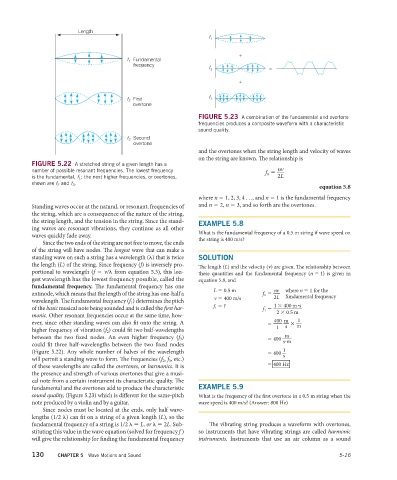
                                                                          FIGURE 5.23  A combination of the fundamental and overtone
                                                                          frequencies produces a composite waveform with a characteristic
                                                                          sound quality.
                                                  f 3   Second
                                                      overtone
                                                                          and the overtones when the string length and velocity of waves

                                                                          on the string are known. The relationship is
                   FIGURE 5.22  A stretched string of a given length has a
                                                                                                    nv _
                   number of possible resonant frequencies. The lowest frequency                f n  =

                   is the fundamental, f 1 ; the next higher frequencies, or overtones,             2L
                   shown are f 2  and f 3 .
                                                                                                                  equation 5.8
                                                                          where n = 1, 2, 3, 4 . . ., and n = 1 is the fundamental frequency
                   Standing waves occur at the natural, or resonant, frequencies of   and n = 2, n = 3, and so forth are the overtones.
                   the string, which are a consequence of the nature of the string,
                   the string length, and the tension in the string. Since the stand-  EXAMPLE 5.8
                   ing waves are resonant vibrations, they continue as all other
                                                                          What is the fundamental frequency of a 0.5 m string if wave speed on
                   waves quickly fade away.
                                                                          the string is 400 m/s?
                      Since the two ends of the string are not free to move, the ends
                   of the string will have nodes. Th e longest wave that can make a
                   standing wave on such a string has a wavelength (λ) that is twice   SOLUTION
                   the length (L) of the string. Since frequency (f) is inversely pro-


                                                                          The length (L) and the velocity (v) are given. The relationship between
                   portional to wavelength (f = v/λ from equation 5.3), this lon-  these quantities and the fundamental frequency (n = 1) is given in
                   gest wavelength has the lowest frequency possible, called the     equation 5.8, and

                   fundamental frequency. The fundamental frequency has one
                                                                               L = 0.5 m           nv _  where n = 1 for the


                   antinode, which means that the length of the string has one-half a          f n  =           fundamental frequency
                                                                                                   2L
                   wavelength. The fundamental frequency (f 1 ) determines the pitch      v = 400 m/s

                                                                                                   1 × 400 m∙s

                   of the basic musical note being sounded and is called the fi rst har-     f 1  = ?    f 1  =   __


                   monic. Other resonant frequencies occur at the same time, how-                   2 × 0.5 m
                                                                                                   _
                                                                                                   400 m _
                                                                                                           1 _


                   ever, since other standing waves can also fit onto the string. A              =               ×


                                                                                                          m
                                                                                                       s
                   higher frequency of vibration (f 2 ) could fi t two half-wavelengths             1

                   between the two fixed nodes. An even higher frequency (f 3 )                  = 400      m _
                   could fit three half-wavelengths between the two fi xed  nodes                     s⋅m

                                                                                                      1 _
                   ( Figure 5.22). Any whole number of halves of the wavelength                  = 400

                                                                                                      s
                   will permit a standing wave to form. The frequencies (f 2 , f 3 , etc.)

                   of these wavelengths are called the overtones, or harmonics. It is            = 400 Hz
                   the  presence and strength of various overtones that give a musi-
                   cal note from a certain instrument its characteristic quality. Th e
                   fundamental and the overtones add to produce the characteristic   EXAMPLE 5.9
                   sound quality, (Figure 5.23) which is different for the same-pitch   What is the frequency of the fi rst overtone in a 0.5 m string when the

                   note produced by a violin and by a guitar.             wave speed is 400 m/s? (Answer: 800 Hz)
                      Since nodes must be located at the ends, only half wave-
                   lengths (1/2 λ) can fit on a string of a given length (L), so the

                   fundamental frequency of a string is 1/2 λ = L, or λ = 2L. Sub-  The vibrating string produces a waveform with overtones,

                   stituting this value in the wave equation (solved for frequency f )   so instruments that have vibrating strings are called harmonic

                   will give the relationship for finding the fundamental frequency   instruments. Instruments that use an air column as a sound
                   130     CHAPTER 5  Wave Motions and Sound                                                            5-16

