


Page 148 - 9780077418427.pdf
P. 148
/Users/user-f465/Desktop
          tiL12214_ch05_115-138.indd Page 125  9/1/10  9:39 PM user-f465
          tiL12214_ch05_115-138.indd Page 125  9/1/10  9:39 PM user-f465                                                /Users/user-f465/Desktop


                                                 Warm air (sound travels
                                                 faster here)


                                                Cool air (sound travels slower here)
                        A
                                                 Cool air (sound
                                                 travels slower)


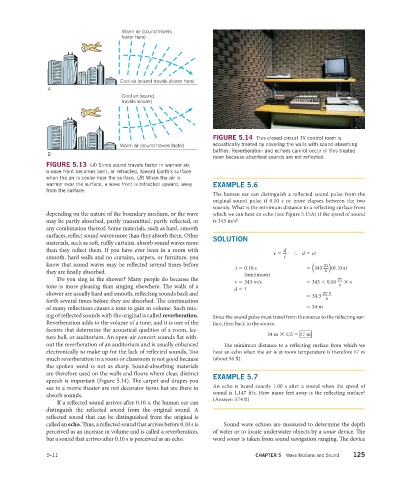
                                                                               FIGURE 5.14  This closed-circuit TV control room is
                                                Warm air (sound travels faster)  acoustically treated by covering the walls with sound-absorbing
                                                                               baffles. Reverberation and echoes cannot occur in this treated
                        B
                                                                               room because absorbed sounds are not reflected.
                       FIGURE 5.13  (A) Since sound travels faster in warmer air,
                        a wave front becomes bent, or refracted, toward Earth’s surface
                        when the air is cooler near the surface. (B) When the air is
                        warmer near the surface, a wave front is refracted upward, away   EXAMPLE 5.6
                        from the surface.
                                                                               The human ear can distinguish a reflected sound pulse from the
                                                                               original sound pulse if 0.10 s or more elapses between the two
                                                                               sounds. What is the minimum distance to a reflecting surface from
                       depending on the nature of the boundary medium, or the wave   which we can hear an echo (see Figure 5.15A) if the speed of sound
                       may be partly absorbed, partly transmitted, partly refl ected, or   is 343 m/s?
                       any combination thereof. Some materials, such as hard, smooth
                       surfaces, reflect sound waves more than they absorb them. Other   SOLUTION

                       materials, such as soft , ruffly curtains, absorb sound waves more


                       than they reflect them. If you have ever been in a room with                   d _

                                                                                                   v =           ∴  d = vt

                       smooth, hard walls and no curtains, carpets, or furniture, you                 t

                       know that sound waves may be reflected several times before                                 m _
                                                                                      t = 0.10 s               =   ( 343          ) (0.10 s)
                       they are fi nally absorbed.                                                                  s
                                                                                         (minimum)
                           Do you sing in the shower? Many people do because the                                        m _


                                                                                      v    = 343 m/s          = 343 × 0.10        × s
                       tone is more pleasing than singing elsewhere. The walls of a   d = ?                             s

                                                                                                                   _
                                                                                                                   m⋅s

                       shower are usually hard and smooth, reflecting sounds back and                         = 34.3

                       forth several times before they are absorbed. Th e continuation                              s
                       of many refl ections causes a tone to gain in volume. Such mix-                        = 34 m
                       ing of reflected sounds with the original is called reverberation.   Since the sound pulse must travel from the source to the refl ecting sur-

                       Reverberation adds to the volume of a tone, and it is one of the   face, then back to the source,
                       factors that determine the acoustical qualities of a room, lec-
                                                                                                 34 m × 1/2 = 17 m
                       ture hall, or auditorium. An open-air concert sounds fl at with-
                       out the reverberation of an auditorium and is usually enhanced   The minimum distance to a reflecting surface from which we


                       electronically to make up for the lack of reflected sounds. Too   hear an echo when the air is at room temperature is therefore 17 m
                       much reverberation in a room or classroom is not good because   (about 56 ft ).
                       the spoken word is not as sharp. Sound-absorbing materials
                       are therefore used on the walls and floors where clear, distinct   EXAMPLE 5.7


                       speech is important (Figure 5.14). The carpet and drapes you

                       see in a movie theater are not decorator items but are there to   An echo is heard exactly 1.00 s after a sound when the speed of

                                                                               sound is 1,147 ft/s. How many feet away is the refl ecting surface?
                       absorb sounds.
                                                                               (Answer: 574 ft )

                           If a reflected sound arrives after 0.10 s, the human ear can


                       distinguish the reflected sound from the original sound. A

                       reflected sound that can be distinguished from the original is
                       called an echo. Thus, a reflected sound that arrives before 0.10 s is   Sound wave echoes are measured to determine the depth


                       perceived as an increase in volume and is called a reverberation,   of water or to locate underwater objects by a sonar device. Th e

                       but a sound that arrives after 0.10 s is perceived as an echo.  word sonar is taken from sound navigation ranging. Th e device
                       5-11                                                                  CHAPTER 5  Wave Motions and Sound   125

