


Page 172 - 9780077418427.pdf
P. 172
/Users/user-f465/Desktop
          tiL12214_ch06_139-176.indd Page 149  9/1/10  9:40 PM user-f465
          tiL12214_ch06_139-176.indd Page 149  9/1/10  9:40 PM user-f465                                                /Users/user-f465/Desktop


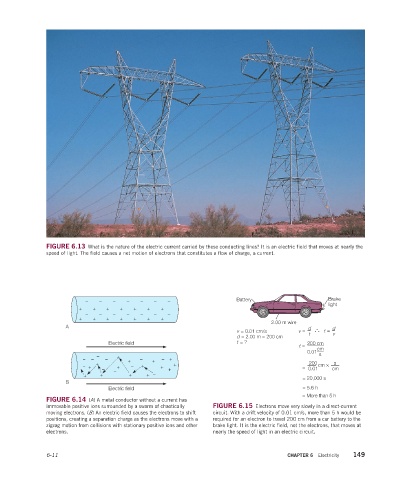
                       FIGURE 6.13  What is the nature of the electric current carried by these conducting lines? It is an electric field that moves at nearly the
                        speed of light. The field causes a net motion of electrons that constitutes a flow of charge, a current.


                                     –   –    –   –    –   –    –                     Battery                        Brake
                                                                                                                     light
                                  +    +   +    +   +    +   +
                                     –   –    –   –    –   –    –
                                  +    +   +    +   +    +   +                                    2.00 m wire
                              A                                                                               d       d
                                                                                       v = 0.01 cm/s       v =      t =
                                                                                       d = 2.00 m = 200 cm     t      v
                                            Electric field                             t = ?               t =  200 cm
                                                                                                              0.01   cm
                                                                                                                      s
                                    –  –  –  –  +  +   –   +  – +
                                                                                                                       s
                                                                                                               200
                                    –  +  +  –  +   –  +     +  +  +                                         =  0.01 cm ×  cm
                                    +    +    –    +     +  –                                                = 20,000 s
                              B
                                            Electric field                                                   = 5.6 h
                                                                                                             = More than 5 h
                       FIGURE 6.14 (A) A metal conductor without a current has
                       immovable positive ions surrounded by a swarm of chaotically   FIGURE 6.15  Electrons move very slowly in a direct-current
                       moving electrons. (B) An electric field causes the electrons to shift   circuit. With a drift velocity of 0.01 cm/s, more than 5 h would be
                       positions, creating a separation charge as the electrons move with a   required for an electron to travel 200 cm from a car battery to the
                       zigzag motion from collisions with stationary positive ions and other   brake light. It is the electric field, not the electrons, that moves at
                       electrons.                                              nearly the speed of light in an electric circuit.


                       6-11                                                                            CHAPTER 6  Electricity   149

