


Page 204 - 9780077418427.pdf
P. 204
/Users/user-f465/Desktop
          tiL12214_ch07_177-202.indd Page 181  9/1/10  9:43 PM user-f465
          tiL12214_ch07_177-202.indd Page 181  9/1/10  9:43 PM user-f465                                                /Users/user-f465/Desktop


                               A


                                                                               A

                               B

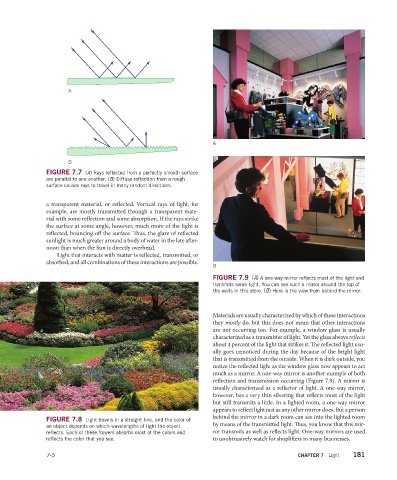
                        FIGURE 7.7  (A) Rays reflected from a perfectly smooth surface
                        are parallel to one another. (B) Diffuse reflection from a rough
                       surface causes rays to travel in many random directions.


                       a transparent material, or reflected. Vertical rays of light, for

                       example, are mostly transmitted through a transparent mate-
                       rial with some reflection and some absorption. If the rays strike

                       the surface at some angle, however, much more of the light is

                       reflected, bouncing off the surface. Thus, the glare of refl ected


                        sunlight is much greater around a body of water in the late aft er-
                        noon than when the Sun is directly overhead.
                           Light that interacts with matter is refl ected, transmitted, or
                        absorbed, and all combinations of these interactions are possible.
                                                                               B
                                                                               FIGURE 7.9  (A) A one-way mirror reflects most of the light and
                                                                               transmits some light. You can see such a mirror around the top of
                                                                               the walls in this store. (B) Here is the view from behind the mirror.


                                                                               Materials are usually characterized by which of these interactions
                                                                               they mostly do, but this does not mean that other interactions
                                                                               are not occurring too. For example, a window glass is usually
                                                                               characterized as a transmitter of light. Yet the glass always refl ects
                                                                               about 4 percent of the light that strikes it. Th e reflected light usu-

                                                                               ally goes unnoticed during the day because of the bright light
                                                                               that is transmitted from the outside. When it is dark outside, you
                                                                               notice the reflected light as the window glass now appears to act

                                                                               much as a mirror. A one-way mirror is another example of both
                                                                               reflection and transmission occurring (Figure 7.9). A mirror is


                                                                               usually characterized as a reflector of light. A one-way mirror,

                                                                               however, has a very thin silvering that reflects most of the light
                                                                               but still transmits a little. In a lighted room, a one-way mirror

                                                                               appears to reflect light just as any other mirror does. But a person
                                                                               behind the mirror in a dark room can see into the lighted room
                        FIGURE 7.8  Light travels in a straight line, and the color of

                                                                               by means of the transmitted light. Thus, you know that this mir-
                        an object depends on which wavelengths of light the object
                        reflects. Each of these flowers absorbs most of the colors and   ror transmits as well as refl ects light. One-way mirrors are used

                        reflects the color that you see.                       to unobtrusively watch for shoplifters in many businesses.
                        7-5                                                                                CHAPTER 7  Light   181

