


Page 26 - 9780077418427.pdf
P. 26
/Users/user-f465/Desktop
          tiL12214_ch01_001-024.indd Page 3  9/1/10  9:51 PM user-f465
          tiL12214_ch01_001-024.indd Page 3  9/1/10  9:51 PM user-f465                                                  /Users/user-f465/Desktop


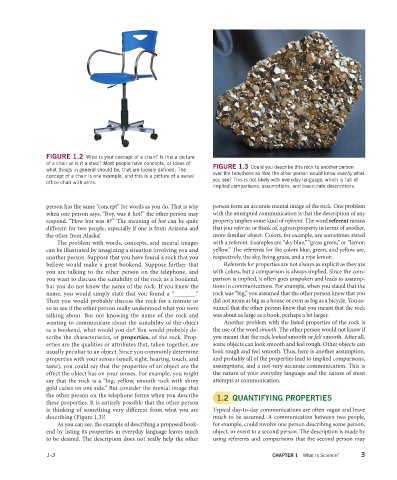
                       FIGURE 1.2 What is your concept of a chair? Is this a picture
                        of a chair or is it a stool? Most people have concepts, or ideas of
                        what things in general should be, that are loosely defined. The   FIGURE 1.3  Could you describe this rock to another person
                        concept of a chair is one example, and this is a picture of a swivel   over the telephone so that the other person would know exactly what
                        office chair with arms.                                you see? This is not likely with everyday language, which is full of
                                                                               implied comparisons, assumptions, and inaccurate descriptions.


                       person has the same “concept” for words as you do. That is why   person form an accurate mental image of the rock. One problem
                       when one person says, “Boy, was it hot!” the other person may   with the attempted communication is that the description of any
                       respond, “How hot was it?” The meaning of hot can be quite   property implies some kind of referent. The word referent  means
                         different for two people, especially if one is from Arizona and   that you refer to, or think of, a given property in terms of another,
                       the other from Alaska!                                  more  familiar object. Colors, for example, are sometimes stated
                           The problem with words, concepts, and mental images   with a referent. Examples are “sky blue,” “grass green,” or “lemon
                       can be illustrated by imagining a situation involving you and   yellow.” The referents for the colors blue, green, and yellow are,
                       another person. Suppose that you have found a rock that you   respectively, the sky, living grass, and a ripe lemon.
                       believe would make a great bookend. Suppose further that   Referents for properties are not always as explicit as they are
                       you are talking to the other person on the telephone, and   with colors, but a comparison is always implied. Since the com-
                       you want to discuss the suitability of the rock as a bookend,   parison is implied, it often goes unspoken and leads to assump-
                       but you do not know the name of the rock. If you knew the   tions in communications. For example, when you stated that the
                       name, you would simply state that you found a “_______.”   rock was “big,” you assumed that the other person knew that you
                       Then you would probably discuss the rock for a minute or   did not mean as big as a house or even as big as a bicycle. You as-
                       so to see if the other person really understood what you were   sumed that the other person knew that you meant that the rock
                       talking about. But not knowing the name of the rock and   was about as large as a book, perhaps a bit larger.
                       wanting to communicate about the suitability of the object   Another problem with the listed properties of the rock is
                       as a bookend, what would you do? You would probably de-  the use of the word smooth. The other person would not know if
                       scribe the characteristics, or properties, of the rock. Prop-  you meant that the rock looked smooth or felt smooth. After all,
                       erties are the qualities or attributes that, taken together, are   some objects can look smooth and feel rough. Other objects can
                       usually peculiar to an object. Since you commonly determine   look rough and feel smooth. Thus, here is another assumption,
                       properties with your senses (smell, sight, hearing, touch, and   and probably all of the properties lead to implied comparisons,
                       taste), you could say that the properties of an object are the   assumptions, and a not-very-accurate communication. This is
                       effect the object has on your senses. For example, you might   the nature of your everyday language and the  nature of most
                       say that the rock is a “big, yellow, smooth rock with shiny   attempts at communication.
                       gold cubes on one side.” But consider the mental image that
                       the other person on the telephone forms when you describe     1.2 QUANTIFYING PROPERTIES
                       these properties. It is entirely possible that the other person
                       is thinking of something very different from what you are   Typical day-to-day communications are often vague and leave
                       describing (Figure 1.3)!                                much to be assumed. A communication between two people,
                           As you can see, the example of describing a proposed book-  for example, could involve one person describing some person,
                       end by listing its properties in everyday language leaves much   object, or event to a second person. The description is made by
                       to be desired. The description does not really help the other   using referents and comparisons that the second person may

                       1-3                                                                        CHAPTER 1  What Is Science?   3

