


Page 29 - 9780077418427.pdf
P. 29
/Users/user-f465/Desktop
          tiL12214_ch01_001-024.indd Page 6  9/3/10  7:29 PM user-f465
          tiL12214_ch01_001-024.indd Page 6  9/3/10  7:29 PM user-f465                                                  /Users/user-f465/Desktop


                   TIME                                                                         1 meter
                   The standard unit for time is the second (s). The second was
                   originally defined as 1/86,400 of a solar day (1/60 × 1/60 ×
                   1/24). Earth’s spin was found not to be as constant as thought,
                   so this old definition of one second had to be revised. Adopted                     1 decimeter
                   in 1967, the new definition is based on a high- precision device
                   known as an atomic clock. An atomic clock has a referent for a
                   second that is provided by the characteristic  vibrations of the
                     cesium-133 atom. The atomic clock that was built at the  National
                   Institute of Standards and Technology in Boulder,  Colorado,
                   will neither gain nor lose a second in 20 million years!                         1 centimeter

                    1.5 METRIC PREFIXES

                   The metric system uses prefixes to represent larger or smaller
                   amounts by factors of 10. Some of the more commonly used
                   prefixes, their abbreviations, and their meanings are listed in
                   Table 1.2. Suppose you wish to measure something smaller than                     1 millimeter
                   the  standard unit of length, the meter. The meter is subdivided
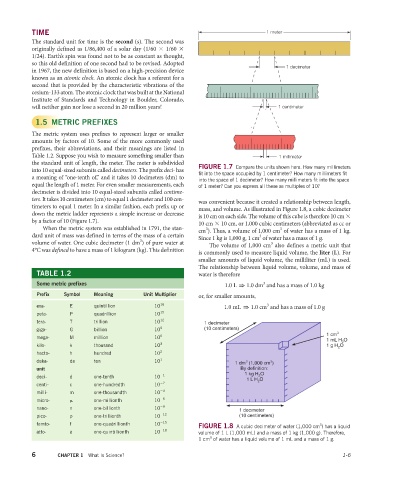
                                                                          FIGURE 1.7  Compare the units shown here. How many millimeters
                   into 10 equal-sized subunits called decimeters. The prefix deci- has
                                                                          fit into the space occupied by 1 centimeter? How many millimeters fit
                   a meaning of “one-tenth of,” and it takes 10 decimeters (dm) to
                                                                          into the space of 1 decimeter? How many millimeters fit into the space
                   equal the length of 1 meter. For even smaller measurements, each   of 1 meter? Can you express all these as multiples of 10?
                   decimeter is divided into 10 equal-sized subunits called centime-
                   ters. It takes 10 centimeters (cm) to equal 1 decimeter and 100 cen-
                                                                          was convenient because it created a relationship between length,
                   timeters to equal 1 meter. In a similar fashion, each prefix up or
                                                                          mass, and volume. As illustrated in Figure 1.8, a cubic decimeter
                   down the metric ladder represents a simple increase or decrease   is 10 cm on each side. The volume of this cube is therefore 10 cm ×
                   by a  factor of 10 (Figure 1.7).
                                                                          10 cm × 10 cm, or 1,000 cubic centimeters (abbreviated as cc or
                      When the metric system was established in 1791, the stan-  3                   3
                                                                          cm ). Thus, a volume of 1,000 cm  of water has a mass of 1 kg.
                   dard unit of mass was defined in terms of the mass of a certain   Since 1 kg is 1,000 g, 1 cm  of water has a mass of 1 g.
                                                                                              3
                                                       3
                   volume of water. One cubic decimeter (1 dm ) of pure water at                  3
                                                                             The volume of 1,000 cm  also defines a metric unit that
                   4°C was defi ned to have a mass of 1 kilogram (kg). This definition
                                                                          is commonly used to measure liquid volume, the liter (L). For
                                                                          smaller amounts of liquid volume, the milliliter (mL) is used.
                                                                          The relationship between liquid volume, volume, and mass of
                    TABLE 1.2                                             water is therefore
                    Some metric prefixes                                           1.0 L ⇒ 1.0 dm  and has a mass of 1.0 kg
                                                                                               3
                    Prefix   Symbol    Meaning          Unit Multiplier   or, for smaller amounts,
                                                                                                 3
                    exa-       E       quintillion         10 18                  1.0 mL ⇒ 1.0 cm  and has a mass of 1.0 g
                    peta-      P       quadrillion         10 15
                    tera-      T       trillion            10 12
                    giga-      G       billion             10 9
                    mega-      M       million             10 6
                    kilo-      k       thousand            10 3
                    hecto-     h       hundred             10 2
                    deka-      da      ten                 10 1
                    unit
                    deci-      d       one-tenth           10 −1
                    centi-     c       one-hundredth       10 −2
                    milli-     m       one-thousandth      10 −3
                    micro-     μ       one-millionth       10 −6
                    nano-      n       one-billionth       10 −9
                    pico-      p       one-trillionth      10 −12
                    femto-     f       one-quadrillionth   10 −15                                                 3
                                                                          FIGURE 1.8  A cubic decimeter of water (1,000 cm ) has a liquid
                    atto-      a       one-quintillionth   10 −18         volume of 1 L (1,000 mL) and a mass of 1 kg (1,000 g). Therefore,
                                                                              3
                                                                          1 cm  of water has a liquid volume of 1 mL and a mass of 1 g.
                   6       CHAPTER 1  What Is Science?                                                                    1-6

