


Page 502 - 9780077418427.pdf
P. 502
/Users/user-f465/Desktop
          tiL12214_ch19_477-500.indd Page 479  9/3/10  6:22 PM user-f465
          tiL12214_ch19_477-500.indd Page 479  9/3/10  6:22 PM user-f465                                                /Users/user-f465/Desktop


                                                                               is a catastrophic event that most certainly modifies the surface
                                                                               of Earth. What the principle of uniformity does state is that the
                                                                               physical and chemical laws we observe today  operated exactly
                                                                               the same way in the past. The rates of operation may or may not
                                                                               have been the same in the past, but the events you see occur-
                                                                               ring today are the same events that occurred in the past. Given
                                                                               enough time, you can explain the formation of the structures of
                                                                               Earth’s surface with known events and concepts.
                                                                                  The principle of uniformity has been used by geologists
                                                                               since the time of Hutton. The concept of how the constant
                                                                               changes  occur has evolved with the development of plate tec-
                                                                               tonics, but the basic frame of reference is the same. You will see
                                                                               how the  principle of uniformity is applied by first considering
                                                                               what can happen to rocks and rock layers that are deeply buried.


                                                                                19.2 DIASTROPHISM
                                                                               All the possible movements of Earth’s plates, including drift
                                                                               toward or away from other plates, and any process that deforms
                                                                               or changes Earth’s surface are included in the term diastrophism.
                                                                               Diastrophism is the process of deformation that changes Earth’s
                                                                               surface. It produces many of the basic structures you see on the
                                                                               surface, such as plateaus, mountains, and folds in the crust. The
                                                                               movement of magma is called vulcanism or volcanism. Diastro-
                                                                               phism, volcanism, and earthquakes are closely related, and their
                                                                               occurrence can usually be explained by events involving plate
                                                                               tectonics (chapter 18). The results of  diastrophism are discussed
                                                                               next in the section on stress and strain, which is followed by
                                                                               a discussion of earthquakes, volcanoes, and mountain chains.
                                                                               Again, remember that diastrophism, volcanism, earthquakes,
                                                                               and the movement of Earth’s plates are very closely related.
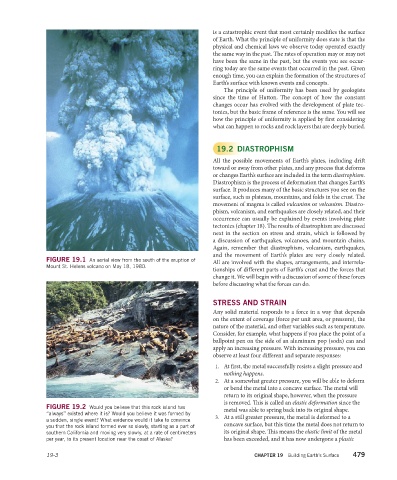
                       FIGURE 19.1  An aerial view from the south of the eruption of
                                                                               All are involved with the shapes, arrangements, and interrela-
                       Mount St. Helens volcano on May 18, 1980.
                                                                               tionships of different parts of Earth’s crust and the forces that
                                                                               change it. We will begin with a discussion of some of these forces
                                                                               before discussing what the forces can do.

                                                                               STRESS AND STRAIN
                                                                               Any solid material responds to a force in a way that depends
                                                                               on the extent of coverage (force per unit area, or pressure), the
                                                                                 nature of the material, and other variables such as temperature.
                                                                               Consider, for example, what happens if you place the point of a
                                                                               ballpoint pen on the side of an aluminum pop (soda) can and
                                                                               apply an increasing pressure. With increasing pressure, you can
                                                                               observe at least four different and separate responses:
                                                                                 1. At first, the metal successfully resists a slight pressure and

                                                                                  nothing happens.
                                                                                 2.  At a somewhat greater pressure, you will be able to deform

                                                                                  or bend the metal into a concave surface. The metal will
                                                                                  return to its original shape, however, when the pressure

                                                                                  is removed. This is called an elastic deformation since the
                       FIGURE 19.2  Would you believe that this rock island has   metal was able to spring back into its original shape.
                       “always” existed where it is? Would you believe it was formed by
                                                                                 3.  At a still greater pressure, the metal is deformed to a
                       a sudden, single event? What evidence would it take to convince
                       you that the rock island formed ever so slowly, starting as a part of   concave surface, but this time the metal does not return to

                       southern California and moving very slowly, at a rate of centimeters   its original shape. This means the elastic limit of the metal
                       per year, to its present location near the coast of Alaska?  has been  exceeded, and it has now undergone a plastic
                       19-3                                                                 CHAPTER 19  Building Earth’s Surface   479

