


Page 551 - 9780077418427.pdf
P. 551
/Volume/201/MHDQ233/tat78194_disk1of1/0073378194/tat78194_pagefiles
          tiL12214_ch21_521-540.indd Page 528  9/23/10  11:09 AM user-f465
          tiL12214_ch21_521-540.indd Page 528  9/23/10  11:09 AM user-f465             /Volume/201/MHDQ233/tat78194_disk1of1/0073378194/tat78194_pagefile


                                        Water


                    Deposition


                                                  Erosional surface


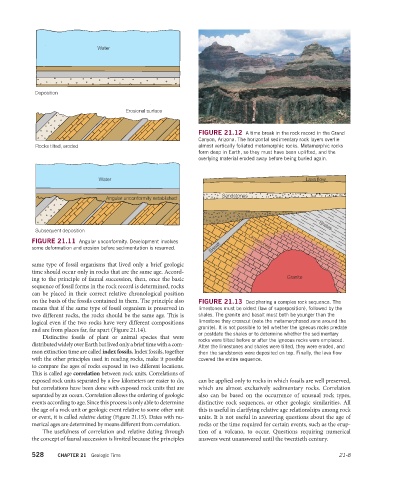
                                                                          FIGURE 21.12  A time break in the rock record in the Grand
                                                                          Canyon, Arizona. The horizontal sedimentary rock layers overlie
                    Rocks tilted, eroded                                  almost vertically foliated metamorphic rocks. Metamorphic rocks
                                                                          form deep in Earth, so they must have been uplifted, and the
                                                                            overlying material eroded away before being buried again.


                                         Water                                                               Lava flow


                                           Angular unconformity established       Sandstones


                    Subsequent deposition                                                                         Shales
                   FIGURE 21.11  Angular unconformity. Development involves               Limestones
                   some deformation and erosion before sedimentation is resumed.  Basalt


                   same type of fossil organisms that lived only a brief geologic
                   time should occur only in rocks that are the same age. Accord-
                                                                                                       Granite
                   ing to the principle of faunal succession, then, once the basic
                   sequence of fossil forms in the rock record is determined, rocks
                   can be placed in their correct relative chronological position
                   on the basis of the fossils contained in them. The principle also   FIGURE 21.13  Deciphering a complex rock sequence. The
                   means that if the same type of fossil organism is preserved in   limestones must be oldest (law of superposition), followed by the
                   two different rocks, the rocks should be the same age. This is   shales. The granite and basalt must both be younger than the
                   logical even if the two rocks have very different compositions   limestone they crosscut (note the metamorphosed zone around the
                   and are from places far, far apart (Figure 21.14).     granite). It is not possible to tell whether the igneous rocks predate
                                                                          or postdate the shales or to determine whether the sedimentary
                      Distinctive fossils of plant or animal species that were
                                                                          rocks were tilted before or after the igneous rocks were emplaced.
                     distributed widely over Earth but lived only a brief time with a com-  After the limestones and shales were tilted, they were eroded, and
                   mon extinction time are called index fossils. Index fossils, together   then the sandstones were deposited on top. Finally, the lava flow
                   with the other principles used in reading rocks, make it possible   covered the entire sequence.
                   to compare the ages of rocks exposed in two different locations.
                   This is called age correlation between rock units. Correlations of
                   exposed rock units separated by a few  kilometers are easier to do,   can be applied only to rocks in which fossils are well  preserved,
                   but correlations have been done with exposed rock units that are   which are almost exclusively sedimentary rocks. Correlation
                   separated by an ocean. Correlation allows the ordering of geologic   also can be based on the occurrence of unusual rock types,
                   events according to age. Since this process is only able to determine     distinctive rock sequences, or other geologic similarities. All
                   the age of a rock unit or geologic event relative to some other unit   this is useful in clarifying relative age relationships among rock
                   or event, it is called relative dating (Figure 21.15). Dates with nu-  units. It is not useful in answering questions about the age of
                   merical ages are determined by means different from correlation.  rocks or the time required for certain events, such as the erup-
                      The usefulness of correlation and relative dating through   tion of a volcano, to occur. Questions requiring numerical
                   the concept of faunal succession is limited because the prin ciples     answers went unanswered until the twentieth century.

                   528     CHAPTER 21 Geologic Time                                                                     21-8

