


Page 605 - 9780077418427.pdf
P. 605
/Volume/201/MHDQ233/tat78194_disk1of1/0073378194/tat78194_pagefile
          tiL12214_ch23_565-596.indd Page 582  9/23/10  11:07 AM user-f465
          tiL12214_ch23_565-596.indd Page 582  9/23/10  11:07 AM user-f465             /Volume/201/MHDQ233/tat78194_disk1of1/0073378194/tat78194_pagefiles


                                                                                   January                          July


                                                                                     Wet


                                                                                 Dry

                                                                                Very
                                                                                wet

                                                                                   Dry

                                                                                     Wet


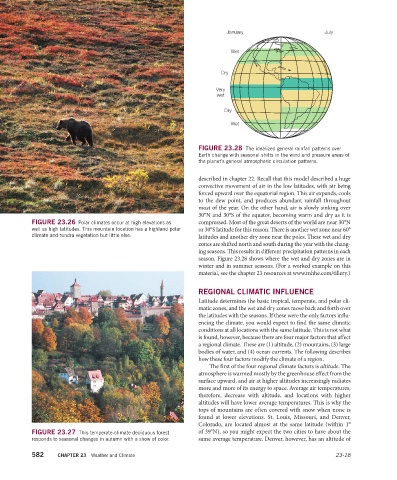
                                                                          FIGURE 23.28  The idealized general rainfall patterns over
                                                                          Earth change with seasonal shifts in the wind and pressure areas of
                                                                          the planet’s general atmospheric circulation patterns.

                                                                          described in chapter 22. Recall that this model  described a huge
                                                                          convective movement of air in the low latitudes, with air being
                                                                          forced upward over the equatorial region. This air expands, cools
                                                                          to the dew point, and produces abundant rainfall throughout
                                                                          most of the year. On the other hand, air is slowly sinking over
                                                                          30°N and 30°S of the equator, becoming warm and dry as it is
                   FIGURE 23.26  Polar climates occur at high elevations as   compressed. Most of the great deserts of the world are near 30°N
                   well as high latitudes. This mountain location has a highland polar   or 30°S latitude for this reason. There is another wet zone near 60°
                   climate and tundra vegetation but little else.         latitudes and another dry zone near the poles. These wet and dry
                                                                          zones are shifted north and south during the year with the chang-
                                                                          ing seasons. This results in different precipitation patterns in each
                                                                          season. Figure 23.28 shows where the wet and dry zones are in
                                                                          winter and in summer  seasons. (For a worked example on this
                                                                          material, see the chapter 23 resources at www.mhhe.com/tillery.)


                                                                          REGIONAL CLIMATIC INFLUENCE
                                                                          Latitude determines the basic tropical, temperate, and polar cli-
                                                                          matic zones, and the wet and dry zones move back and forth over
                                                                          the latitudes with the seasons. If these were the only factors influ-
                                                                          encing the climate, you would expect to find the same climatic
                                                                          conditions at all locations with the same latitude. This is not what
                                                                          is found, however, because there are four major factors that affect
                                                                          a regional climate. These are (1) altitude, (2) mountains, (3) large
                                                                          bodies of water, and (4) ocean currents. The following describes
                                                                          how these four factors modify the climate of a region.
                                                                             The first of the four regional climate factors is altitude. The
                                                                            atmosphere is warmed mostly by the greenhouse effect from the
                                                                          surface upward, and air at higher altitudes increasingly radiates
                                                                          more and more of its energy to space. Average air temperatures,
                                                                          therefore, decrease with altitude, and locations with higher
                                                                            altitudes will have lower average temperatures. This is why the
                                                                          tops of mountains are often covered with snow when none is
                                                                          found at lower elevations. St. Louis, Missouri, and Denver,
                                                                          Colorado, are  located almost at the same latitude (within 1°
                   FIGURE 23.27  This temperate-climate deciduous forest   of 39°N), so you might expect the two cities to have about the
                   responds to seasonal changes in autumn with a show of color.  same average  temperature. Denver, however, has an altitude of

                   582     CHAPTER 23  Weather and Climate                                                             23-18

