


Page 608 - 9780077418427.pdf
P. 608
/Volume/201/MHDQ233/tat78194_disk1of1/0073378194/tat78194_pagefile
          tiL12214_ch23_565-596.indd Page 585  9/23/10  11:07 AM user-f465
          tiL12214_ch23_565-596.indd Page 585  9/23/10  11:07 AM user-f465             /Volume/201/MHDQ233/tat78194_disk1of1/0073378194/tat78194_pagefiles


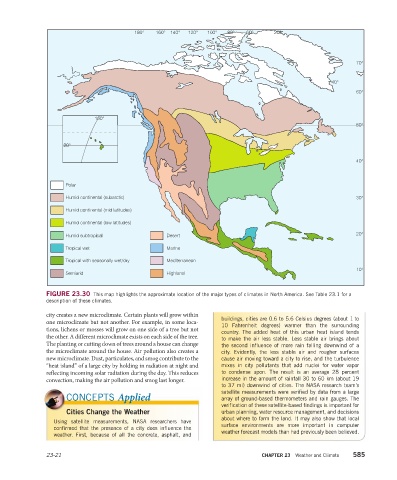
                       FIGURE 23.30  This map highlights the approximate location of the major types of climates in North America. See Table 23.1 for a
                       description of these climates.

                        city creates a new microclimate. Certain plants will grow within
                                                                                 buildings, cities are 0.6 to 5.6 Celsius degrees (about 1 to
                        one microclimate but not another. For example, in some loca-
                                                                                 10 Fahrenheit degrees) warmer than the surrounding
                        tions, lichens or mosses will grow on one side of a tree but not
                                                                                 country. The added heat of this urban heat island tends
                        the other. A different microclimate exists on each side of the tree.
                                                                                 to make the air less stable. Less stable air brings about
                        The planting or cutting down of trees around a house can change   the second influence of more rain falling downwind of a
                        the microclimate around the house. Air pollution also creates a   city. Evidently, the less stable air and rougher surfaces
                        new microclimate. Dust, particulates, and smog contribute to the   cause air moving toward a city to rise, and the turbulence
                        “heat island” of a large city by holding in radiation at night and   mixes in city pollutants that add nuclei for water vapor
                        reflecting incoming solar radiation during the day. This  reduces   to condense upon. The result is an average 28 percent
                        convection, making the air pollution and smog last longer.  increase in the amount of rainfall 30 to 60 km (about 19
                                                                                 to 37 mi) downwind of cities. The NASA  research team’s
                                                                                 satellite measurements were verified by data from a large
                              CONCEPTS Applied                                   array of ground-based thermometers and rain gauges. The
                                                                                 verification of these satellite-based findings is  important for
                              Cities Change the Weather                          urban planning, water resource management, and decisions
                                                                                 about where to farm the land. It may also show that  local
                          Using satellite measurements, NASA researchers have
                                                                                 surface environments are more important in computer
                          confirmed that the presence of a city does influence the
                                                                                 weather forecast models than had previously been believed.
                          weather. First,  because of all the concrete, asphalt, and
                        23-21                                                                  CHAPTER 23  Weather and Climate   585

