


Page 600 - 9780077418427.pdf
P. 600
/Volume/203/MHRL245/muL0599x_disk1of1/007340599x/muL0599x_pagefile
          tiL12214_ch23_565-596.indd Page 577  9/25/10  4:40 PM user-f465
          tiL12214_ch23_565-596.indd Page 577  9/25/10  4:40 PM user-f465              /Volume/203/MHRL245/muL0599x_disk1of1/007340599x/muL0599x_pagefiles


                                                                               from the Gulf of Mexico at the surface. Above this warm, moist
                                                                               layer is a layer of dry, unstable air that has just crossed the Rocky
                                                                               Mountains, moved along rapidly by the jet stream. The stage is
                                                                               now set for some event, such as a cold air mass moving in from
                                                                               the north, to shove the warm, moist air upward, and the result
                                                                               will be violent thunderstorms with tornadoes.


                                                                                     CONCEPTS Applied


                                                                                     Tornado Damage
                                                                                 Tornadoes are rated on wind speed and damage. Here is
                                                                                 the scale with approximate wind speeds:
                                                                                   0:   Light damage, winds under 120 km/h (75 mi/h).
                                                                                     Damage to chimneys, tree limbs broken, small trees
                                                                                     pushed over, signs damaged.
                                                                                   1:   Moderate damage, winds 121 to 180 km/h (76 to
                                                                                     112 mi/h). Roofing materials removed, mobile homes
                                                                                     and moving  autos pushed around or overturned.
                                                                                   2:   Considerable damage, winds 181 to 250 km/h
                                                                                     (113 to 155 mi/h). Roofs torn off homes, mobile
                                                                                     homes demolished, boxcars overturned, large trees
                                                                                     snapped or uprooted, light objects become missiles.
                                                                                   3:   Severe damage, winds 251 to 330 km/h (156 to
                                                                                     205 mi/h). Roofs and some walls torn off homes,
                                                                                     whole trains overturned, most trees uprooted, cars
                                                                                     lifted off the ground and thrown.
                                                                                   4:   Devastating damage, winds 331 to 418 km/h
                                                                                     (206 to 260 mi/h). Homes leveled, cars thrown,
                                                                                     large missiles generated.
                                                                                   5:   Incredible damage, winds 419 to 512 km/h
                                                                                     (261 to 318 mi/h). Homes demolished and swept
                                                                                     away, automobile-sized  missiles fly though the air
                                                                                     more than 100 yards, trees  debarked.


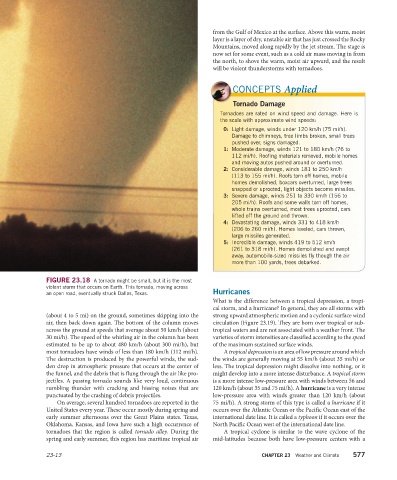
                       FIGURE 23.18  A tornado might be small, but it is the most
                       violent storm that occurs on Earth. This tornado, moving across
                       an open road, eventually struck Dallas, Texas.          Hurricanes
                                                                               What is the difference between a tropical depression, a tropi-
                                                                               cal storm, and a hurricane? In general, they are all storms with
                       (about 4 to 5 mi) on the ground, sometimes skipping into the   strong upward atmospheric motion and a cyclonic surface wind
                       air, then back down again. The bottom of the column moves   circulation (Figure 23.19). They are born over tropical or sub-
                       across the ground at speeds that average about 50 km/h (about   tropical waters and are not associated with a weather front. The
                       30 mi/h). The speed of the whirling air in the  column has been   varieties of storm intensities are classified according to the speed
                       estimated to be up to about 480 km/h (about 300 mi/h), but   of the maximum sustained surface winds.
                       most tornadoes have winds of less than 180 km/h (112 mi/h).   A tropical depression is an area of low pressure around which
                       The destruction is produced by the powerful winds, the sud-  the winds are generally moving at 55 km/h (about 35 mi/h) or
                       den drop in atmospheric pressure that occurs at the center of   less. The tropical depression might dissolve into nothing, or it
                       the funnel, and the debris that is flung through the air like pro-  might develop into a more intense disturbance. A tropical storm
                       jectiles. A passing tornado sounds like very loud, continuous   is a more intense low-pressure area with winds between 56 and
                       rumbling thunder with cracking and hissing noises that are   120 km/h (about 35 and 75 mi/h). A hurricane is a very intense
                       punctuated by the crashing of debris projectiles.       low-pressure area with winds greater than 120 km/h (about
                           On average, several hundred tornadoes are reported in the     75 mi/h). A strong storm of this type is called a hurricane if it
                       United States every year. These occur mostly during spring and   occurs over the Atlantic Ocean or the Pacific Ocean east of the
                       early summer afternoons over the Great Plains states. Texas,   international date line. It is called a typhoon if it occurs over the
                       Oklahoma, Kansas, and Iowa have such a high occurrence of   North  Pacific Ocean west of the international date line.
                       tornadoes that the region is called  tornado alley. During the   A tropical cyclone is similar to the wave cyclone of the
                       spring and early summer, this region has maritime tropical air   mid-latitudes because both have low-pressure centers with a

                       23-13                                                                   CHAPTER 23  Weather and Climate   577

