


Page 606 - 9780077418427.pdf
P. 606
/Volume/201/MHDQ233/tat78194_disk1of1/0073378194/tat78194_pagefiles
          tiL12214_ch23_565-596.indd Page 583  9/23/10  11:07 AM user-f465
          tiL12214_ch23_565-596.indd Page 583  9/23/10  11:07 AM user-f465             /Volume/201/MHDQ233/tat78194_disk1of1/0073378194/tat78194_pagefile


                       1,609 m (5,280 ft), and the  altitude of St. Louis is 141 m (465 ft).
                       The yearly average temperature for Denver is about 10°C (about                               Labrador
                                                                                                                    Current
                       50°F), and for St. Louis it is about 14°C (about 57°F). In general,                          (cold)
                       higher altitude means lower average temperature.           North
                                                                                  Pacific
                           The second of the regional climate factors is mountains. In   Current
                       addition to the temperature change caused by the altitude of the   (warm)
                       mountain, mountains affect the conditions of a passing air mass.   California
                       The western United States has mountainous regions along the    Current
                                                                                      (cool)                     Gulf Stream
                       coast. When a moist air mass from the Pacific meets these moun-                           (warm)
                       tains, it is forced upward and cools. Water vapor in the moist air
                       mass condenses, clouds form, and the air mass loses much of its
                       moisture as precipitation falls on the western side of the mountains.
                       Air moving down the eastern slope is compressed and becomes                                  North Equatorial
                                                                                                                    Current (warm)
                       warm and dry. As a result, the western slopes of these mountains
                       are moist and have forests of spruce, redwood, and fir trees. The
                       eastern slopes are dry and have grassland or desert vegetation.
                           The third of the regional climate factors is a large body of
                       water. Water, as discussed previously, has a higher specific heat
                       than land material, is transparent, and loses energy through
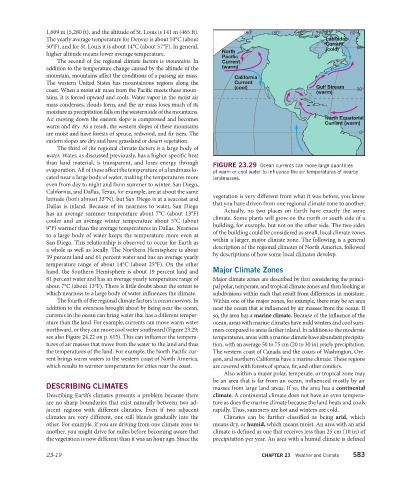
                                                                               FIGURE 23.29  Ocean currents can move large quantities
                       evaporation. All of these affect the temperature of a landmass lo-  of warm or cool water to influence the air temperatures of nearby
                       cated near a large body of water, making the temperatures more   landmasses.
                       even from day to night and from summer to winter. San  Diego,
                       California, and Dallas, Texas, for example, are at about the same
                                                                               vegetation is very different from what it was before, you know
                       latitude (both almost 33°N), but San Diego is at a  seacoast and
                                                                               that you have driven from one regional climate zone to another.
                       Dallas is inland. Because of its nearness to water, San Diego
                                                                                  Actually, no two places on Earth have exactly the same
                       has an average summer temperature about 7°C (about 13°F)
                                                                               climate. Some plants will grow on the north or south side of a
                       cooler and an average winter temperature about 5°C (about
                                                                               building, for example, but not on the other side. The two sides
                       9°F) warmer than the average temperatures in Dallas. Nearness
                                                                               of the building could be considered as small,  local climate zones
                       to a large body of water keeps the temperature more even at
                                                                               within a larger, major climate zone. The  following is a general
                       San  Diego. This relationship is observed to occur for Earth as
                                                                               description of the regional climates of North America, followed
                       a whole as well as locally. The Northern Hemisphere is about
                                                                               by descriptions of how some local climates develop.
                       39 percent land and 61 percent water and has an average yearly
                       temperature range of about 14°C (about 25°F). On the other
                       hand, the Southern Hemisphere is about 19 percent land and   Major Climate Zones
                       81 percent water and has an average yearly  temperature range of   Major climate zones are described by first considering the princi-
                       about 7°C (about 13°F). There is little doubt about the extent to   pal polar, temperate, and tropical climate zones and then looking at
                       which nearness to a large body of water influences the climate.  subdivisions within each that result from differences in moisture.
                           The fourth of the regional climate factors is ocean currents. In   Within one of the major zones, for example, there may be an area
                       addition to the evenness brought about by being near the ocean,   near the ocean that is influenced by air masses from the ocean. If
                       currents in the ocean can bring water that has a different temper-  so, the area has a marine climate. Because of the influence of the
                       ature than the land. For example, currents can move warm water   ocean, areas with marine climates have mild winters and cool sum-
                       northward, or they can move cool water southward (Figure 23.29;   mers compared to areas farther inland. In addition to the moderate
                       see also Figure 24.22 on p. 615).  This can influence the tempera-  temperatures, areas with a marine climate have abundant precipita-
                       tures of air masses that move from the water to the land and thus   tion, with an average 50 to 75 cm (20 to 30 in) yearly precipitation.
                       the temperatures of the land. For example, the North Pacific cur-  The western coast of Canada and the coasts of Washington, Ore-
                       rent brings warm  waters to the western coast of North America,   gon, and northern California have a marine climate. These regions
                       which results in warmer temperatures for cities near the coast.  are covered with forests of spruce, fir, and other conifers.
                                                                                  Also within a major polar, temperate, or tropical zone may
                                                                                 be an area that is far from an ocean, influenced mostly by air
                       DESCRIBING CLIMATES                                     masses from large land areas. If so, the area has a continental
                       Describing Earth’s climates presents a problem because there   climate. A continental climate does not have an even tempera-
                       are no sharp boundaries that exist naturally between two ad-  ture as does the marine climate because the land heats and cools
                       jacent regions with different climates. Even if two  adjacent   rapidly. Thus, summers are hot and winters are cold.
                       climates are very different, one still blends gradually into the   Climates can be further classified as being  arid, which
                       other. For  example, if you are driving from one climate zone to   means dry, or humid, which means moist. An area with an arid
                       another, you might drive for miles before becoming aware that   climate is defined as one that receives less than 25 cm (10 in) of
                       the vegetation is now different than it was an hour ago. Since the   precipitation per year. An area with a humid climate is defined

                       23-19                                                                   CHAPTER 23  Weather and Climate   583

