


Page 18 - RW205.01.0819 WW-Seminar-The Perfect Presentation
P. 18
The Perfect Presentation


           How can we identify feelings and needs when              For example:
           they are not stated openly?
                                                                    I want stability. (A NEED)
           We kindly ask the other person. When we do,              I don’t want instability.  (NOT A NEED)
           it is important to connect a feeling to a need, as
           the need is what counts. We can use a question           It takes some practice to be able to identify
           like: Are you... (feeling) because you want...           someone else´s feelings and needs, and
           (need)?                                                  sometimes even our own! Yet, it is very
                                                                    rewarding practice because it helps to create
           For example:                                             more meaningful and lasting connections
                                                                    with others. And direct selling, more than
                   Are you worried  (feeling)  because  you         other ways of selling, is about creating and
                   would like to be sure that you can pay for the   maintaining connections!
                   product (need)?
                                                                    What happens after you have identified
           If our guess is wrong, the other person will             feelings and needs?
           correct it, and we will learn more about their
           feelings and needs. A few more examples of               You can follow up with a proposal. Making a
           communication that demonstrate listening                 proposal  after identifying feelings and needs
           from the heart are offered in table on the next          increases the chance that the proposal will be
           page.                                                    heard and maybe accepted, because the other
                                                                    person felt heard first. For example, a possible
           Needs are universal. Everybody can relate                proposal to follow up on the exchange above
                                 2
           to needs, although they may have different               could be:
           priorities. They are also always positive: they are
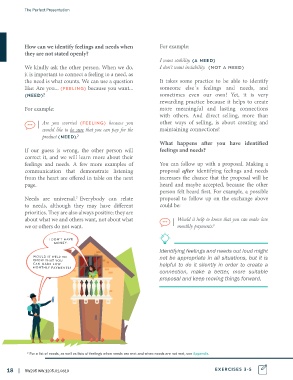
           about what we and others want, not about what                   Would it help to know that you can make low
           we or others do not want.                                       monthly payments?


                     I DON’T HAVE
                        MONEY.
                                                                    Identifying feelings and needs out loud might
               WOULD IT HELP TO                                     not be appropriate in all situations, but it is
               KNOW THAT YOU
               CAN MAKE LOW                                         helpful  to do it silently  in order to create a
               MONTHLY PAYMENTS?
                                                                    connection,  make a better, more  suitable
                                                                    proposal and keep moving things forward.


            2   For a list of needs, as well as lists of feelings when needs are met and when needs are not met, see Appendix.


    18     RW205 WW.1205.01.0819                                                           EXERCISES 3-5

