


Page 17 - RW205.01.0819 WW-Seminar-The Perfect Presentation
P. 17
COMMUNICATING EFFECTIVELY


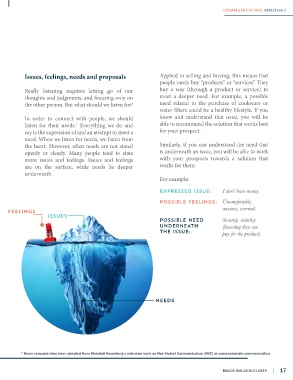
           Issues, feelings, needs and proposals                    Applied to selling and buying, this means that
                                                                    people rarely buy “products” or “services”. They

           Really listening requires letting go of our              buy a way (through a product or service) to
           thoughts and judgments, and focusing only on             meet a deeper need. For example, a possible
           the other person. But what should we listen for?         need related to the purchase of cookware or
                                                                    water filters could be a healthy lifestyle. If you
           In order to connect with people, we should               know  and  understand  that  need,  you  will  be
           listen  for  their  needs. Everything  we  do  and       able to recommend the solution that works best
                                 1
           say is the expression of and an attempt to meet a        for your prospect.
           need. When we listen for needs, we listen from
           the heart. However, often needs are not stated           Similarly, if you can understand the need that
           openly or clearly. Many people tend to state             is underneath an issue, you will be able to work
           more  issues  and feelings.  Issues  and feelings        with your prospects towards a solution that
           are on the surface, while needs lie deeper               works for them.
           underneath.
                                                                    For example:

                                                                    EXPRESSED ISSUE:          I don’t have money.

                                                                    POSSIBLE FEELINGS: Uncomfortable,
                                                                                              anxious, worried.
    FEELINGS
                     Issues
                                                                    POSSIBLE NEED             Security, stability
                                                                    UNDERNEATH                (knowing they can
                                                                    THE ISSUE:                pay for the product).


                                                                  NEEDS


          1   These concepts have been adapted from Marshall Rosenberg’s extensive work on Non Violent Communication (NVC) or compassionate communication.


                                                                                              RW205 WW.1205.01.0819   17

