


Page 69 - alligood 8th edition_Neat
P. 69
50 UNIT I Evolution of Nursing Theories
care at the Loeb Center for Nursing and Rehabilitation
Nurse perceives patient’s behavior as consistent or in New York. She recognized professional nurses and
inconsistent with her concept of comfor t or capability
encouraged them to contribute to patient outcomes.
Hall’s work is viewed as a philosophy of nursing.
Nurse explores, for purpose of clarification,
meaning to patient of perceived behavior Joyce Travelbee
Human-to-Human Relationship Model
Joyce Travelbee presented her Human-to-Human
Patient provides convincing Patient does not provide
evidence of comfort or convincing evidence of Relationship Theory in her book, Interpersonal Aspects
capability comfort or capability of Nursing (1966, 1971). She published predominantly
Need-for-help met Need-for-help may not in the mid-1960s and died at a young age in 1973.
have been met Travelbee proposed that the goal of nursing was to
assist an individual, family, or community to prevent
or cope with the experiences of illness and suffering
Nurse may need to reconstruct and, if necessary, to find meaning in these experiences,
experience to ascertain: with the ultimate goal being the presence of hope
1. Whether the need-for-help (Travelbee, 1966, 1971). She discussed her theory with
has been identified Victor Frankel (1963), whom she credits along with
2. Whether nurse met need in Rollo May (1953) for influencing her thinking (Meleis,
an acceptable way 2007). Travelbee’s work was conceptual, and she wrote
3. Whether nurse needs help to about illness, suffering, pain, hope, communication,
know where to start again interaction, empathy, sympathy, rapport, and therapeu-
and then take appropriate tic use of self. She proposed that nursing was accom-
action
plished through human-to-human relationships that
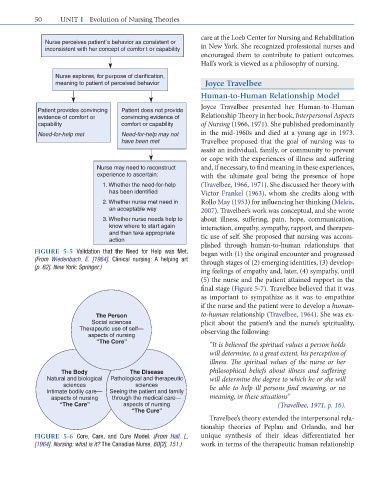
FIGURE 5-5 Validation that the Need for Help was Met. began with (1) the original encounter and progressed
(From Wiedenbach, E. [1964]. Clinical nursing: A helping art through stages of (2) emerging identities, (3) develop-
[p. 62]. New York: Springer.) ing feelings of empathy and, later, (4) sympathy, until
(5) the nurse and the patient attained rapport in the
final stage (Figure 5-7). Travelbee believed that it was
as important to sympathize as it was to empathize
if the nurse and the patient were to develop a human-
The Person to-human relationship (Travelbee, 1964). She was ex-
Social sciences plicit about the patient’s and the nurse’s spirituality,
Therapeutic use of self— observing the following:
aspects of nursing
“The Core” “It is believed the spiritual values a person holds
will determine, to a great extent, his perception of
illness. The spiritual values of the nurse or her
The Body The Disease philosophical beliefs about illness and suffering
Natural and biological Pathological and therapeutic will determine the degree to which he or she will
sciences sciences be able to help ill persons find meaning, or no
Intimate bodily care— Seeing the patient and family
aspects of nursing through the medical care— meaning, in these situations”
“The Care” aspects of nursing (Travelbee, 1971, p. 16).
“The Cure”
Travelbee’s theory extended the interpersonal rela-
tionship theories of Peplau and Orlando, and her
FIGURE 5-6 Core, Care, and Cure Model. (From Hall, L. unique synthesis of their ideas differentiated her
[1964]. Nursing: what is it? TheCanadianNurse,60[2], 151.) work in terms of the therapeutic human relationship

