


Page 12 - MGPI_Case_Study
P. 12
The sulfuric acid lowered the pH of the sodium hypochlorite, which,   concentration, pH, etc.), contractors conservatively assumed that
        combined with the heat produced by the reaction, accelerated the   the sodium hypochlorite might have completely decomposed
                                                                               29
        rate of sodium hypochlorite decomposition.  As a result, several   during the incident.   The maximum theoretical quantity of chlorine
        major and minor reactions may have occurred, involving both the   gas produced by the reaction was estimated to be 3,490 pounds,
                                                  26
        reactants and products formed by their decomposition.  A likely   assuming that no chlorine further reacted or was otherwise removed
                                                                            30
        reaction pathway between sulfuric acid and sodium hypochlorite   from the plume.   A reaction between chlorine and water in the
        produced hypochlorous acid and sodium sulfate. The hypochlorous   plume would likely reduce the overall amount of chlorine gas. 31
        acid further decomposed to form chlorine and chlorine dioxide.

        Chlorine dioxide can itself decompose to form chlorine gas and   There was no real-time air monitoring data available during the
        oxygen gas. Chlorine dioxide will also react with hydrochloric   incident that would have detected the concentrations of chemicals
        acid to form chlorine gas and water at temperatures around 40   present in the plume. MGPI had stationary air monitors in and
                                                  27
        to 70 degrees Celsius (104 to 158 degrees Fahrenheit).   These   around the Mod B area, but these were to detect concentrations of
        chlorine-containing compounds have a greenish-yellow tint.   propylene oxide and phosphorous oxychloride. Shortly after emergency
        Several MGPI employees described the cloud as yellow-green   responders mitigated the reaction by closing the discharge valve on
        to CSB investigators (Figure 8). See the CSB Contractor’s Report   the truck, they conducted air quality monitoring and determined the

        for a technical summary of the potential chemical reactions.   air quality was safe in the building and immediate area where the
                                                                incident occurred. Additionally, the U.S. Environmental Protection
                                                                Agency (EPA) arrived at 1:00 PM and began on-site and perimeter air
                                                                monitoring with handheld detectors equipped with chlorine sensors.

                                                                Monitoring results were negative for chlorine. Environmental
                                                                consultants hired on behalf of MGPI also conducted real-time air
                                                                monitoring using a variety of instruments at 3:30 PM and detected
                                                                levels of chlorine from 0.1 to 11.7 parts per million (ppm) in the
                                                                                     32
                                                                immediate vicinity of Mod B.   At the time of the monitoring,
                                                                approximately 5 hours after much of the cloud had dissipated, chlorine
                                                                concentrations were below detectable limits in the community.
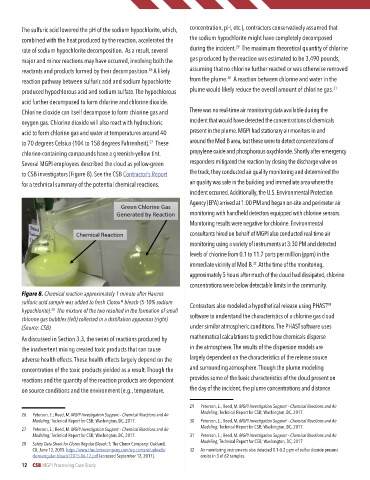
        Figure 8. Chemical reaction approximately 1 minute after Harcros
        sulfuric acid sample was added to fresh Clorox® bleach (5-10% sodium   Contractors also modeled a hypothetical release using PHAST
                                                                                                             TM
        hypochlorite).   The mixture of the two resulted in the formation of small
                  28
        chlorine gas bubbles (left) collected in a distillation apparatus (right)   software to understand the characteristics of a chlorine gas cloud
        (Source: CSB).                                          under similar atmospheric conditions. The PHAST software uses
        As discussed in Section 3.3, the series of reactions produced by   mathematical calculations to predict how chemicals disperse

        the inadvertent mixing created toxic products that can cause   in the atmosphere. The results of the dispersion models are
        adverse health effects. These health effects largely depend on the   largely dependent on the characteristics of the release source
        concentration of the toxic products yielded as a result. Though the   and surrounding atmosphere. Though the plume modeling
        reactions and the quantity of the reaction products are dependent   provides some of the basic characteristics of the cloud present on
        on source conditions and the environment (e.g., temperature,   the day of the incident, the plume concentrations and distance

                                                                29   Peterson, E.; Reed, M. MGPI Investigation Support – Chemical Reactions and Air
        26   Peterson, E.; Reed, M. MGPI Investigation Support – Chemical Reactions and Air   Modeling; Technical Report for CSB; Washington, DC, 2017.
            Modeling; Technical Report for CSB; Washington, DC, 2017.  30   Peterson, E.; Reed, M. MGPI Investigation Support – Chemical Reactions and Air
        27   Peterson, E.; Reed, M. MGPI Investigation Support – Chemical Reactions and Air   Modeling; Technical Report for CSB; Washington, DC, 2017.
            Modeling; Technical Report for CSB; Washington, DC, 2017.  31   Peterson, E.; Reed, M. MGPI Investigation Support – Chemical Reactions and Air
                                                                   Modeling; Technical Report for CSB; Washington, DC, 2017
        28   Safety Data Sheet for Clorox Regular Bleach;1; The Clorox Company: Oakland,
            CA, June 12, 2015. https://www.thecloroxcompany.com/wp-content/uploads/  32   Air monitoring instruments also detected 0.1-0.2 ppm of sulfur dioxide present
            cloroxregular-bleach12015-06-12.pdf (accessed September 12, 2017).  onsite in 3 of 62 samples.
        12  CSB MGPI Processing Case Study

